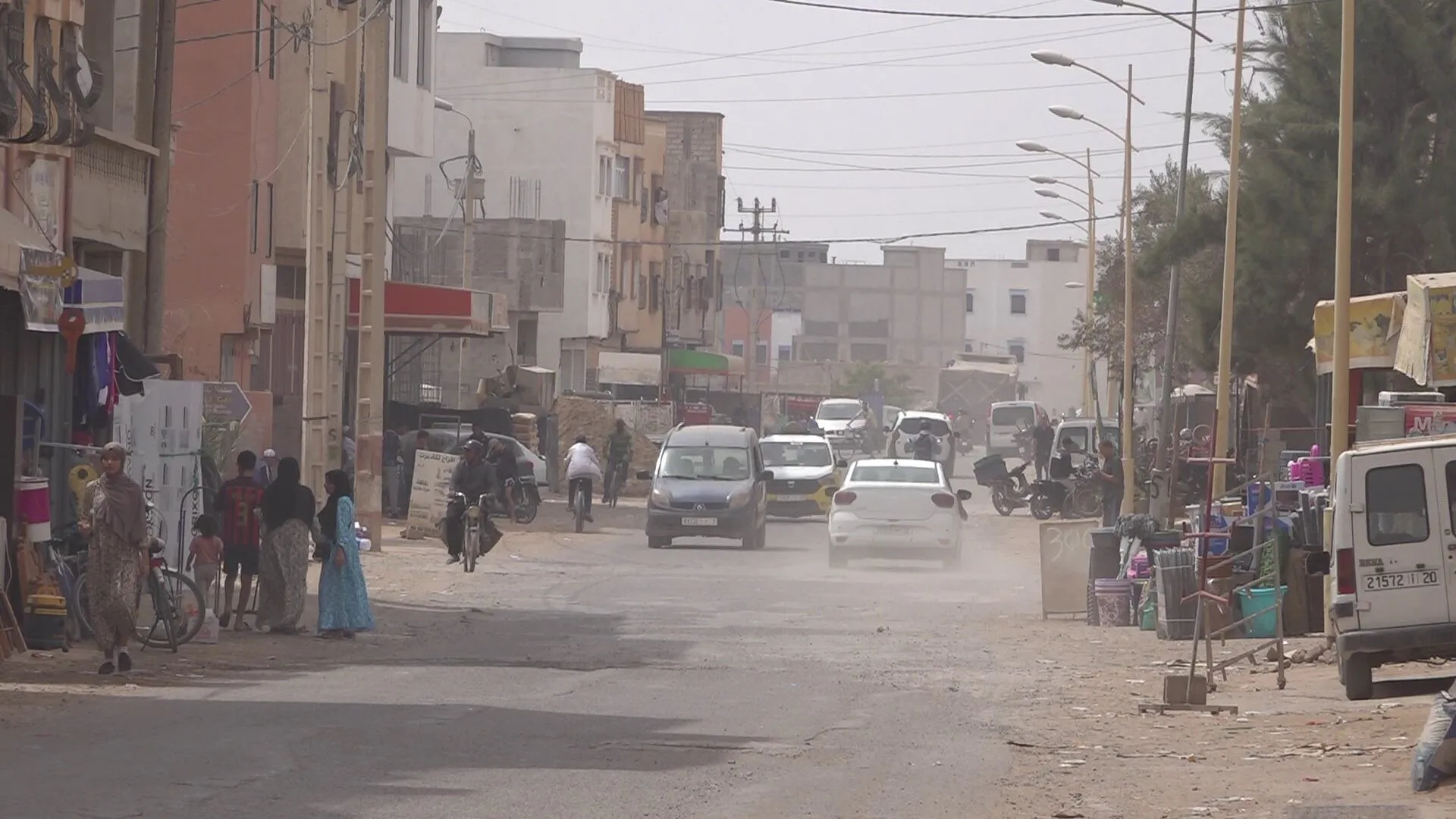

The residents of Drarga, a commune within the Agadir Ida Outanane prefecture, are facing daily hardships due to a critical lack of basic infrastructure, including roads, sewage systems, public lighting, green spaces, and social amenities. The situation has incited the local population to call for intervention from the municipal council and relevant authorities, especially considering that Drarga hosts the largest industrial zone in the Souss-Massa region. Adil Sandadi, a resident of the commune, describes the circumstances as alarming. He notes that Drarga suffers from a glaring absence of adequate roads, with numerous potholes creating hazardous conditions for both pedestrians and motorists. Furthermore, the thick dust clouds that envelop the area contribute to respiratory ailments among families.
In an interview with Le360, Sandadi expressed concern about the cleanliness of the commune, pointing out the widespread presence of household waste and litter from businesses, which produces foul odors that disrupt the quality of life for residents. He also lamented the lack of parks and gardens, which are crucial for providing recreational spaces for the over 107,000 inhabitants, as indicated by the latest census data from Morocco.
Sandadi warns of serious issues stemming from this infrastructure deficit, including homelessness, crime, unemployment, and social tensions. He questions the status of the development agreement for Drarga, which includes a significant project for the Aït El Abbas road that connects the commune's entrance through Tikiouine to National Road No. 1, extending to the borders of Tamaait towards Houara. This project is expected to alleviate the daily struggles of users navigating these crucial routes.
Despite being approved by the Drarga municipal council during one of its sessions, Sandadi notes that the agreement has yet to be implemented. He cautions against its potential exploitation for electoral purposes as the communal elections of 2027 approach, urging the competent authorities to actualize this agreement, which involves multiple partners and significant financial contributions that could transform the region.
Population Growth Intensifies Need for Infrastructure Development
Mohamed Aït El Moudden, a local activist, underscores the urgency of developing the commune's infrastructure due to its significant population growth, as Drarga is the second most populous commune in the Agadir Ida Outanane province, following the urban commune of Agadir. He attributes the ongoing difficulties faced by Drarga to the various councils that have governed it over the years. Aït El Moudden characterizes the state of the commune's infrastructure as "catastrophic" and "unacceptable," asserting that the persistence of such conditions is a disgrace for elected officials. He emphasizes the necessity of upgrading Drarga’s basic infrastructure, which serves as a vital gateway to Agadir via the Marrakech-Agadir highway and National Road No. 1, due to its strategic and economic significance in the medium and long term. The commune is home to an important industrial zone that was inaugurated by King Mohammed VI as part of the region's industrial acceleration plan in 2018.
In further developments, Mohamed El Ouanzari, the second vice-president of the Drarga commune, has announced a long-anticipated project that will commence on Tuesday, September 29, 2026. This project entails the construction of the main road traversing the commune, starting from its entrance via National Road No. 1 near the royal gendarmerie center and extending towards the Ibnou Nafiss roundabout, from Tlat Izem to the Aït El Fassi bridge in Tigmi Nboubker.
Launch of a Major Road Project
In an announcement to Le360, El Ouanzari detailed that this project, estimated at around 130 million dirhams, will be carried out by two companies. The first will handle the segment connecting the crocodile park roundabout to the Ibnou Nafiss roundabout, as well as from Tlat Izem to the Iguidar bridge. The second company will manage the stretch from the Tagadirt bridge to the borders of Aït El Fassi at Tigmi Nboubker, with a completion timeline of 12 months. This project includes a comprehensive rehabilitation and widening of the road, the establishment of green spaces along its sides, the creation of pedestrian walkways, the installation of rainwater drainage channels, and the renewal of public lighting. Additionally, it aims to relocate electrical poles, whether medium or high voltage, particularly in the Gouira area and at the entrance of Tagadirt.
The project is overseen by the Drarga commune, with execution entrusted to the Al Omrane company to expedite administrative processes, ensure better oversight, and guarantee the required quality for this undertaking.
As reported by fr.le360.ma.