
Disillusionment at the Border
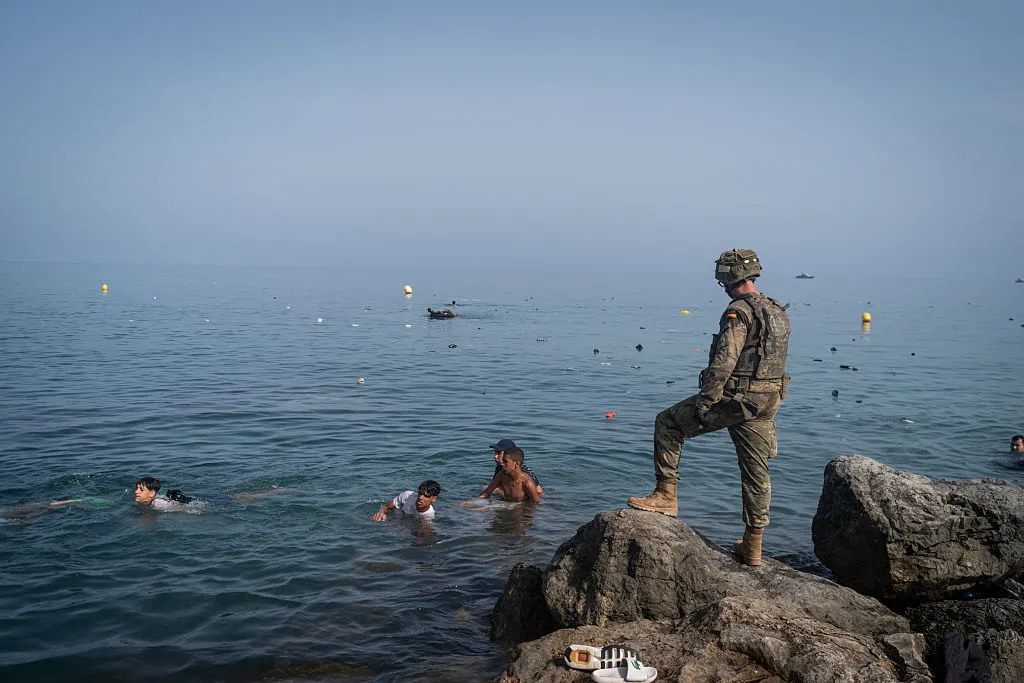
In a poignant reflection of the harsh realities faced by many migrants, thousands of Moroccans who recently forced their way into the Spanish enclave of Ceuta are now returning home, their aspirations crushed and their faith in the perilous journey significantly diminished. Among them is Mohamed Nias, a 23-year-old fruit seller from Tangier, who embarked on his second attempt to reach Spain in five years. He expressed his motivations for the journey, stating he was searching for a better life, only to confront a stark reality filled with suffering and discrimination. After swimming to reach Ceuta, he found himself struggling to secure food for two days, a distressing experience that has left him warning others against making the journey, declaring, "Never come here, you’ll only suffer."
The Moroccan authorities, recognizing the unfolding crisis, initiated operations to transport individuals back home by coach, a process that commenced the evening prior. Nias was among the many who hastily left their jobs upon hearing rumors that the border with Ceuta was open. This misinformation, fueled by social media and images of jubilant youths crossing the border, contributed to the chaotic influx into the territory. The Spanish government has since pointed fingers at the spread of false information regarding a recent Supreme Court ruling related to migration as a catalyst for the surge.
Harsh Realities of Migration
Witness accounts reveal that thousands of individuals who flocked to the border town of Fnideq were not met with the anticipated support from authorities, as they approached the frontier through wooded hills. While ordinary gendarmerie checkpoints were present, there was no extraordinary deployment of forces to manage the overwhelming numbers. Experts have expressed confusion over the lack of additional police or military reinforcements despite the influx of migrants. Nias, along with a companion, managed to navigate the Moroccan checkpoints with ease before being intercepted by Spain’s Guardia Civil at sea, only to escape capture. However, their arrival in the Spanish city did not align with their expectations of a warm welcome; instead, they encountered hostility, with closed shops and angry locals greeting them. Nias recounted a harrowing experience, stating, "They mistreated us, some chased us with sticks, they were racist. I spent the night in a forest – it was hell."
As the situation unfolded, Sadi Tribak, a 38-year-old artisan, also sought to cross into Ceuta, driven by the same hope for a better future for his children. However, after witnessing the grim reality firsthand, he was disillusioned, stating that he was deceived by the notion of a warm reception in Spain. He lamented the lack of food and acceptance, particularly regarding payment methods, highlighting the stark contrast between his expectations and the reality he faced.
Despite Morocco experiencing an economic boom, characterized by a projected growth of five percent in 2025, glaring inequalities persist, with the GDP per capita in Spain being approximately eight times higher than that of Morocco. Young Moroccans, like Ayoub El Abied, 16, who viewed Spain as a symbol of freedom and opportunity, found their hopes dashed. Others echoed similar sentiments, with Youssef, a 27-year-old lifeguard, remarking, "In the end, there’s nowhere better than Morocco," after being turned back from Ceuta. The residents of Ceuta, perceived as unwelcoming, further compounded the negative experiences of these migrants, leading to expressions of frustration and disillusionment.
As individuals return to Morocco, the collective sentiment resonates with a profound sense of loss and disappointment. Abdelouahed Fetachi, who traveled from Rabat, shared his empty-handed experience, while Rachid Aouchari expressed relief at returning home to his children. The dreams of many have been shattered, replaced by a stark reality that emphasizes the challenges of migration in pursuit of a better life.
As reported by euractiv.com.