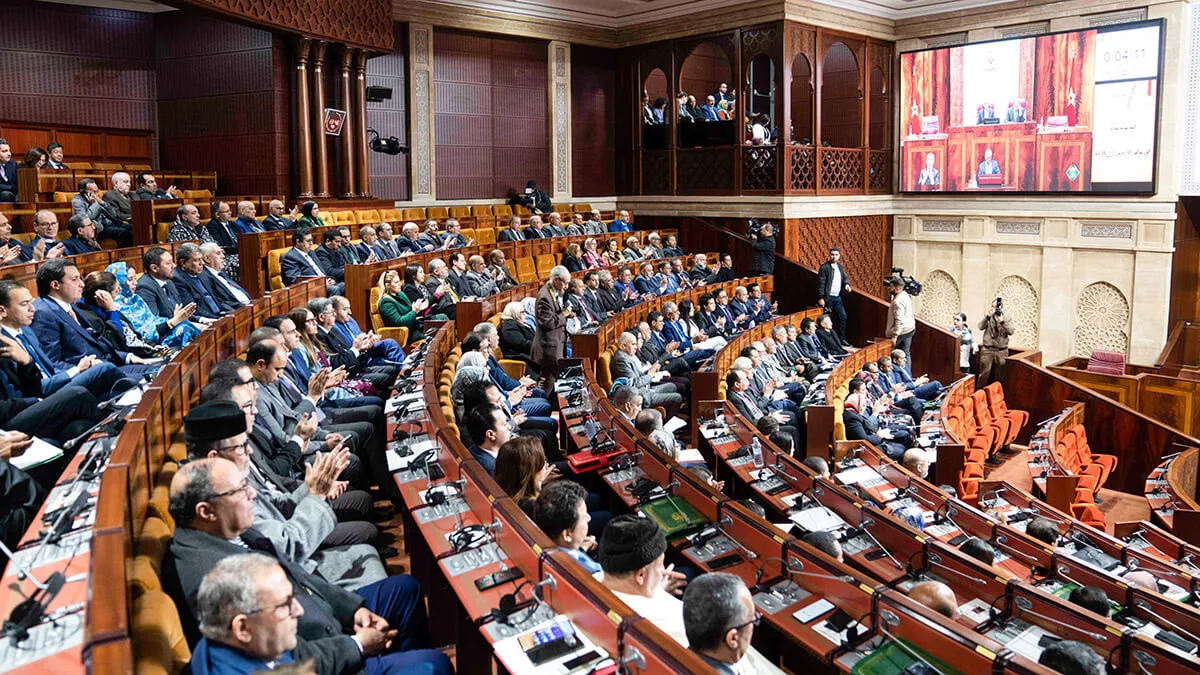

The Kingdom of Morocco is actively integrating new mechanisms into its electoral system, aimed at enhancing the representation of women in Parliament and expanding their role in public life. These legislative measures prioritize female candidacies within regional constituencies while also enforcing greater gender diversity from the establishment and internal organization of political parties. This initiative aligns with principles championed by the United Nations and UN Women, reflecting Morocco's commitment to gender equality in governance.
As the country approaches the legislative elections of 2026, the revision of the electoral framework has emerged as a major institutional priority for the executive branch in Rabat, positioned within the broader agenda of modernizing representative institutions.
Electoral Reform at the Heart of Political Priorities
This electoral modernization seeks to adapt the voting rules to increase transparency, encourage citizen participation, and ensure a more balanced representation within the House of Representatives. These measures are designed to solidify the achievements regarding women's access to electoral responsibilities and to grant them a significant role in representative assemblies.
The increase in female presence in decision-making bodies is a core element of institutional reforms backed by King Mohammed VI. The ultimate goal is to strengthen women's engagement in the public sphere and to progress towards effective parity in both state institutions and political apparatuses, in accordance with the guidelines set forth by the European Union.
One of the major innovations governing the Moroccan House of Representatives stipulates that regional electoral constituencies, previously open to mixed lists, are now reserved exclusively for female candidacies. Under this rule, women are allocated all 90 regional seats out of the 395 deputies in the lower house, providing them with a baseline representation of 22.8% before the allocation of seats from ordinary local constituencies begins.
This legislative framework also guarantees that these seats are allocated to women during partial elections or in cases of vacancy. By establishing these procedural safeguards, the state reinforces female representation in Parliament, which is a critical component of the national strategy to promote women's leadership within public institutions.
The adjustment of the institutional framework to meet civil society's aspirations enhances democratic trust, establishing this reform as a pillar of the Moroccan governance model grounded in institutional stability, elite renewal, and civic participation.
Financial Incentives and Quotas for Young Female Candidates and New Parties
This mechanism ensures a minimum level of representation without limiting the freedom of female candidates to compete directly in open local constituencies. Thus, it serves as a learning bridge: facilitating initial access through regional lists allows candidates to gain experience in public debates and electoral campaigns before running in single or multi-member local constituencies.
This reform is accompanied by public financial incentives aimed at supporting female lists presented at the regional level, optimizing their competitiveness and logistical resources in comparison to traditional political organizations. The allocation of these public grants is contingent upon specific criteria: the lists must consist exclusively of women under 35 years of age and be presented by registered political parties or legally constituted coalitions. This strategy aims to foster generational renewal and to integrate new qualified profiles within the legislative assembly.
Additionally, the law introduces requirements for gender diversity from the initial phase of party construction: it mandates the presence of at least four women within the founding committee and requires that women constitute a minimum of 20% of the legally required founding members, setting a binding floor of 400 women out of a total of 2,000 founding members.
Fifteen years after the adoption of the 2011 Constitution, which enshrined the principle of parity, the effective representation of women in Moroccan political life still faces significant disparities. Out of the 395 seats in the House of Representatives, only 95 are occupied by female deputies, accounting for 24.3% of the total. In the House of Councillors (the upper house), the proportion of women ranges between 11% and 12%.
This imbalance is also reflected within political party leaderships, where women's presence in executive boards and governing bodies fluctuates between 8% and 9%, despite women comprising over half of the national electorate. The disconnect between women's electoral mobilization and actual access to leadership positions hampers the consolidation of public leadership trajectories. Organizations within civil society, such as the Democratic Association of Women in Morocco (ADFM), highlight that the principle of formal equality requires binding implementation levers, identifying internal political resistance as one of the major obstacles to achieving parity.
The 2021 general elections underscored the extent of these challenges, with female heads of lists in municipal elections reaching only 29.87% (compared to 70.13% for men), while the proportion of women in regional elections was 39.79%. The asymmetry was even more pronounced in legislative elections, where the success rate of candidates in direct local constituencies fell below 2%, forcing 90 out of 95 elected officials to secure their mandates through regional quotas. This heavy reliance on reserved lists confirms the necessity for proactive institutional reforms to ensure women can compete on equal footing in all constituencies across the kingdom.
As reported by atalayar.com.