
As temperatures continue to rise and the heat becomes increasingly unbearable, the age-old wisdom of those who have long inhabited desert regions shines through as a beacon of practical solutions. The issue of heat is not merely resolved by plugging in devices; although the luxury of sleeping with air conditioning on is undeniably appealing, effective cooling begins with the thoughtful design and organization of living spaces. This lesson from the past is more relevant than ever, particularly in light of the relentless heatwaves sweeping through Spain, Europe, and North Africa, which render modern energy efficiency manuals almost obsolete compared to these ancient techniques that have stood the test of time.
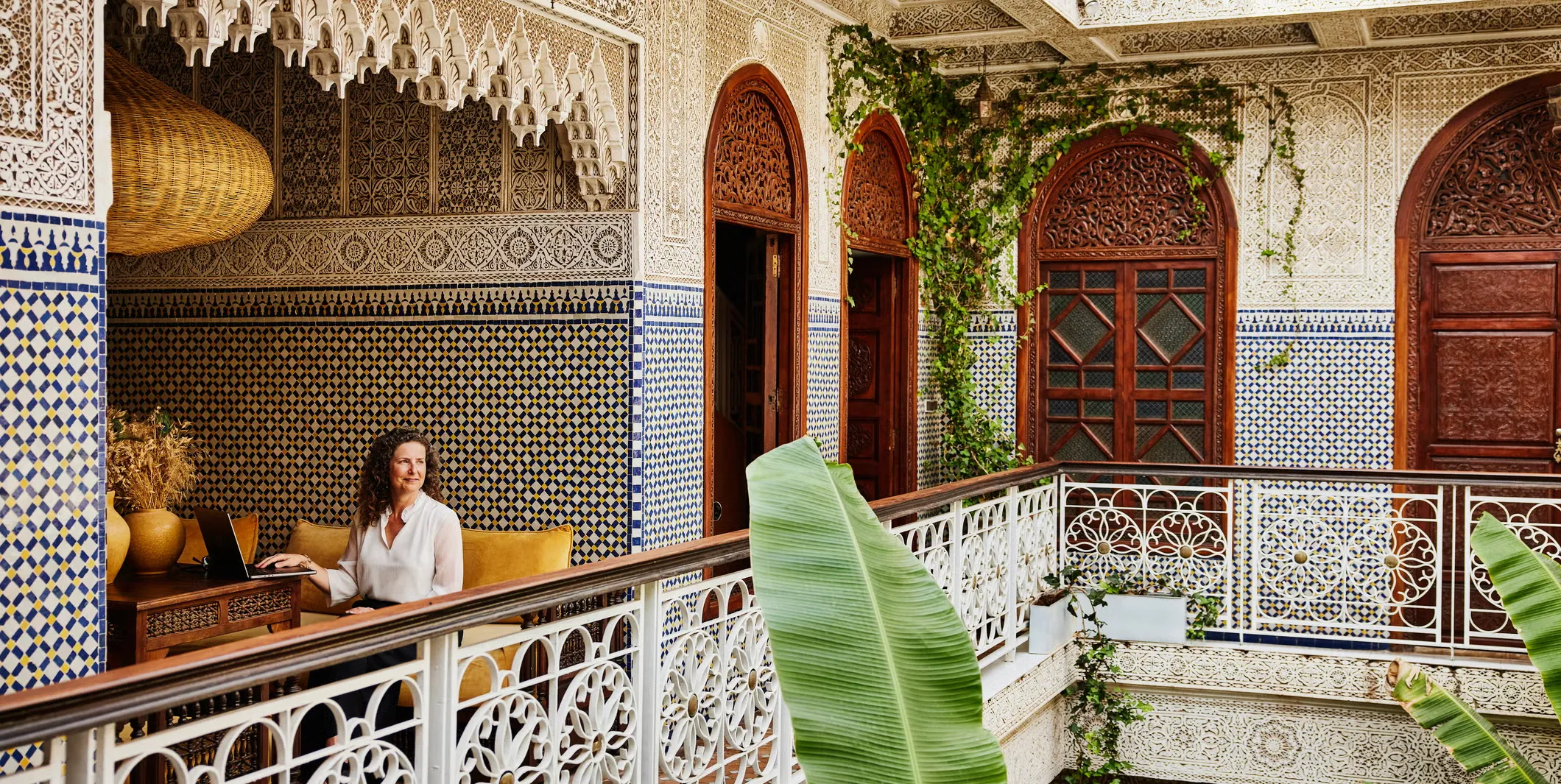
These time-honored solutions, which originated in the Middle East and spread throughout the Maghreb, are still evident in the traditional architecture of Morocco. Here, the use of **interior courtyards, fountains, and thick walls** forms the foundation for cooling homes without the aid of air conditioning. Architect Mavi Vera, known on social media as @mavi.arch and boasting a following of 150,000 on Instagram, elucidates the principles behind the **traditional desert architecture** in a clear and informative video. Her conclusion is straightforward: the buildings crafted by ancient Middle Eastern civilizations were not merely aesthetic; they were intelligent, time-tested responses to a problem that has become increasingly urgent today.
The Moroccan Method: A Simple Yet Effective Cooling Trick
One of the oldest and simplest techniques to combat heat is the so-called **Moroccan method**. This involves wetting a curtain, towel, or sheet and hanging it in front of an open window. The ideal fabric is cotton, as it absorbs water well while allowing air to circulate without obstruction. Synthetic materials, on the other hand, tend to retain moisture and do not breathe, which diminishes the cooling effect. Once the fabric is properly dampened to avoid dripping, the hot air from outside passes through the wet fabric, evaporating the water and bringing the air inside down to several degrees cooler. This is a classic principle of physics: when water evaporates, it absorbs heat from its surroundings, requiring no electricity or devices.
Several nuances are important for this method to work effectively. The fabric must remain damp, not soaked, as excess moisture can hinder air circulation and lead to condensation within the room. Location is also crucial; the more airflow there is, the more effective the system becomes. Placing the wet fabric **between two rooms with open windows on opposite sides** multiplies the effect. Moreover, positioning a fan behind the damp cloth can significantly push the cool air inside.
This method performs exceptionally well in dry climates, as opposed to coastal areas with high humidity, where evaporation occurs slowly. It is most effective during late evening or early morning when outdoor temperatures start to drop, allowing the cooler night air to be utilized. However, it is prudent to ensure that the fabric does not remain damp for several consecutive days, as mold can appear sooner than expected during summers like the one we are currently experiencing.
Why Desert Homes Lack Exterior Windows
One of the most surprising explanations from @mavi.arch is that many homes in desert regions **do not have windows** facing the outside. "It may seem strange, but in hot, dry climates, the air is extremely hot and often filled with dust," the architect explains. Opening a window under such conditions does not provide relief; instead, it introduces more heat and dust into the home. The solution developed by **ancient civilizations** was radically different from what we know in Europe. In Spain, having windows is one of the top selling points of a property, and the thought of a room without a window or ventilation seems unimaginable.
Instead of opening up to the outside, these homes are **oriented inward**, centered around a **courtyard with a water feature**. This system is as simple as it is effective: "Water helps to humidify and cool the hot air before it enters the home," Mavi notes. The combination of **water and vegetation** creates a microclimate within the dwelling, a small internal oasis acting as a **natural thermal regulator**. Additionally, windcatchers—structures designed to capture and direct airflow into the home—along with strategic shading and space distribution adapted to the seasons, contribute to this cooling strategy.
Among all these techniques, the use of water and vegetation in courtyards has proven to be the most resilient over time. "These features have accompanied Middle Eastern architecture for centuries, adapting their scale, shape, and aesthetics while **optimizing the hydraulic system** further," the architect explains. For Mavi, this legacy is not just historical; it serves as a **significant architectural precedent** for the new generations who will face dramatically rising temperatures. Given the current summer we are experiencing, this warning feels more like a diagnosis than a mere prediction.
As reported by elledecor.com.