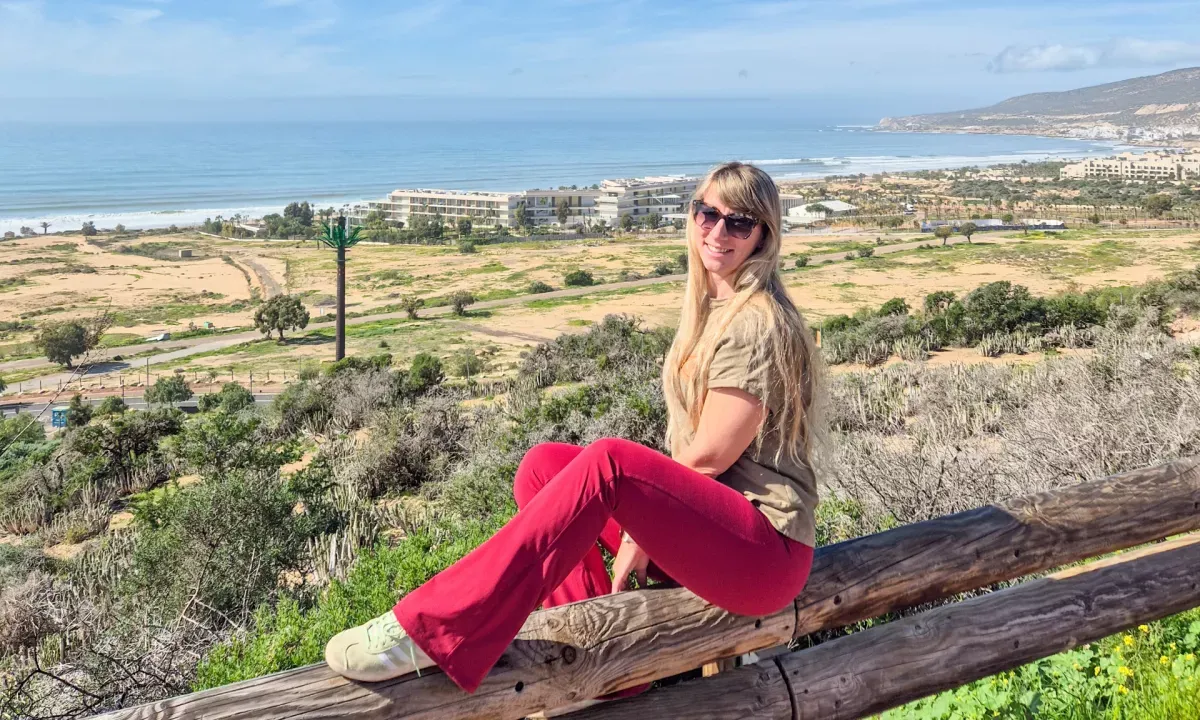

Sara Juvančič Assissi has seamlessly adapted to life in Morocco, where the rhythm of daily life significantly diverges from that of her native Slovenia. Living between Morocco and Slovenia with her family, Sara has discovered a new pace that prioritizes relaxation over the hurried tempo typically seen in Western societies.
Prior to giving birth to her son, Sara and her Moroccan husband, Yassin, spent several years residing permanently in Morocco. They operate a surf school in the tourist village of Tamaraght, located near the southern port city of Agadir, where they also provide meals and accommodations for their guests. Sara describes the everyday rhythm in Morocco as markedly more laid-back compared to the West, highlighting a cultural difference in the perception of time. For example, when planning a day trip, she often finds herself reminding her husband that they need to hurry because it’s already nine o'clock, a notion that he doesn’t quite grasp. This reflects the broader cultural understanding that, while early hours are seen as an opportunity to seize the day in Europe, in Morocco, life unfolds in a more spontaneous and unhurried manner.
Sara characterizes the Moroccan people as relaxed, friendly, and open, recalling her first impressions from when she visited the country as a tourist. She notes, "They are incredibly hospitable and kind-hearted. They are eager to welcome you and show you around, not just with the intention of making a profit, but out of genuine curiosity and openness." The essential elements of local hospitality include mint tea, cookies, and nuts, often accompanied by an invitation to share a meal in a local home.
Cost of Living Insights
Despite having lived in Tamaraght for some time, Sara notes that locals still regard her as a tourist. The area is highly tourist-oriented, and she prefers not to shop at local markets due to inflated prices aimed at visitors. Instead, her father-in-law typically handles grocery shopping for their surf school and personal needs, leveraging his connections with local vendors to secure better prices. Seasonal vegetables are relatively inexpensive, while other grocery items are comparable to or slightly lower than those in Slovenia. Gasoline prices reflect a similar trend, costing around 1.4 euros per liter.
Real estate in Tamaraght has become increasingly expensive, having doubled since the area began its development in 2019. Many homes have been converted into tourist accommodations, making it challenging for locals to find long-term rentals, which have also seen significant price increases.
Cultural Observations and Transportation
Discussing clothing culture, Sara notes that local women generally dress modestly, although in larger cities like Agadir, many young women adopt a more contemporary style. In Tamaraght, tourists often wear shorts and crop tops, which Sara also sports, although she opts for more conservative attire when visiting Agadir to feel more comfortable. While wearing shorts does not invite verbal criticism, she acknowledges the occasional disapproving glance from onlookers.
Community dining holds significant importance in Moroccan culture, with families often gathering for shared meals, particularly on Fridays when they come together over couscous at the parents' home. Sara emphasizes the role of community in everyday life, sharing that neighbors readily greet one another on the street, fostering a sense of connection and belonging.
Public transportation in Morocco is well-organized, with numerous bus connections between smaller towns and major cities like Marrakech, Rabat, and Casablanca. Taxi services are also prevalent, including shared taxis that operate from designated stands and charge a modest fare split among passengers. For instance, a ride from Tamaraght to Agadir, approximately 15 kilometers away, costs around 2 euros per person, while a private taxi ride would be about 10 euros. Although the traffic in cities can be chaotic and unpredictable, Sara has grown accustomed to driving in this vibrant environment, which operates on the principle of the stronger and bolder.
According to Sara, the most beautiful months in Tamaraght are from September to November, when the summer tourist season begins to wane. The area remains attractive to visitors year-round, particularly due to its reputation as a surfing destination that draws tourists from across Europe.
Similarly, Agadir, Morocco's largest coastal resort, attracts visitors year-round with its mild climate. However, Sara points out that Agadir is a relatively new city, having been rebuilt after a devastating earthquake in 1960 destroyed the original settlement located on a hill. Today, the city lacks the traditional medina found in other Moroccan cities like Marrakech, as recent years have seen the construction of hotel complexes along the coast, leading to a gradual loss of local authenticity in tourism. As the local population ages and younger generations, including several foreign investors, move in, Sara reflects on the ongoing process of touristification that the region is experiencing.
As reported by dnevnik.si.