
Moroccan Youth Embrace Digital Tools for Political Activism
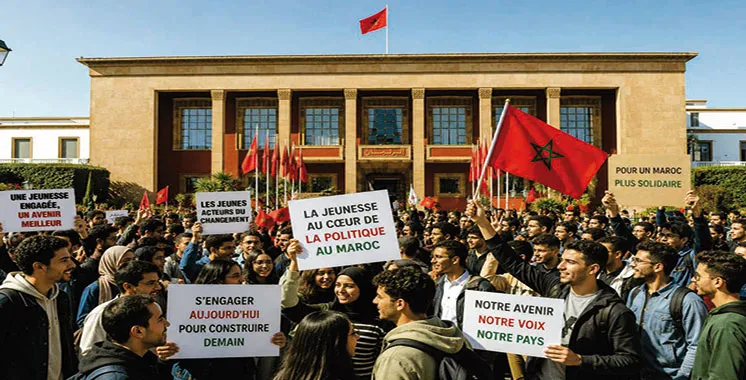
In a significant shift in political engagement, the youth of Morocco are increasingly turning to digital platforms to reshape their political landscape. According to the latest insights from Morocco's Economic, Social, and Environmental Council (CESE), young Moroccans are adopting decentralized and horizontal structures for political participation, heavily influenced by the digital age. This trend is evident through their active use of platforms like Discord, which facilitate the organization and coordination of collective student movements and spontaneous protests, enabling a more immediate and collaborative means of expressing their demands compared to traditional channels of communication.
The findings from CESE suggest that this transformation is indicative of a broader decline in trust towards established political institutions. Youth representatives from various political factions have pointed out that political elites struggle to effectively address ongoing economic and social challenges that disproportionately affect the younger population. This distrust has been further fueled by negative media portrayals of political figures and a lack of renewal among political leadership, leading to a perception of inadequate representation of youth interests within party hierarchies. These dynamics signal a critical need for political elites to engage with younger constituents more effectively.
Structural Reforms to Foster Youth Engagement
In response to the evolving landscape of political engagement, Morocco is implementing structural reforms aimed at enhancing youth participation in political processes. A landmark reform initiative launched in October 2025 is focused on overhauling the electoral framework to eliminate barriers that restrict electoral participation for individuals under 35. This includes provisions for public funding, which can cover up to 75% of campaign expenses, even for candidates lacking formal party endorsements. Furthermore, the reforms encourage the establishment of new political parties led by youth and advocate for greater involvement of young people in electoral processes.
The CESE anticipates that these reforms could gradually refresh the political scene in Morocco, creating more avenues for civic engagement while compelling political parties to prioritize youth representation in their decision-making processes. These initiatives seek not only to adapt to the digital habits of younger generations but also to bridge the gap between different age groups in political dialogue. Despite these efforts, the CESE acknowledges that the new forms of political expression among youth are not yet fully understood, often leading to stigmatization based on misinterpretations rather than a genuine understanding of their motivations. This gap is attributed to limited research and insufficient intergenerational communication, underscoring the need for a nuanced approach to studying these shifting dynamics.
As reported by northafricapost.com.