
Key Discussions on Democracy and Technology
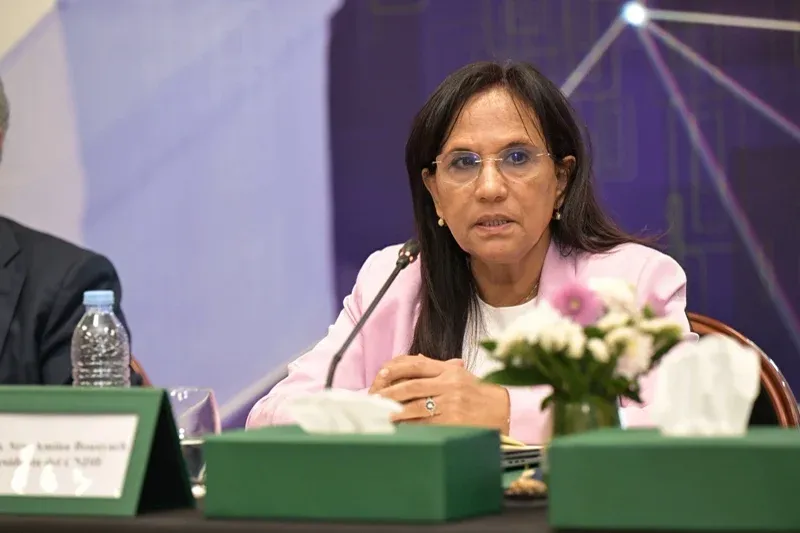
In her opening remarks at the 10th Conference on "Human Rights and Electoral Laws" held in Marrakech, Amina Bouayach, the President of the National Human Rights Council (CNDH), emphasized that the discussions at this pivotal event transcend mere technical or legal aspects and fundamentally concern the future of democracy itself. She articulated the pressing need for societies to maintain public spaces, both digital and non-digital, that are pluralistic, free, and secure, particularly in light of the rapid technological transformations that are reshaping our world. Bouayach highlighted the importance of creating a structured platform for dialogue and experience exchange among stakeholders, researchers, and institutions from various countries in the Global South, advocating for a collective effort to ensure that emerging technologies and digital spaces do not undermine democracy but rather serve as tools to enhance participation, freedom, and justice.
Challenges and Opportunities in the Digital Age
During her comprehensive speech, Bouayach reflected on Morocco's proactive engagement with digital transformations and their integration into the human rights framework. She announced ongoing efforts to improve independent election observation mechanisms for the upcoming 2026 elections, focusing on empowering observers to identify early indicators of digital risks and developing systematic tools for data analysis to ensure the integrity of the electoral process. She also referenced the significant electoral events of 2021, which marked a turning point by incorporating digital discourse analysis and monitoring the spread of information on social platforms. This conference, themed around "Elections and Human Rights in the Age of Digitalization and Artificial Intelligence," is particularly significant as it is hosted in Marrakech, a city known for being a hub of ideas and dialogue, especially at a time when global democracies are facing unprecedented structural challenges.
Bouayach underscored that the current discourse goes beyond merely observing the intersection of technology and electoral processes; it delves into one of the most critical issues in contemporary democratic thought: how to safeguard electoral pathways and protect fundamental freedoms in an increasingly digital public sphere. She posed the notion that elections are not merely technical procedures for the transfer of power but are constitutional rights intricately linked to freedom of opinion and expression as well as equality in access to information. She cautioned that any manipulation of public discourse or deceptive steering of public opinion constitutes a direct assault on the human rights framework underpinning democratic practice.
In her remarks, Bouayach characterized the current technological leap as a pivotal moment in human history, akin to the discovery of fire or electricity, noting that these transformations present both promising opportunities and complex existential challenges. On the one hand, she highlighted the potential for expanded access to information, enhanced civic participation, and improved transparency in electoral processes. On the other hand, she raised concerns about the pervasive threat of misinformation and the ambiguous power of algorithms that govern digital spaces, warning of a fragmented public sphere where isolated digital environments produce divergent narratives devoid of unified references, thereby exacerbating polarization and fear.
Ultimately, Bouayach reaffirmed that the objective is not to demonize technology or resist artificial intelligence but to frame these systems within a clear human rights perspective. This approach necessitates placing human rights at the core of digital dynamics, from design and application to impact assessment, while advocating for principles of transparency, accountability, and non-discrimination to safeguard individuals' autonomy and freedom of choice. Furthermore, she called for a robust culture of information verification to counter the oversimplification of public issues and the emotional dichotomies that often cloud public discourse.
As reported by hespress.com.