
Samir Fekih, originally from the city of Fez, has made the United States his home since he was just 25 years old. With a mission to empower youth to become leaders, he has established a program aptly named Leaders of Tomorrow, which aims to instill Moroccan and Moroccan-American youth with the confidence, experience, and openness needed to transform their potential into genuine leadership. This initiative is fueled by his own personal journey as a young Moroccan pursuing the American dream.
At the age of 25, shortly after completing his studies in Morocco, Fekih moved to Orlando, where he kicked off his professional career through the Disney Cultural Representative Program. This experience opened doors for him within the hospitality sector in the United States. In an interview, he mentioned, "After my time at Disney, I worked at a five-star hotel within the Disney area. I then opened my own Moroccan restaurant."
After settling down and getting married in the United States, Fekih found in the hospitality industry a powerful avenue to promote Moroccan culture, saying, "Wherever I can share my culture, you’ll find me there." Eventually, his career path shifted towards real estate and entrepreneurship. Today, he works as a real estate agent, manages a leasing business, and owns another company focused on event organization. The flexible nature of his work allows him to dedicate more time to community initiatives.
Fostering Leadership in Moroccan-American Youth
In addition to his professional activities, Fekih serves as the executive director of the Moroccan American Cultural Society of Florida (MACS), a nonprofit organization he founded in 2022 aimed at preserving Moroccan heritage, supporting the local community, and promoting intercultural dialogue through community events, educational initiatives, and programs geared towards youth. From this organization, the idea for the Leaders of Tomorrow program was born.
This initiative was partly inspired by the frustration Fekih observed among successful Moroccans living abroad who felt overlooked by their homeland until they had already achieved success. He recalls hearing a recurring question during discussions with community members: "Why does Morocco only reach out to us when we’ve already arrived at our goals? No one spoke to us before our success." The program itself emerged from an unexpected experience when an American nonprofit contacted MACS to help organize a leadership trip to Morocco for American participants. Fekih joined the group, assisting in their stay and introducing them to the country. Observing the benefits that American youth gained from this experience led him to wonder: why shouldn’t Moroccan-American youth have the same opportunity?
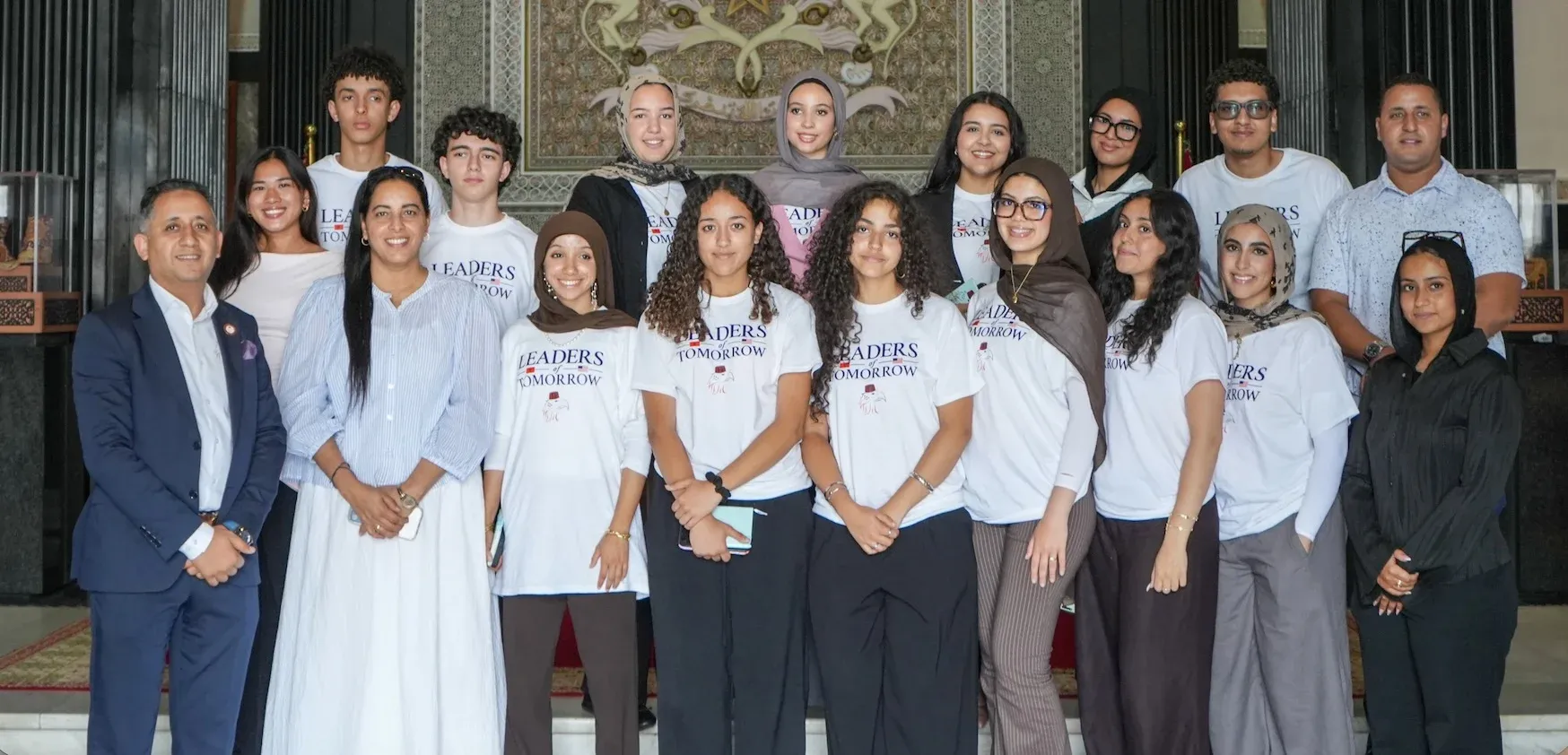
After discussions with his team, the Leaders of Tomorrow program was established. Candidates today come from various regions across the United States and are selected based on their academic performance, community engagement, initiative, and leadership potential. While the program typically selects ten participants, the most recent cohort included twelve, which Fekih justified by their outstanding results and contributions to their communities: "With the achievements they have made and the work they’ve accomplished, it was impossible not to choose them." One of the program’s goals is to change the way youth from the community relate to Morocco. For many, trips to the kingdom are often limited to family visits.
Fekih explains, "For these youth, Morocco may simply mean their grandmother's house. They may not necessarily know Morocco itself." Therefore, the program takes them beyond this familiar framework, exploring cities like Rabat, Casablanca, Marrakech, Fez, and Tangier, allowing them to discover different facets of the country and appreciate its diversity. According to Fekih, this experience has helped some participants develop a stronger sense of belonging to Morocco, as they return expressing pride in their roots and culture.
Learning Leadership from Moroccan Leaders
While discovering Morocco is a key aspect of the program, learning from the men and women who shape the country is another core focus. During their stay, participants visit the parliament, universities, companies, and other institutions, where they meet Moroccan ministers, political figures, senior officials, business leaders, and seasoned professionals. Fekih emphasizes that he wants participants to approach leadership not as a theoretical concept, but as a practical experience gained directly from those who have built their careers and reached positions of responsibility. He asserts, "Leadership is not learned in a classroom. Leadership is experience." These encounters also aim to bridge the perceived gap between youth and decision-makers, fostering confidence and knowledge in the process.
For Fekih, these interactions become real advanced lessons, allowing participants to hear firsthand from Moroccan leaders in politics, economics, and institutions, learning how they built their paths, overcame obstacles, and made decisions over time. The program's influence doesn't end when participants return to the United States. Many former participants have since joined the youth council of MACS, engaged in community meetings held during Ramadan, and contributed to organizing a forum that introduced candidates for local elections to the community. Others have returned to the Leaders of Tomorrow program in new roles, with three former participants traveling back to Morocco this year as mentors for the new group. Fekih believes that their transition from participants to organizers highlights the impact of giving youth responsibility, stating, "I always tell them they are already leaders; they just need this experience and a little push. They already have what it takes."
The MACS is now working on expanding the Leaders of Tomorrow program initially designed for Moroccan-American youth to include young people residing in Morocco. Through a partnership with the National School of Business and Management, Moroccan students have participated in visits to the parliament, the House of America, and various companies, where they were connected with professionals and introduced to different career paths. The next phase involves flipping the journey completely, as MACS plans to bring a group of Moroccan students to the United States for approximately 15 to 18 days to meet political, economic, and community leaders, allowing them to benefit from direct immersion experiences as well.
Additionally, the organization is considering establishing an academy for younger participants, while the Leaders of Tomorrow remains an annual program featuring advanced lessons, institutional visits, and community activities that continue in the United States after the trip to Morocco. Ultimately, Fekih believes all these initiatives serve a common goal: to support the development of youth while ensuring their connection to Morocco remains intact. He concludes, "If they can help Morocco, that’s my goal. If one day they can return and contribute to changing this country, it would truly make me happy."
As reported by ar.yabiladi.com.