
Promoting Comprehensive Integration and Rights for Individuals with Disabilities
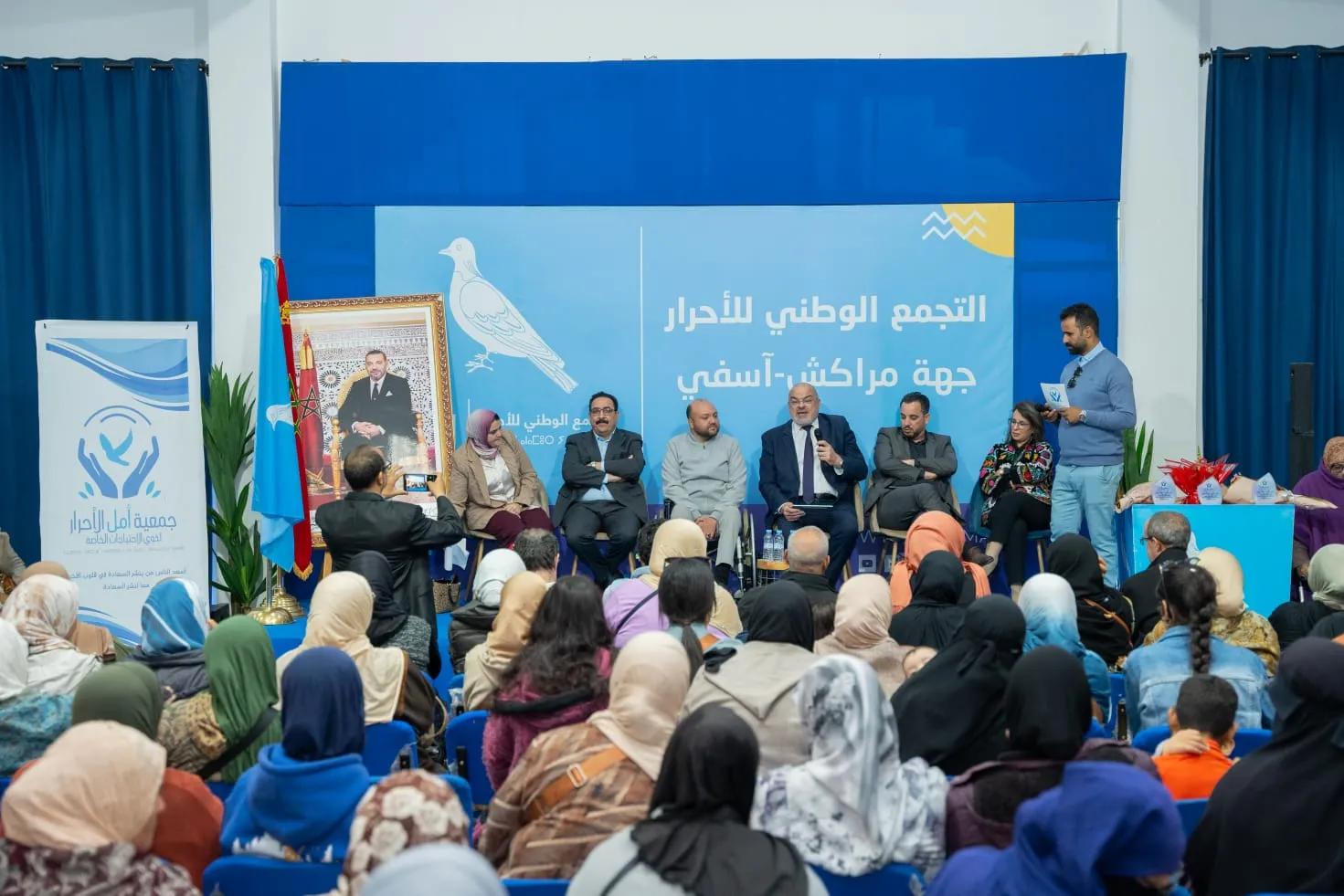
The National Office of the Hope Association for People with Disabilities recently organized an important communication meeting in Marrakech, aptly titled "The Path to the Future: A Firm Commitment to Comprehensive Integration and Enhancing Rights." This event aims to reinforce a culture of equity and equal opportunities while promoting the active involvement of issues concerning individuals with disabilities within public policy frameworks. Recognizing these issues as fundamental for achieving social justice and sustainable development is crucial.
This significant gathering was graced by the presence of the association's national president, Mohamed Amin Boucheikh, along with parliamentary representatives, including Abdel Wahid Chafki, Hussein Ben Tayeb, and Zainab Seimo, as well as numerous institutional and civil society stakeholders. This networking event exemplified a spirit of shared responsibility and underscored the importance of advocacy efforts in navigating the transformations taking place within the country.
The meeting commenced with a substantial opening speech from the National Office President, emphasizing that the Hope Association does not operate on an ad-hoc basis or isolated initiatives but rather follows a comprehensive strategic vision. This vision positions advocacy as a critical lever for change and civil action as a genuine partner in public decision-making. He highlighted the association's rich experience in defending the rights of individuals with disabilities through active participation in various national endeavors and positive interaction with government initiatives, particularly those launched by the National Rally of Independents as part of its ambitious program.
Furthermore, he articulated that this advocacy journey relies on clear constitutional references and international commitments endorsed by the kingdom, which necessitates a transition from merely recognizing rights theoretically to effectively implementing them on the ground. He stressed that the dignity of individuals with disabilities should not be viewed as a matter of charity or a temporary approach; rather, it is an inherent right that demands integrated public policies focused on proactivity, efficiency, and spatial justice.
In this context, he called for enhanced coordination among various actors, including elected institutions, governmental sectors, and civil society, to formulate realistic and innovative solutions that meet the expectations of this demographic, ensuring their full integration into all aspects of life. He affirmed that the challenge today extends beyond merely improving indicators; it involves fostering a new societal awareness based on equality and respect for diversity.
The Role of Parliamentary Representatives in Advocacy
The contributions from parliamentary representatives served as pivotal moments during the meeting, clearly reflecting the cohesive vision of the National Rally of Independents and their active involvement in implementing the governmental program while maintaining a responsible legislative and oversight role that enhances advocacy within institutions.
Parliamentarian Abdel Wahid Chafki, in his extensive intervention, highlighted that the reform of the healthcare system is one of the pillars of the societal project championed by the National Rally of Independents. He noted that this reform is based on a comprehensive vision that places citizens at the center of all public policy initiatives. He emphasized that the universalization of social protection, including health insurance and medical coverage, represents a qualitative shift in establishing health justice and reflects a strong political will to reduce regional and social disparities.
Moreover, he asserted that advocacy within the legislative institution has evolved from merely identifying issues to actively participating in the stages of policy formulation and implementation, through proposing legislative amendments, holding the government accountable, and ensuring monitoring and evaluation processes. He reiterated that integrating individuals with disabilities into these reforms is a priority that necessitates further coordination and resource mobilization to guarantee their full access to healthcare services in a manner that preserves their dignity and rights.
Parliamentarian Hussein Ben Tayeb underscored that the economic and social vision put forth by the National Rally of Independents is centered on achieving inclusive and integrated growth that creates job opportunities and enhances human dignity. He confirmed that the government has launched ambitious employment programs targeting improved employability, supporting entrepreneurship, and encouraging investment, particularly for vulnerable groups. He remarked that individuals with disabilities represent a human resource capable of contributing to development if the right conditions for professional integration are established. He emphasized that parliamentary advocacy aims to secure equal opportunities and develop incentive mechanisms for companies engaging in this initiative, while also calling for enhanced partnerships between the public and private sectors to create an inclusive and sustainable economic environment.
Additionally, Deputy Zainab Seimo asserted that reforming the education system constitutes a strategic challenge within the societal project led by the National Rally of Independents, as it serves as the foundation for other reforms. She highlighted that the government is committed to establishing a quality public education system that is open and equitable, ensuring the right to learn for all children without exception. She stressed that inclusive education is no longer a secondary option but has become a standalone public policy that necessitates the development of curricula, the training of human resources, and the provision of appropriate infrastructure. Furthermore, she indicated that parliamentary advocacy aims to enhance the legal and institutional framework for this initiative, ensuring its sustainability and enabling children with disabilities to fully integrate into the educational journey and realize their potential within society.
In conclusion, the meeting was enriched by quality contributions from institutional actors, affirming the importance of integrating public policies with territorial and sectoral actions. Mariam Zghabouch, a member of the Marrakech municipal council, asserted that the accessibility initiative is a fundamental pillar for achieving genuine inclusion, pointing out that an inclusive city requires local political will translated into tangible projects that impact citizens' daily lives. She highlighted that the Marrakech municipal council is working on integrating accessibility standards into various urban programs, ensuring the independence and dignity of individuals with disabilities, reflecting a genuine commitment to establishing spatial justice.
Mr. Ramzi, the regional president of the Health Assembly in the Marrakech-Safi region, reviewed the profound transformations occurring within the healthcare sector, notably the adoption of the "Family Doctor" model as a strategic option for reorganizing healthcare services and bringing them closer to citizens. He confirmed that this model aims to ensure continuous and integrated health monitoring that responds to the needs of various demographics, with special attention to individuals with disabilities. Furthermore, he pointed out that regional healthcare services have seen significant improvements in quality and diversity, enhancing citizens' confidence in the healthcare system. This communication meeting concluded with the affirmation that the path to the future hinges on our ability to translate political will into effective public policies, making comprehensive integration a non-negotiable strategic choice that guarantees dignity and equity while establishing a Morocco that embraces everyone without exception, within the framework of fair and sustainable development.
As reported by rni.ma.