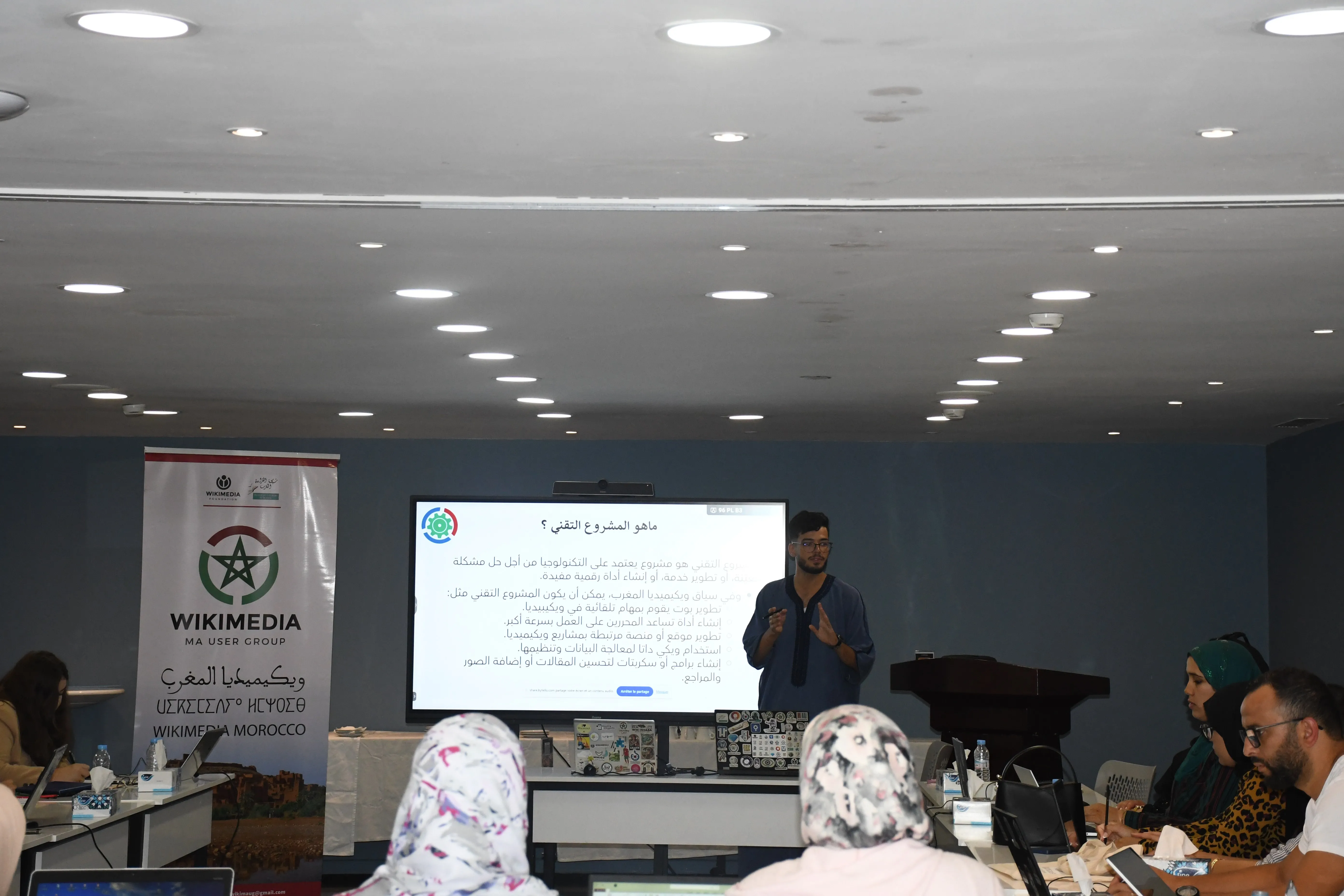

In August 2026, I had the privilege of leading a technical workshop in Casablanca, aimed at Moroccan educators who were already familiar with the **Reading Wikipedia in the Classroom** initiative. This workshop, part of the **Wikipedia in Education Workshop**, sought to elevate their understanding beyond just reading and editing Wikipedia articles, delving into the intricate technical infrastructure that supports the entire Wikimedia ecosystem.
Exploring the Broader Wikimedia Ecosystem
For many newcomers, the allure of Wikipedia stems from its vast repository of articles and references, often overlooking the extensive network of interconnected projects and tools that underpin it. My goal during the workshop was to shed light on this often-invisible layer of the Wikimedia ecosystem, emphasizing that contributing to free knowledge encompasses a wide array of activities beyond traditional article editing.
We engaged in discussions about the interconnectivity of Wikimedia projects and how a single contribution can ripple through multiple languages and platforms. This exploration revealed to participants the rich tapestry of collaboration that defines the Wikimedia movement, encouraging them to think about their contributions in new and diverse ways.
Diving into Wikidata and Technical Skills
A significant portion of our workshop was dedicated to **Wikidata**, where participants discovered how Wikipedia articles align with Wikidata items. We examined the structured information housed in Wikidata and its crucial role in supporting various Wikimedia projects. By dissecting the fundamental components of a Wikidata item—such as items and identifiers, labels, descriptions, statements, and properties—participants gained insight into how knowledge can be organized as structured, reusable data. This perspective was particularly enlightening for those who primarily viewed Wikipedia through the lens of reading and editing.
Additionally, we introduced **[WikiTechMa](https://meta.wikimedia.org/wiki/WikiTechMa_%E2%80%94_Wikimedia_Morocco_Technical_Initiative)**, an initiative designed to engage individuals interested in the technical aspects of the Wikimedia movement in Morocco. The intention was not to transform every participant into a developer but rather to highlight the myriad opportunities available for those passionate about technology, data, and problem-solving within the Wikimedia framework. This dialogue opened avenues for exploring how technical expertise can bolster Wikimedia communities, inviting contributors from diverse backgrounds to partake in the collective endeavor of enhancing free knowledge.
Our workshop was not merely theoretical; participants actively engaged with the Wikimedia ecosystem, exploring the interconnections between Wikipedia and Wikidata. They navigated various Wikimedia projects and applied the concepts discussed, solidifying their understanding of Wikipedia's role within a larger collaborative knowledge infrastructure.
One of the most significant takeaways was the connection between education, technology, and the Wikimedia movement. Educators are not just potential Wikipedia editors; they are instrumental in guiding students on how digital knowledge is constructed, organized, verified, and reused. Familiarizing teachers with projects like Wikidata enhances broader digital and information literacy, positioning a Wikipedia article as a starting point for deeper learning rather than an endpoint.
Looking ahead, the workshop illustrated that even those without a programming background could grasp technical topics within the Wikimedia sphere through practical examples linked to familiar Wikipedia activities. I am hopeful that the teachers who participated will continue to explore the vast resources of Wikipedia, Wikidata, and Wikimedia Commons, eventually passing on these insights to their students. Facilitating this workshop allowed me to share my passion for understanding not only how to contribute to free knowledge, but also the intricate infrastructure that supports it.
As reported by diff.wikimedia.org.