Empowering Women Through Dialogue and Reform
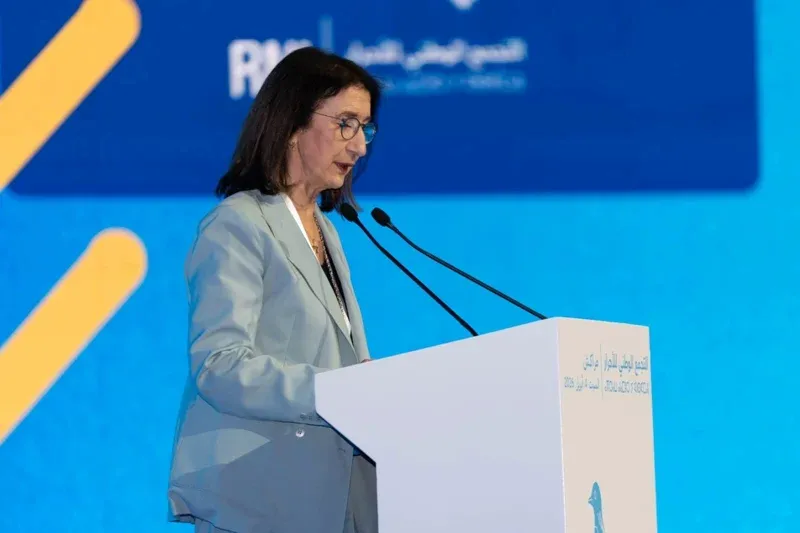
Amineh Benkhdra, the President of the National Federation of Gathering Women, emphasized that the fourth edition of the Gathering Women's Summit serves as a crucial organizational and political platform aimed at revitalizing discussions regarding the role of women in the ongoing social and developmental reforms in Morocco. During the opening session held in Marrakech, under the theme "Women at the Heart of Major Social and Developmental Reforms," she stated that the event brings together active women who believe in their roles in societal building and contributing to the significant projects unfolding in Morocco. Benkhdra highlighted that the issues affecting Moroccan women are part of a democratic journey led by King Mohammed VI, which focuses on reinforcing their status as essential partners alongside men in achieving economic and social transformation.
Progress and Challenges for Moroccan Women
In her address, Benkhdra pointed out that the advancement of women's conditions is fundamental to constructing a modern and equitable Morocco, in line with royal directives and the spirit of the constitution. She underscored that Moroccan women have demonstrated high competencies and have significantly contributed across various development sectors. The National Rally of Independents has prioritized women's empowerment by placing it at the heart of its party project, complemented by the dynamic efforts of the National Federation of Gathering Women in advocating for women’s representation in political life.
BenKhdra also reviewed the transformations Morocco has undergone in recent decades, particularly during the reign of King Mohammed VI, which have manifested through substantial reforms, notably the Family Code, enhancing women's social and economic rights, and expanding their presence in elected institutions and decision-making positions. She noted that the current government continues to implement major social initiatives that focus on families and, by extension, women, through reforms in education and healthcare systems, the activation of direct social support programs, and initiatives to promote housing, investment, and job creation.
Furthermore, she provided numerical data reflecting the impact of these programs, highlighting that approximately 4 million families benefit from social support, amounting to around 12.5 million beneficiaries, including 5.5 million children, 420,000 widows, and over a million individuals over the age of 60, with significant financial allocations dedicated to funding these initiatives. Benkhdra regarded these reforms as a vital lever for improving the situation of women, particularly those in vulnerable conditions, and contributing to their empowerment within society. She stressed that the challenge today lies in transitioning from numerical representation to a qualitative and influential presence in decision-making roles. Additionally, she pointed out that women's economic empowerment remains contingent upon overcoming several challenges, particularly regarding access to finance and training, especially in rural areas, urging support for women's initiatives and fostering entrepreneurship.
In conclusion, Benkhdra called upon women to continue engaging in political and social work and to contribute to the reform and development processes that reinforce the position of women as key partners in building a dignified and progressive Morocco. As reported by hespress.com.