
Strengthening Access to Drinking Water in Rural Areas
The Regional Multi-Service Company (SRM) Casablanca-Settat is playing a pivotal role alongside regional authorities in implementing a comprehensive program aimed at enhancing the supply of drinking water in various centers and rural douars. This initiative specifically targets underserved rural areas, addressing the critical need for reliable water access. In total, the program encompasses 446 centers and douars that are set to benefit from an array of planned operations. This initiative is part of the National Drinking Water Supply and Irrigation Program (PNAEPI) for the years 2020-2027, with a total budget estimated at 350.8 million dirhams (MDH). This financial allocation includes funding for studies, technical assistance, and land acquisition. The financing is mainly provided by the Ministry of the Interior, contributing 245.6 MDH, while the General Directorate of Local Authorities supports it with 105.2 MDH.
Key Investment Areas and Ongoing Projects
The program spans several provinces within Casablanca-Settat, including Settat, Berrechid, Benslimane, El Jadida, and Sidi Bennour. Investments are categorized into three primary areas of intervention. A budget of 150 MDH is allocated for improving drinking water supply to 25 centers. Additionally, 150.8 MDH is earmarked for enhancing water service to 341 douars, and 50 MDH will fund the development of water points in 80 additional douars. Beyond the significant financial investments, the program aims to tackle disparities in access to drinking water, bringing this essential service closer to rural populations.
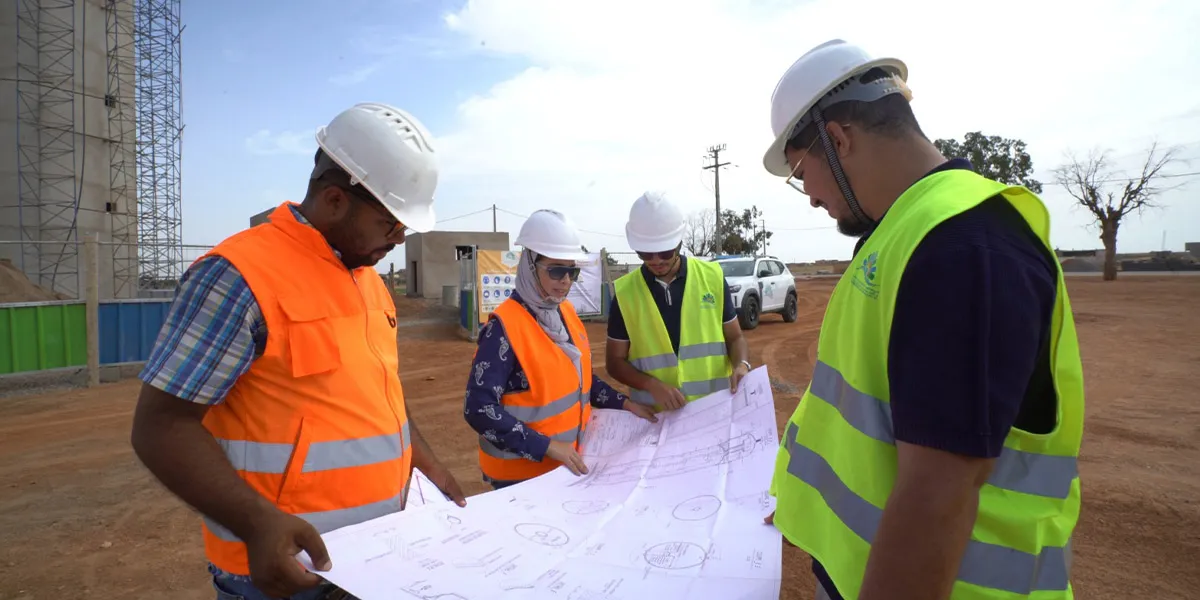
The nature of the projects entails the construction and reinforcement of critical infrastructure necessary for ensuring a stable drinking water supply in the designated areas. The SRM Casablanca-Settat is directly responsible for managing projects worth approximately 44 MDH, particularly in the provinces of Sidi Bennour and El Jadida. Their involvement encompasses the entire project lifecycle, from preparation and contract management to monitoring, control, and the acceptance of completed works.
In Sidi Bennour province, significant progress has been made, with ongoing projects achieving a completion rate of 90%. These projects cover six centers, including Sebt Lamaarif, Ouled Amrane, M’Tal, Metrane, Ouled Si Bouhya, and Bni Hilal, with an overall investment of 35 MDH. Key activities include the construction and reinforcement of drinking water networks, elevated reservoirs, and associated equipment, along with the establishment of booster stations and individual connections.
Meanwhile, in El Jadida, a separate initiative valued at approximately 8.6 MDH has been successfully completed. This project involved the provision of drinking water to the center of Sidi Hssein Ben Abderrahmane and six douars under the Ouled Hcine municipality. It features 19 kilometers of pipelines, nine water fountains, a 150 m³ elevated reservoir, and enhancements to the pumping station, benefiting around 1,200 households, which equates to nearly 6,000 residents.
As reported by leseco.ma.