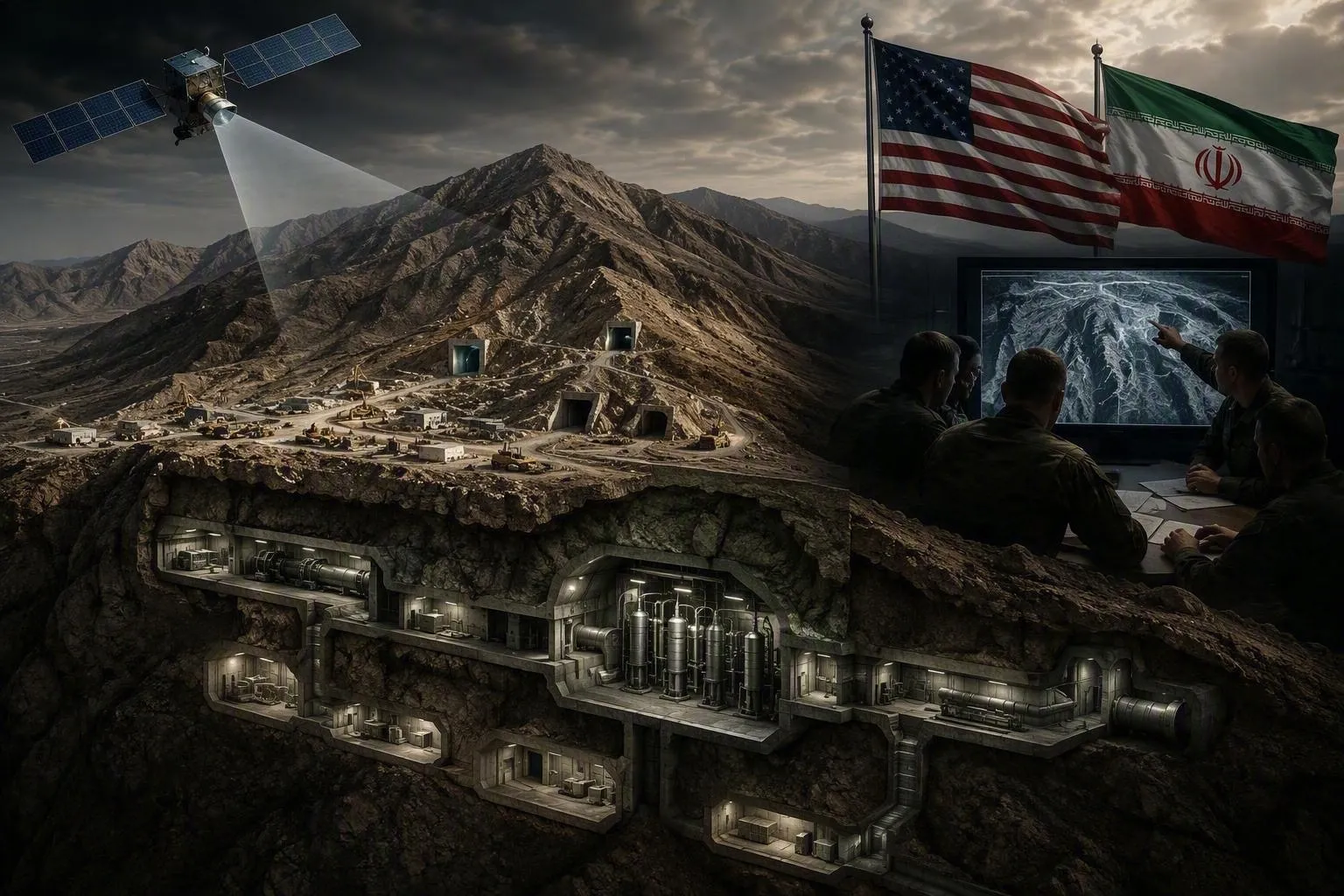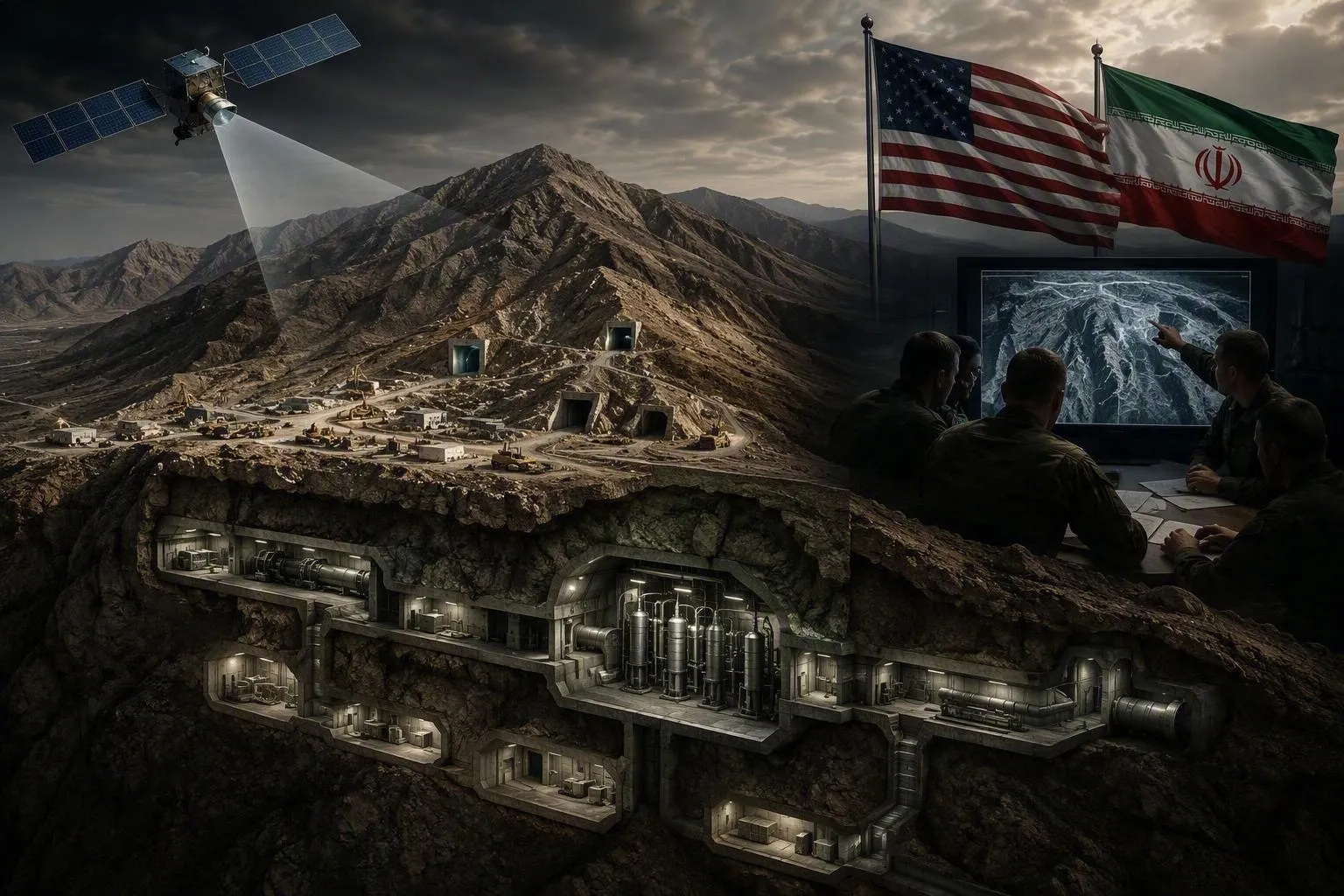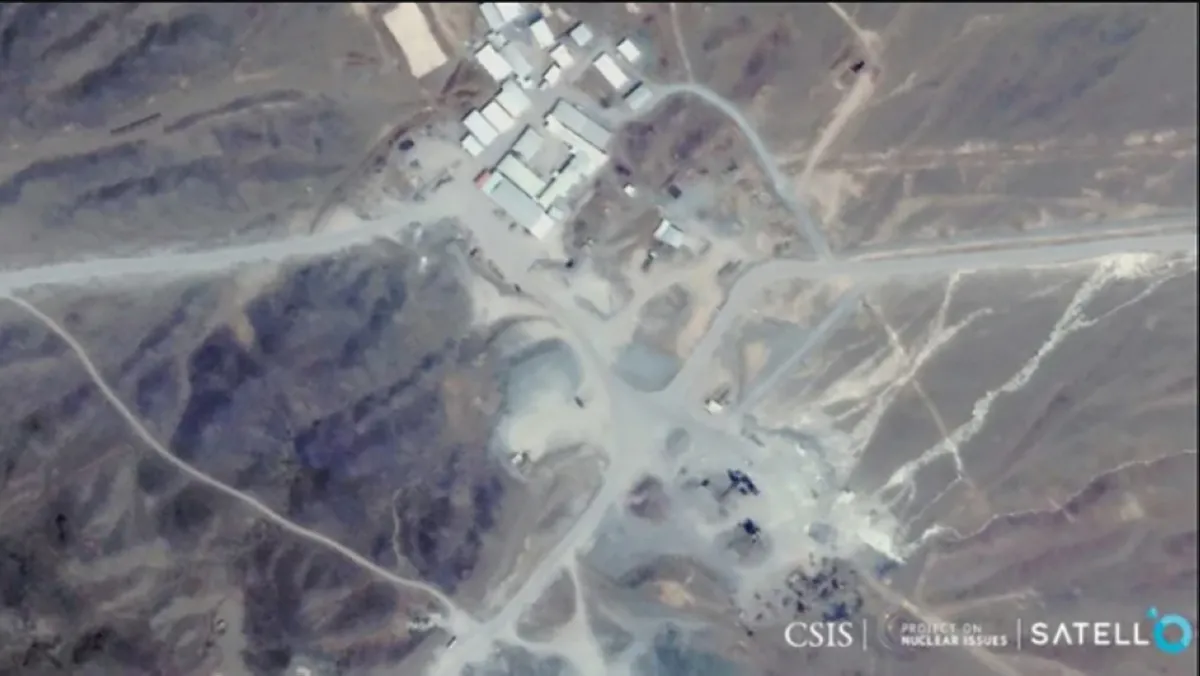

Recent analysis of satellite images released by an American research center has revealed a significant acceleration in construction activities at a fortified Iranian site deep within the Kolang Mountain (also known as Mount Fahas) near Natanz, anticipated for completion by 2026. Western intelligence agencies suspect that Tehran is clandestinely building a uranium enrichment facility at this location. Furthermore, CNN has reported ongoing American efforts to devise plans to target this site, especially with the increasing construction activities suggesting it may serve as a secure refuge for Iran's nuclear program.
The satellite images, the most recent of which were captured on August 9, indicate intensified work on fortifying tunnel entrances and enhancing internal road networks. However, experts have stated that they could neither confirm nor refute Israeli intelligence reports regarding the transfer of centrifuges to this location, a site that former U.S. President Donald Trump threatened to strike in July.
Experts from the Center for Strategic and International Studies, based in Washington, analyzed satellite images taken over a six-year period, with the latest from August 9. They noted that these combined images reveal construction activity in Kolang Mountain during 2026 that surpasses any recorded since the establishment of the site. They highlighted a clear increase in construction efforts in 2026, which includes the elevation and fortification of tunnel entrances, the paving of internal road networks, reinforcement of surrounding areas, and the removal of excavation debris.
In July, Trump emphasized, 'We will bomb this site soon and with great force,' yet he did not act on his threat. The International Atomic Energy Agency has requested information from Tehran regarding Kolang Mountain and sought access to the site. According to reports from the Center for Strategic and International Studies, Iran has not responded to these requests. Experts have pointed out that demolishing the fortified facility embedded within a granite mass at such significant depth would be challenging, even with the heaviest non-nuclear munitions available to the U.S.
As reported by alraimedia.com.