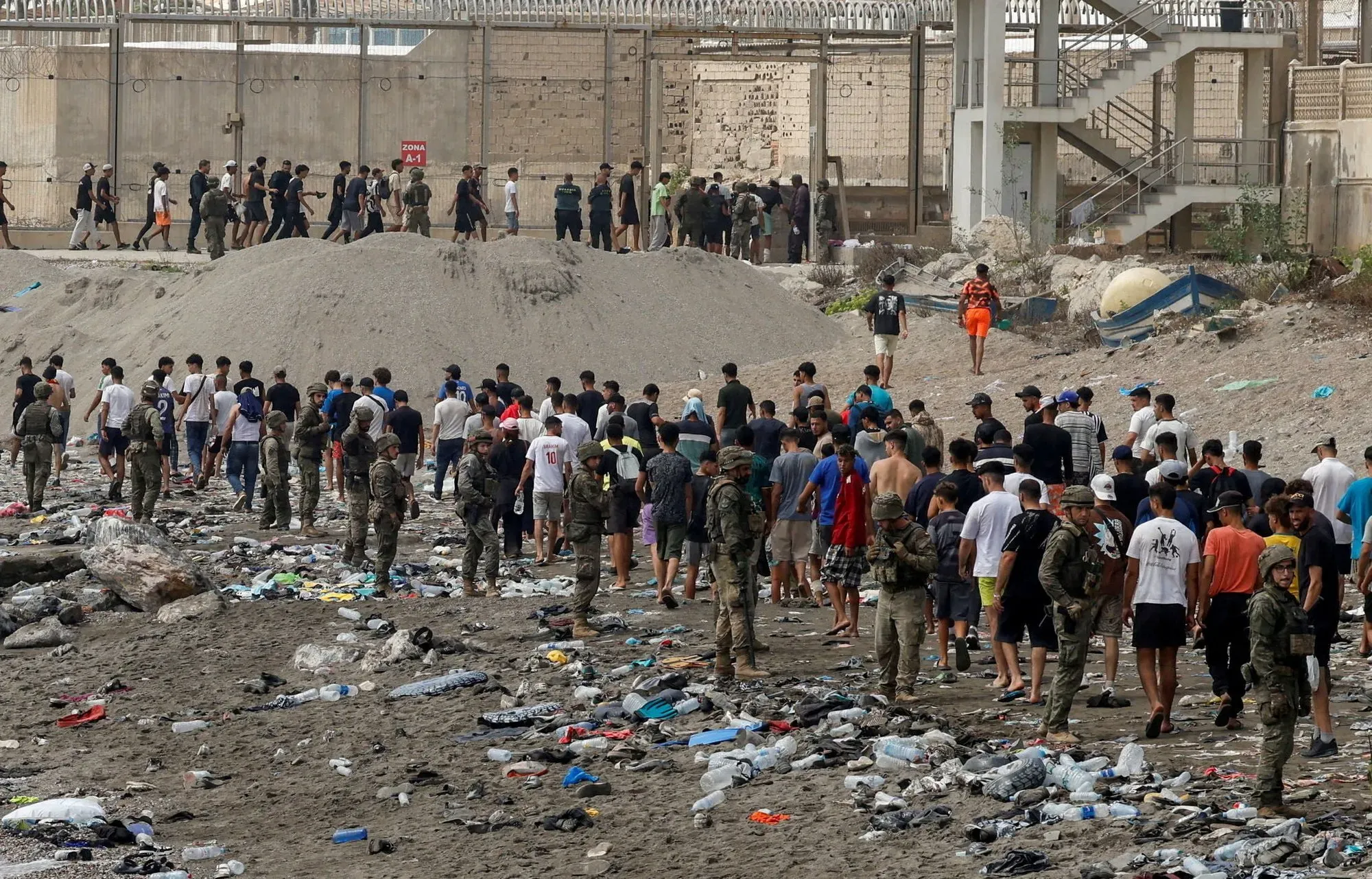

Daily Incidents of Sexual Assault Amid Migrant Influx in Ceuta
Ceuta, a Spanish enclave located on the northern coast of Africa, has been grappling with a concerning rise in sexual assaults since the significant influx of migrants that occurred at the end of July. According to Spanish prosecutors, there have been 23 reported sexual assaults in the area since this crisis began, with a particularly alarming nine cases involving minors. Chief prosecutor Silvia Rojas elaborated on the dire situation, stating that this statistic translates to nearly one assault per day. He emphasized that migrant girls find themselves in a precarious position, made even more vulnerable by their irregular status within the territory.
The migrant surge reached its peak when over 72,000 individuals crossed from Morocco into Ceuta over the course of just two days, specifically on July 30 and 31. While many of these migrants have since returned to Morocco, approximately 5,000 remain in Ceuta, contributing to escalating tensions and unrest in the city. This crisis has not only impacted local communities but has also posed a significant political challenge for Spanish Prime Minister Pedro Sánchez, who faces mounting pressure regarding his government's response to the situation.
Violence Erupts Amidst Tensions and Political Fallout
Reports indicate that among those still in Ceuta, between 1,400 and 1,600 are children. The suspects involved in the recent sexual assaults include a mix of Moroccan nationals, Spaniards, and a Belgian national, according to the Efe news agency. The increase in migrant arrivals has coincided with a sharp rise in violent incidents, leading to a situation where many victims of sexual assault are hesitant to come forward, largely due to fear and their precarious circumstances. The Spanish Society of Epidemiology has highlighted the complexities of identifying and addressing violence against migrant women and girls, underscoring the urgent need for effective support and protection mechanisms.
Local tensions have escalated further in recent days, resulting in violent confrontations between migrants and residents. In response, Prime Minister Sánchez convened a national security council meeting for the second time within a week to address the ongoing crisis. Emergency medical personnel at Ceuta University Hospital have reported treating numerous victims of sexual violence, including a shocking case involving a 10-year-old child. In light of these events, the Spanish government has approved a multi-million euro aid package aimed at improving essential services and supporting unaccompanied minors.
As the situation develops, Ceuta's mayor, Juan Jesús Vivas, has called for demonstrations across mainland Spain to show solidarity with the city, coinciding with its annual holiday. Nevertheless, Sánchez's government has faced severe criticism for its handling of the crisis, particularly from the right-wing Vox party, which has accused the Prime Minister of losing control over Ceuta. Vivas himself has stated that without a clear government plan to address the migrant situation, local residents feel powerless.
Prime Minister Sánchez has also announced that King Felipe VI is expected to visit Ceuta as soon as conditions allow, a maneuver perceived as a bid to reinforce Spanish control over the territory. This visit would mark the first time a Spanish monarch has set foot in Ceuta in two decades, as the last visit occurred in 2007. Discussions surrounding the migrant crisis have also highlighted Morocco's longstanding dispute over Spanish control of Ceuta and Melilla, another Spanish enclave nearby. Sánchez has refrained from directly blaming Morocco for the influx of migrants, suggesting instead that disinformation campaigns are at play, with potential links to international far-right movements aiming to exploit the situation to destabilize Spain and Europe.
Despite the turmoil, it is evident that the ramifications of this crisis extend far beyond Ceuta, impacting national politics and international relations. As Spain grapples with these pressing issues, the need for a comprehensive and humane approach to migration and the protection of vulnerable populations has never been more critical.
As reported by gbnews.com.