

The recent migration crisis in the Spanish city of Ceuta has ignited an unprecedented wave of hostile rhetoric directed towards Morocco, with some statements transcending mere political criticism and diplomatic tension. This has manifestly included alarming terms such as "invasion," "war," and "blockade," with even explicit calls for military action including firing upon and bombarding the Moroccan capital of Rabat. This escalation indicates a troubling shift among certain political, religious, and media circles in Spain, where the issue of immigration and border management has morphed into an identity confrontation that revives the language of historical conflicts between the two shores of the Mediterranean.
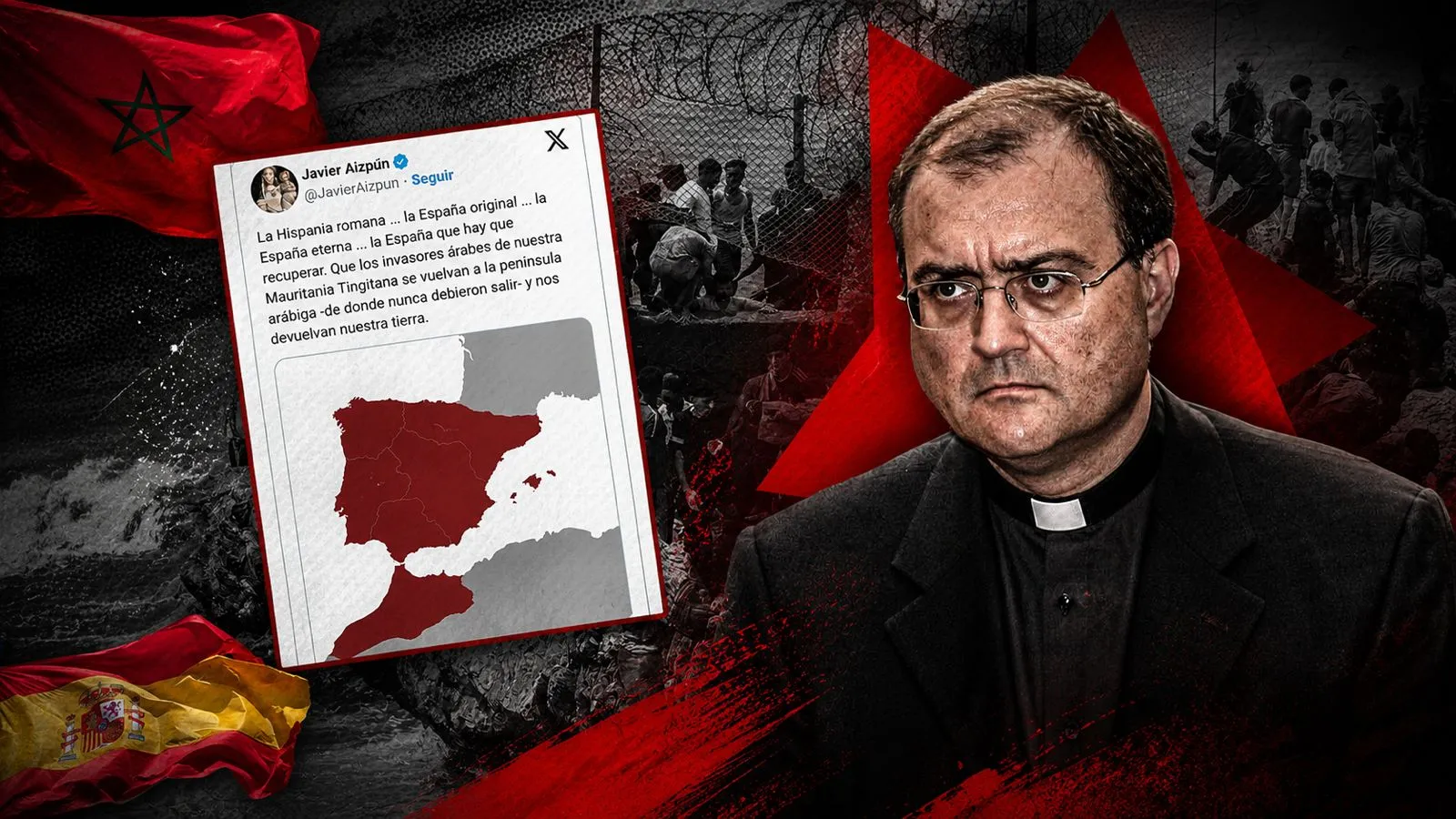
One of the most notable comments came from Javier Aithbon, a priest from the parish of Huarte and a member of the cathedral clergy in Pamplona, who following the mass influx towards Ceuta, called for the "re-conquest of Morocco and its conversion to Christianity." He referenced a supposed directive from Queen Isabella the Catholic, stating, "What Queen Isabella left unfinished, let us know how to complete." This rhetoric harks back to a historical edict attributed to the queen, urging her successors not to cease their "conquest of Africa." In juxtaposition, some Arabic writings circulate a different phrase attributed to her, claiming that "the only good for Spain is for Morocco to remain fragmented, ignorant, poor, and perpetually sick."
Aithbon did not limit his inflammatory discourse to historical references; he further called for "intense gunfire" against those he termed "invaders," and even suggested the bombing of Rabat if necessary, framing this within a vision of reclaiming Northern Morocco for what he termed "eternal Spain." The danger of Aithbon's remarks lies in their framing of migration not as a humanitarian or security crisis but rather as a matter of "reconquest," echoing the agenda pursued by Queen Isabella against Muslims in the Iberian Peninsula. This dialogue imbues the current political disagreement with a religious dimension, portraying the situation as a battle between Christianity and Islam, thus reviving a discourse that many believed had been left behind centuries ago.
Moreover, the warlike language has not been confined to fringe extremist voices. Santiago Abascal, leader of the Vox party, described the events in Ceuta as an "invasion," advocating for the permanent militarization of the borders and the closure of the crossing with Morocco until guarantees from Rabat are obtained to prevent a recurrence of such events. Samuel Vasquez, the party's immigration and security official, adopted a combative tone by urging residents to "defend their families with whatever they have," a statement that has raised concerns about inciting confrontation and civil violence. Similarly, Alberto Núñez Feijóo, leader of the Popular Party, labeled the crisis as a "managed occupation," attributing the Spanish government's delayed response as a failure to adequately address what he perceives as an assault on national sovereignty. Although his rhetoric was less extreme than calls for bombing and shooting, his use of the term "occupation" has similarly shifted the discourse from one of irregular migration to military conflict.
This trend was echoed by the President of Ceuta, Juan Jesús Vivas, who described the city as being "under siege," suggesting that the migration pressure had escalated to a direct threat against the unity and territorial integrity of Spain. Additionally, far-right European Parliament member Alves Pérez called for a declaration of "state of siege" and military intervention, while extremist factions used terms like "fighting-age men" to refer to young migrants arriving from Morocco.
Simultaneously, protests erupted outside the Moroccan embassy in Madrid, where anti-Muslim and anti-immigrant slogans were chanted, alongside Nazi symbols and gestures, coupled with calls to protect "Christian Spain." Within days, terms like invasion, siege, reconquest, conversion, and bombardment have intertwined, revealing that the Ceuta crisis has not only sparked a new tension between Madrid and Rabat but has also opened the door for a historically antagonistic narrative that depicts Morocco as a civilizational and military adversary.
While these statements do not represent the entirety of Spanish society or its institutions, the fact that they originate from religious leaders, political figures, and elected representatives adds a particular gravity. They contribute to transforming the Moroccan migrant into an "enemy" and frame the bilateral relations within a context of war rather than maintaining them within a political and security dispute that could be managed through dialogue and cooperation.
As reported by assahifa.com.
