
New Strains in Spanish-Algerian Relations
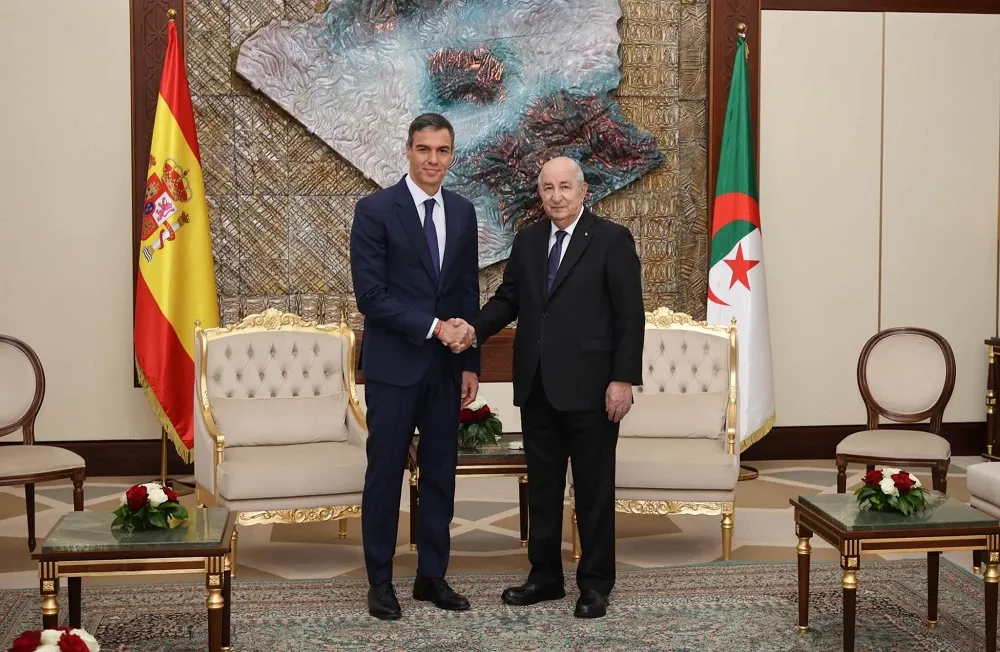
The Spanish-Algerian relationship finds itself on the brink of a new phase of tension following the decision made by Prime Minister Pedro Sánchez's government to indefinitely postpone a high-level summit that was scheduled to take place in Madrid on October 20 and 21. This unexpected move has reportedly taken Algerian authorities by surprise, especially since official preparations for the summit had reached advanced stages. According to the Spanish newspaper "The Objective," diplomatic sources indicated that Madrid notified Algiers just hours before the announcement, stating that the meeting, which was anticipated to bring together Sánchez and Algerian President Abdelmadjid Tebboune along with various political, economic, and business representatives from both nations, would no longer proceed as planned.
Sensitive Timing for Diplomatic Relations
This decision comes at a particularly sensitive diplomatic juncture for Spain, as Madrid is gearing up for the visit of King Felipe VI and Queen Letizia to Ceuta and Melilla on October 13 and 14. The timing of this royal visit has raised concerns regarding Morocco's reaction, given that Rabat views these cities as integral parts of its territory. Sources suggest that the preparations for the royal visit were a contributing factor to the Spanish government's decision to postpone the summit with Algeria, in order to avoid the delicate situation of simultaneously managing relations with both Algeria, a regional rival of Morocco, and the impending royal engagements in Ceuta and Melilla.
This situation highlights the sensitivity inherent in the balance of relations that Spain maintains with both Rabat and Algiers, particularly given the extensive strategic interests Spain has with each country. The Spanish newspaper noted the possibility that Morocco may respond with diplomatic protests against the royal visit, recalling the incident in 2007 when Rabat withdrew its ambassador from Madrid following a royal visit to the disputed cities.
The postponement of the Spanish-Algerian summit follows recent indications that suggested a potential thawing in the relationship between Madrid and Algiers. Thus far, the Sánchez government has not announced a new date for the high-level summit. Previously, Spanish Foreign Minister José Manuel Albares met with his Algerian counterpart, Ahmed Attaf, on the sidelines of the United Nations General Assembly, where he reaffirmed both countries' commitment to strengthening ties and ensuring stability and prosperity in the Mediterranean region.
Prime Minister Sánchez had visited Algeria on July 20, meeting with President Tebboune to agree on holding a high-level meeting in October, aimed at overcoming the differences that have characterized bilateral relations in recent years. Notably, this was the first high-level meeting of its kind since April 2018, under former Prime Minister Mariano Rajoy. Sánchez's visit marked a significant step in the effort to restore relations, culminating in an agreement to increase Spain's imports of Algerian gas, particularly following the diplomatic fallout resulting from Madrid's shift in stance regarding the Western Sahara conflict in 2022, where it supported Morocco's autonomy proposal as a basis for resolution.
However, recent weeks have seen a new test of this relationship, largely stemming from the case of Algerian businessman and opposition figure Ayoub Aissiou, who was detained in Spain at Algeria's request for extradition. After spending 41 days in jail, the Spanish National Court decided to temporarily release him on September 4, but imposed several precautionary measures, including the withdrawal of his passport and restrictions on his movement within the country. Despite his release, the issue of extradition remains unresolved, as the Spanish judiciary still needs to rule on Algeria's request. Aissiou has claimed that his case is politically motivated and opposes his extradition, warning that it could have repercussions for Madrid-Algiers relations.
The postponement of the October summit places Sánchez's government at a critical juncture in managing its Maghreb relationships, as it seeks to maintain the rapprochement built with Morocco over recent years, which has faced significant strain following the events in Ceuta at the end of July. Simultaneously, Madrid is working to rebuild cooperation channels with Algeria, particularly in the energy sector.
As reported by assahifa.com.