
Recent developments have marked a significant shift in the dynamics of U.S.-Iranian tensions, as American military strikes now extend beyond the Iranian coastline along the Gulf and venture deeper into Iranian territory. This strategic transition reflects a move away from targeting naval capabilities and instead focuses on crippling Iran's logistical and supply systems. Concurrently, American threats have intensified, particularly regarding fortified nuclear sites, with the 'Jabal al-Faas' complex near the Natanz facility in the heart of Iran's desert region in Isfahan coming under scrutiny.
This escalation comes amid ongoing confrontations between Washington and Tehran on multiple fronts, characterized by a tightening American maritime blockade and reciprocal Iranian actions aimed at U.S. vessels and bases in the region. The situation has been exacerbated by President Donald Trump's threats to broaden the target list within Iran, heightening the stakes of this geopolitical chess game.
Widening the Scope of Attacks
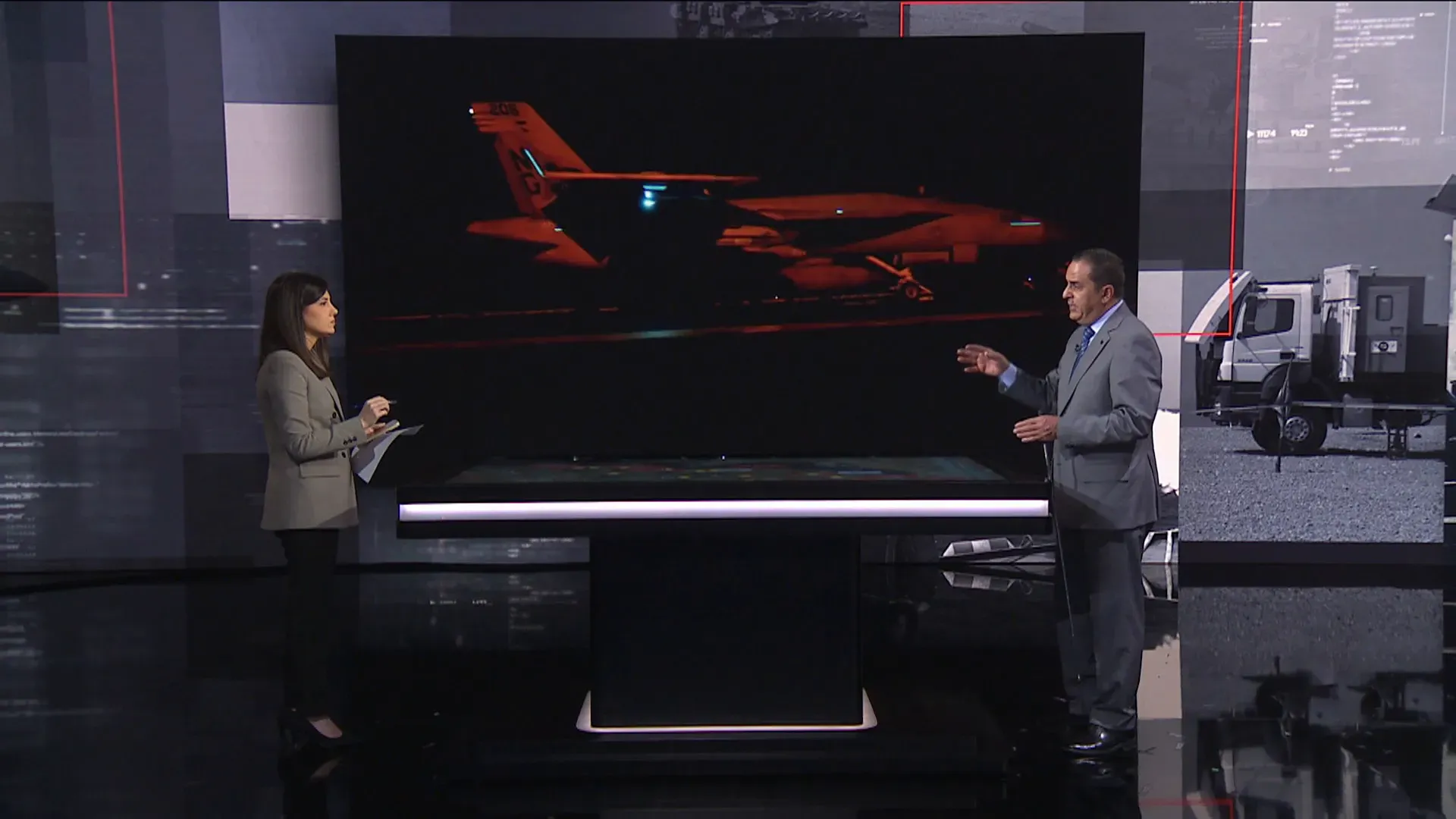
As analyst Mahmoud Al-Zaybaq detailed through an interactive display, the recent wave of U.S. strikes has spanned a broad geographic area, targeting locations from Chabahar and Konarak to Bandar Abbas, Kish, Abu Musa, and Bushehr, illustrating a comprehensive operation that initially concentrated on the coastal regions of Iran. Reports from Iran indicate casualties among both military personnel and civilians, while the U.S. has released imagery purportedly documenting strikes on facilities in Bandar Abbas. In response, Iran has continued its retaliatory measures by attacking U.S. bases in Bahrain and Jordan, as well as targeting Emirati tankers in the southern passage of the strategic Strait of Hormuz.
The maritime tension has been palpable, with shipping traffic through the Strait showing signs of severe disruption. Tehran remains adamant in rejecting the use of the southern passage recently opened by Oman, viewing it as an illegitimate route that undermines their control over the vital chokepoint. Moreover, military expert Colonel Nidal Abu Zaid remarked on the simultaneous attack on three vessels coinciding with the start of the American blockade, suggesting that Tehran aims to convey a message of its capability to threaten maritime navigation, even if direct hits on U.S. bases are presently unattainable.
Strategic Shifts and Military Methodologies
In a broader military assessment, Abu Zaid highlighted the most significant evolution in the conflict—the shift in the operational focus of American strikes from Iran's western coast to deeper inland targets. Recent attacks have reached as far as Khorramabad and Kerman, moving away from initial strikes aimed at coastal naval bases to disrupt logistical lines supporting those positions. This so-called 'fire-cleansing' operation aims to systematically dismantle Iran's military infrastructure. Previously targeted installations included the Imam Ali naval base in Bandar Abbas and other maritime facilities in Bushehr, before the focus shifted to essential support areas for coastal forces.
The methodology behind these strikes has become increasingly precise. The U.S. military now employs a refined operational cycle that includes identifying targets, tracking them, executing strikes, and then assessing damage via reconnaissance drones. This approach explains the repeated targeting of specific sites. The recent claim by Iran regarding the downing of a U.S. reconnaissance drone indicates the significance of such surveillance aircraft in evaluating damage before launching subsequent waves of strikes, optimizing firepower efficiency while minimizing ordnance expenditure.
Trump's renewed emphasis on the 'Jabal al-Faas' site—a heavily fortified complex located south of Tehran near the Natanz facility—has added another layer of tension. American intelligence suspects this facility may serve as a covert alternative for uranium enrichment, while Tehran maintains it is intended for assembling advanced centrifuges. Situated within the Zagros mountain range, the site is surrounded by complex rocky terrain, granting it an exceptional level of fortification, making it one of the most challenging military targets. Estimates suggest that its installations are buried deep within solid rock, necessitating the use of specialized penetrative munitions. This geographical and strategic significance underscores the complexities involved in any potential confrontation between Washington and Tehran.
As reported by aljazeera.net.