

Rising Tensions in Ceuta: A Hybrid Attack on Spain’s Sovereignty
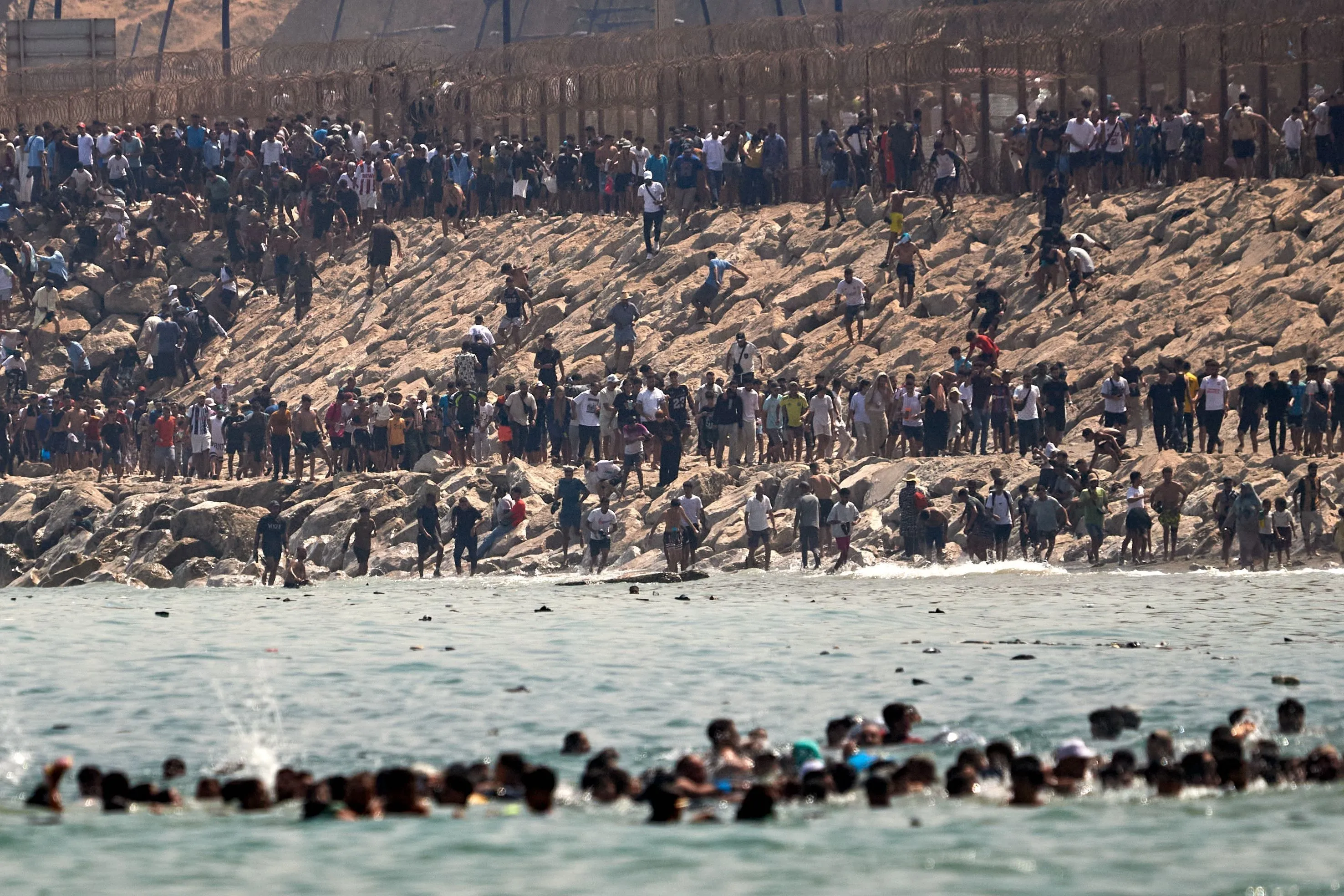
In recent days, a significant influx of migrants in Ceuta has sparked a wave of concerns among European Union (EU) leaders, who are increasingly labeling this crisis as a 'hybrid attack' on Spain's sovereignty. This assertion has been supported by four EU diplomats and two officials who highlighted that such an overwhelming surge of tens of thousands of migrants could not have occurred without the implicit approval of Morocco. This situation has prompted 22 EU heads of state, including German Chancellor Friedrich Merz, to issue an open letter emphasizing that the EU cannot allow the 'instrumentalization of migration or other hybrid threats.'
Official estimates indicate that within a mere 48 hours, over 50,000 individuals attempted to breach the borders of the Spanish enclave, although most have since returned to Morocco. Tragically, the death toll has risen to 72, raising alarms about the humanitarian implications of this crisis. In his initial response, Spanish Prime Minister Pedro Sánchez characterized the situation as an 'attack' and a violation of Spain's territorial integrity. However, he also acknowledged the 'very reasonable cooperation with the countries of origin and transit' while carefully avoiding direct criticism of Morocco.
This unfolding scenario not only highlights the complexities of migration policies within the EU but also raises questions about the relationships between member states and neighboring countries. As the situation develops, it is crucial for the EU to address the multifaceted challenges presented by such crises, ensuring that both humanitarian concerns and national sovereignties are respected.
As reported by handelsblatt.com.
