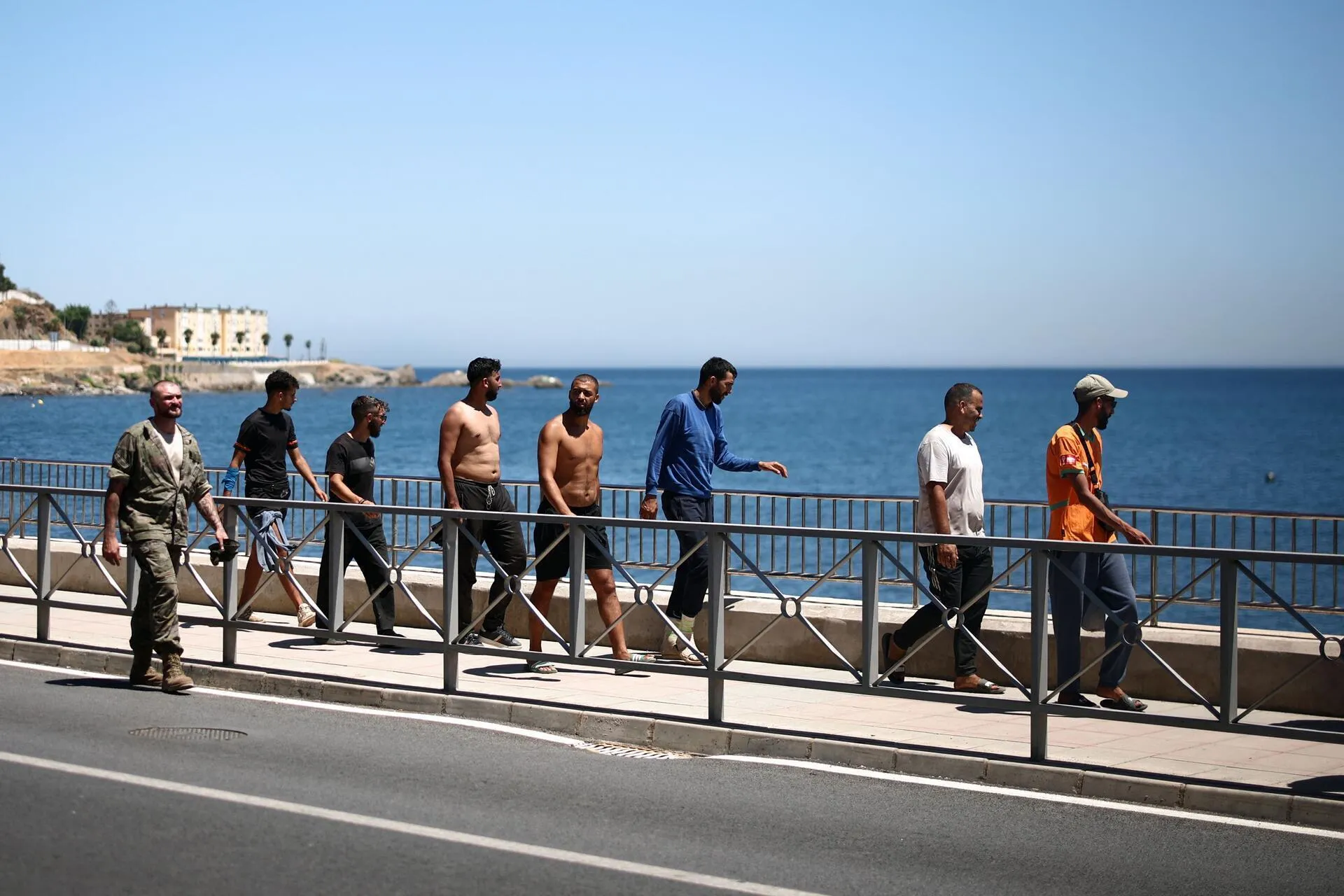

The recent surge of irregular migrants in the Spanish enclave of Ceuta has sparked significant discussions within the European Parliament, particularly during a session of the Committee on Civil Liberties, Justice, and Home Affairs. On Thursday, the Mayor and President of Ceuta, Juan Jesús Vivas, voiced his concerns and criticisms towards Morocco, highlighting the challenges posed by the influx of migrants that occurred last week.
Last Sunday saw a remarkable return of a large group of men to Morocco, following an unprecedented event where over 70,000 individuals crossed from Morocco into the Spanish enclave in just a few days. The rapidity of this situation has left many in the EU grappling with the implications and potential policy responses. Belgian Green politician Saskia Bricmont pointed out that the extraordinary session was convened in part due to the outrage expressed by right-wing factions, including the far-right group 'Patriots for Europe' (PfE), which has called for further discussions on the matter.
In the wake of the crisis, tensions have somewhat eased, particularly after 22 EU heads of state and government expressed their concerns about the situation in Ceuta, primarily focusing their criticism on Spain. During an extraordinary meeting on Tuesday, EU interior ministers united in showing their full solidarity with Spain. By this time, most of the individuals who had crossed into Ceuta had already returned to Morocco. German S&D MEP Birgit Sippel remarked that this situation served as a test of whether EU nations would stand together, and she concluded that they had indeed fallen short in this regard.
In other international news, reports have surfaced indicating that Iran has threatened the Gulf states with attacks on power plants and desalination facilities, amid fears of potential U.S. strikes on Iranian energy infrastructure. Meanwhile, a drone loaded with explosives was discovered at Leipzig/Halle Airport, found near a Ukrainian transport aircraft, leading German Interior Minister to suspect highly professional operatives behind the incident.
Latin America is seeing a significant shift to the right. The narrow victory of Abelardo de la Espriella in the Colombian presidential runoff on June 21 marks another step in this direction, underscoring the country’s deep political divide. The incoming president has already begun preparations ahead of his inauguration on August 7.
As reported by tageblatt.lu.