
Europe Acknowledges Morocco's Role in Ceuta Migration Management
The European Commission has recently expressed its appreciation for Morocco's significant cooperation in managing the influx of migrants during the crisis that occurred in Ceuta on July 29 and 30. This acknowledgment came in response to inquiries from Marieki Eilers, a member of the European Parliament representing the 'Patriots for Europe' group. In her statement, Dubravka Suica, the European Commissioner for Mediterranean Affairs, emphasized that Morocco's swift action in facilitating the immediate return of migrants during this crisis underscores the importance of the relationship between the European Union (EU) and Morocco.
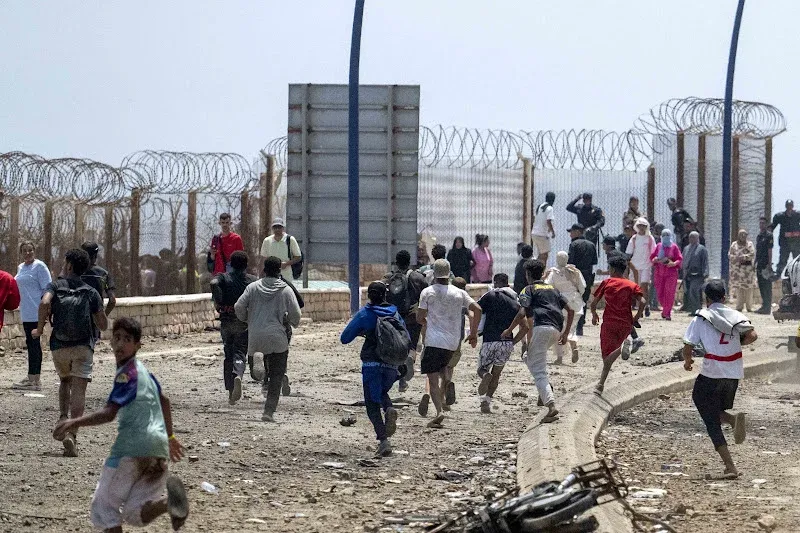
During the crisis, approximately 72,000 irregular migrants crossed the maritime border between Morocco and the Spanish enclave of Ceuta within a mere 24 hours. The Moroccan government played a crucial role by facilitating their immediate repatriation, with the vast majority of these individuals returned by August 4 of this year. Commissioner Suica highlighted that this incident reaffirms the depth and breadth of the EU-Morocco relationship, which requires a balanced and comprehensive approach that considers the full spectrum of EU interests, particularly in areas related to repatriation and readmission.
Furthermore, Suica noted that the EU-Morocco relations encompass a wide range of issues, including security, trade, investment, economic cooperation, and migration. Notably, the collaboration on migration itself is extensive, addressing various aspects such as border management, labor mobility, and the protection of migrants and refugees, supported by a comprehensive framework of political dialogue and financial cooperation. In response to questions regarding the European Investment Bank's announcement of new funding for a tramway network in the capital city of Rabat, the European Commission stated that the projects funded by the bank must align with EU objectives. In this specific case, the Commission approved funding for the infrastructure project in accordance with the stipulations outlined in Article 19 of the European Investment Bank's founding law, as connectivity is recognized as a key goal for the EU in Morocco.
In her closing remarks on migration issues, Suica emphasized that forthcoming repatriation regulations will enhance the importance of the external dimension of the EU's return policy. This provision aims to foster cooperation with third countries, ensuring that the external aspect of the return policy is an integral part of a comprehensive approach to migration management. She assured that any future funding from the European Investment Bank will continue to be scrutinized in accordance with the applicable legal framework.
Suica reiterated the European Commission's commitment to transparency and reporting in line with the regulations governing the EU budget, external action tools, guarantees, and cooperation with the European Investment Bank and other implementing partners. Information regarding EU funding is made available through the relevant budget, financial tools, and related reports, including the annual report on the implementation of the EU's external action tools.
In conclusion, Dubravka Suica reaffirmed that the Commission will maintain communication and interaction with Morocco concerning readmission and broader migration cooperation, ensuring that EU procedures remain compliant with EU law, foreign policy objectives, and the requirements associated with relevant financial instruments.
As reported by hespress.com.