European Commission's Stance on Migrant Returns from Ceuta
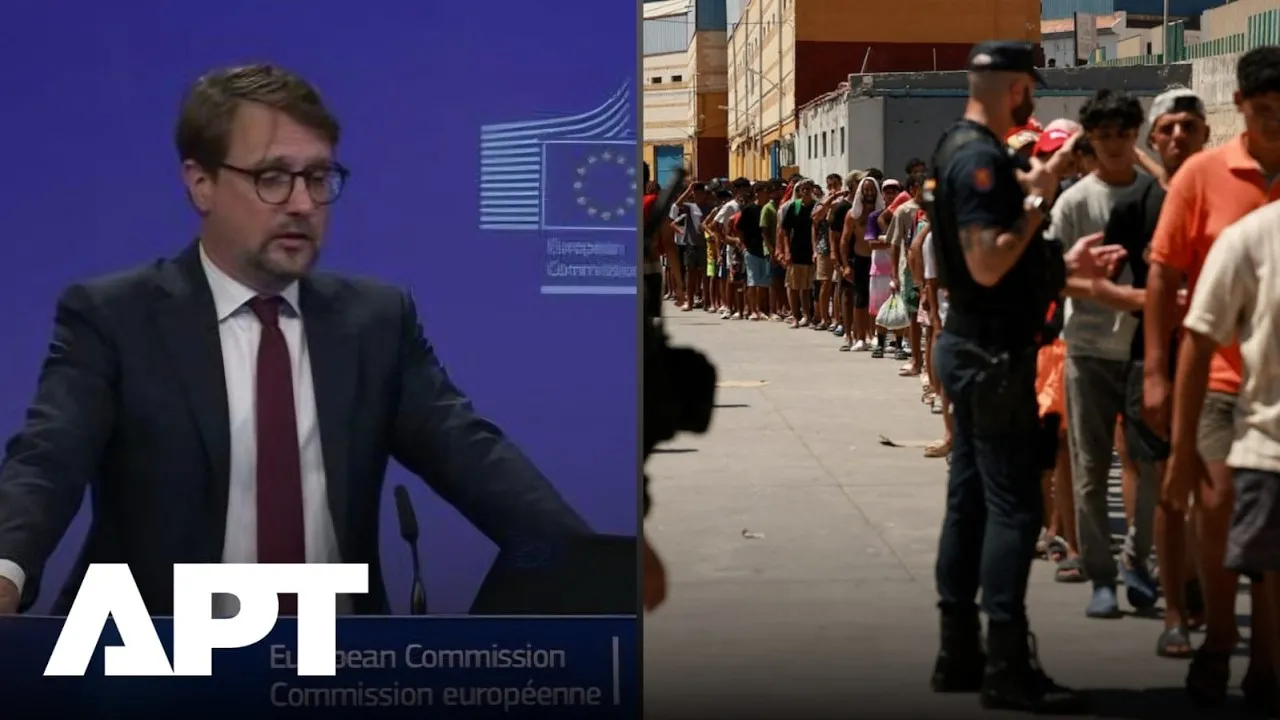
The European Commission has recently asserted that all migrants residing illegally in Ceuta should be returned to Morocco, which includes unaccompanied foreign minors who crossed into the autonomous city. This stance highlights the commitment of the European Union to uphold its legal framework regarding migrant returns. During a press conference in Brussels, Markus Lammert, the spokesperson for the Commission on Internal Affairs, emphasized that the expectation remains that all individuals unlawfully present in Ceuta will be returned to their country of origin. He praised the Spanish government's declaration that no one who is illegally in Ceuta will be transferred to the Iberian Peninsula.
When questioned about whether this directive also applies to minors, who are afforded special protections under community law, Lammert maintained that such matters are governed by EU law, particularly referencing the Return Directive established in 2008. This directive stipulates that the return of a minor can only occur after ensuring that the child receives assistance from relevant services, prioritizing the best interests of the child. Importantly, it mandates that before any unaccompanied minor is expelled from a member state's territory, it must be guaranteed that the child will be handed over to a family member, a designated guardian, or that adequate reception services are available in their home country.
Future of Unaccompanied Minors and EU Regulations
Community sources have conveyed to Europa Press that the return regulation agreed upon last June by the European Parliament and the Council is set to include provisions for unaccompanied minors that are quite similar to those outlined in the Return Directive. Although this regulation aims to tighten return policies and establish deportation centers outside EU territory, it expressly excludes unaccompanied minors from these agreements with third countries. Nonetheless, it introduces the potential for biometric controls to verify the age of minors and allows for their detention as a last resort, albeit for the shortest time possible, not exceeding 24 months.
Lammert reiterated the European Commission's expectation that all individuals unlawfully residing in Ceuta will be effectively returned, urging Spanish and Moroccan authorities to collaborate closely to ensure this process is executed smoothly. Following Morocco's intention to facilitate the return of all unaccompanied foreign minors, Lammert reaffirmed Brussels' offer to assist and support this initiative. He also welcomed Spain's announcement to increase its reception capacity to address the humanitarian situation faced by irregular migrants.
As reported by telecinco.es.