
European Union's Support for Moroccan Autonomy Plan
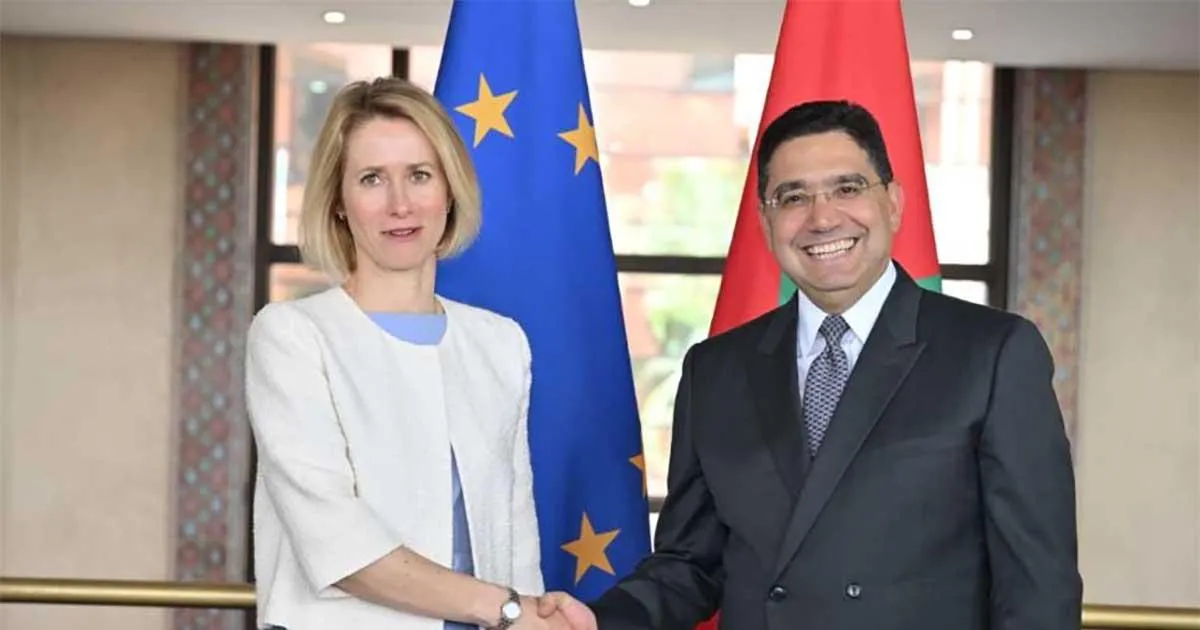
During a recent visit to Rabat, Kaja Kallas, the High Representative of the European Union for Foreign Affairs and Security Policy and Vice-President of the European Commission, articulated a significant shift in the EU's approach towards the Moroccan Sahara dispute. Kallas emphasized that a genuine autonomy plan, as proposed by Morocco, could serve as a viable solution for concluding this long-standing regional conflict. This statement comes in line with the EU's broader strategy of fostering dialogue among the involved parties, urging them to engage in negotiations without preconditions, with Morocco's Autonomy Proposal as a foundational element.
The joint communiqué issued post-meeting between Kallas and Morocco's Minister of Foreign Affairs, Nasser Bourita, underscored the EU's endorsement of Morocco's readiness to elucidate how autonomy would function under its sovereignty. This endorsement is pivotal, particularly in light of the recent adoption of UN Security Council resolution 2797 (2025), which reaffirms support for the Secretary-General and his Personal Envoy in facilitating negotiations based on the autonomy proposal put forth by Morocco.
Strengthening International Consensus
The EU's newfound stance not only reflects a consensus among its 27 member states but also serves as a critical signal ahead of the upcoming UN Security Council meeting. In addition to the EU's backing, several individual European nations have publicly affirmed their support for Morocco's sovereignty over the Sahara and its proposed Autonomy Plan. This collective international momentum, spearheaded by King Mohammed VI, indicates a robust commitment to resolving the regional dispute through a framework that respects Morocco's territorial integrity while offering a path towards autonomy.
As reported by middle-east-online.com.