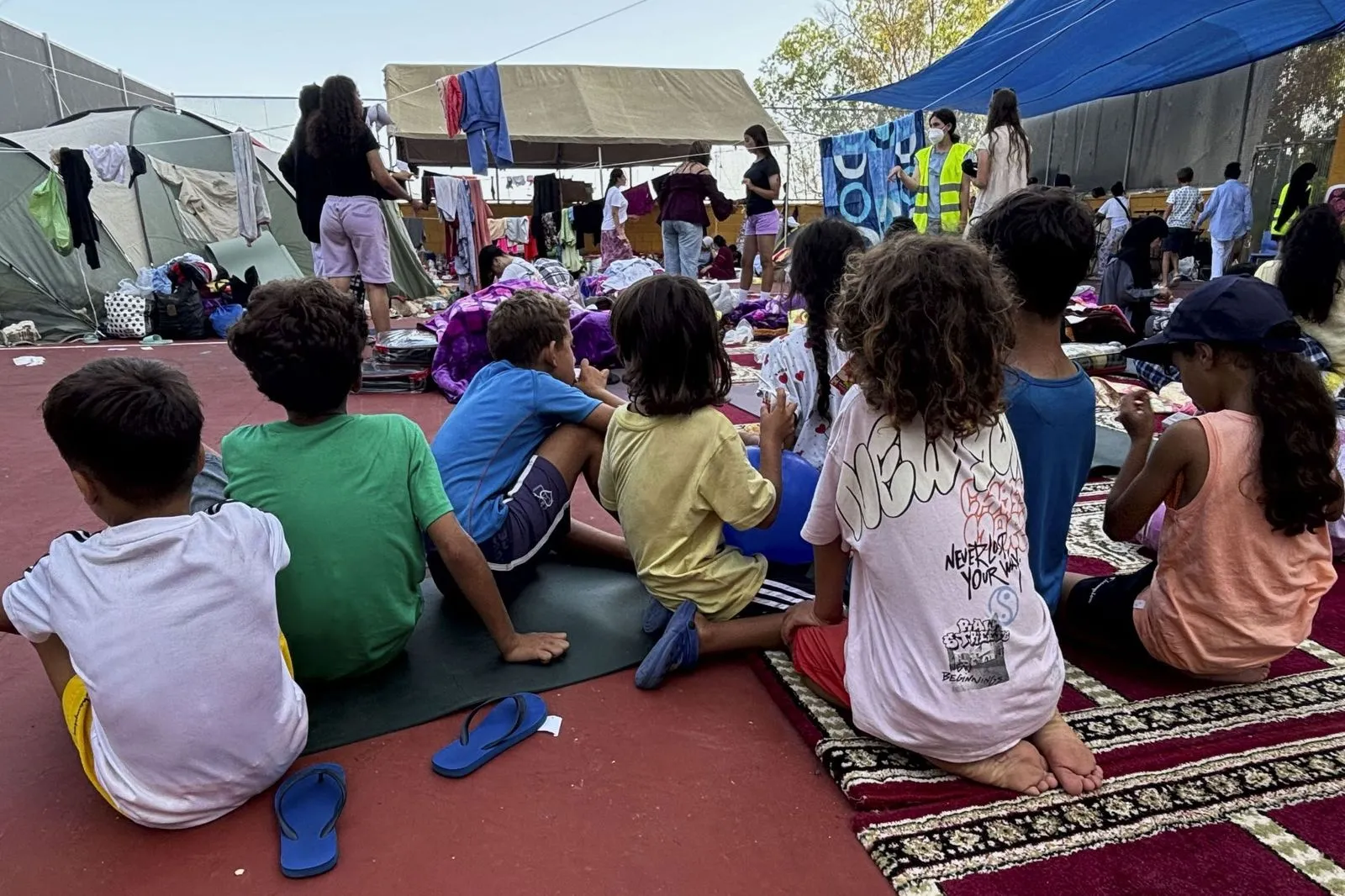

EU's Stance on Ceuta's Migration Challenge
The ongoing migration crisis in Ceuta has sparked discomfort across Europe, prompting the European Commission to emphasize the urgent need for a resolution that involves the return of all irregular migrants, including unaccompanied minors, back to Morocco. This directive aligns with the existing regulations of the European Union, which allow for such actions. During a press briefing in Brussels, Markus Lammert, the spokesperson for the Commission on Internal Affairs, reiterated the expectation that all individuals residing illegally in Ceuta should be returned. He welcomed the Spanish government's commitment to ensure that no one illegally staying in Ceuta would be transferred to the mainland.
When questioned about whether the term “everyone” encompasses minors, despite the special protections afforded to them under EU law, Lammert clarified that “this is regulated by EU law,” which has been in effect since the ratification of the Return Directive in 2008. According to this directive, any decision regarding the return of a minor must be made only after ensuring that “the relevant services have provided assistance in the best interest of the child.” Furthermore, it stipulates that before a member state expels an unaccompanied minor from its territory, it must verify that the child will be handed over to a family member, a designated guardian, or that there are adequate reception services available in the country of return.
Protection for Minors and Community Response
Community sources have reiterated to this publication that “there are specific protections for minors within the return procedure.” Lammert highlighted that Morocco has expressed its willingness to facilitate the return of all migrant minors. “We take note of the statements from Moroccan authorities indicating their readiness to accept all who arrived illegally in Ceuta, including unaccompanied minors,” stated a spokesperson from the European Commission.
As of recent reports, the National Police has identified 2,168 minors in Ceuta since the mass entry from Morocco commenced on July 30. Following Brussels' pronouncement, the Spanish Commission for Refugee Aid (CEAR), Accem, and the United Nations High Commissioner for Refugees (UNHCR) responded with an appeal emphasizing the best interests of the child in light of the European Commission's endorsement. Mauricio Valiente, the director general of CEAR, described Lammert's remarks as “a regrettable error” that “should be corrected immediately for their own interest.” He emphasized that unaccompanied foreign minors or those without family ties are entitled to reinforced legal protection based on the best interests of the child, as stipulated by the Convention on the Rights of the Child and the Organic Law on the Legal Protection of Minors. He further clarified that migrant minors are not subject to the general immigration regime and fall under the care of autonomous services upon their arrival, asserting that their status is considered legal in all respects.
Similarly, Cuca Gamarra, the Deputy Secretary of Institutional Regeneration for the Popular Party, described the European Commission's endorsement of the potential return of Ceuta migrants to Morocco as “decisive.” She emphasized the importance of this clear and robust stance from Europe, stating that it reinforces the application of European laws in Spain, which encompasses provisions for return as the path forward. Nevertheless, the exact number of individuals irregularly present in Ceuta remains uncertain. The European Commission acknowledged its lack of precise figures, speculating that it could involve “several thousand individuals.” In light of the situation, Lammert praised the Spanish government’s decision to increase reception capacity to address the humanitarian situation faced by irregular migrants, with four newly designated spaces in Ceuta accommodating up to 1,500 individuals. Minister of Inclusion, Social Security, and Migration, Elma Saiz, stated this morning that the government does not rule out the possibility of increasing the capacity to 4,000 in these new facilities.
Furthermore, Lammert mentioned that the Commission has yet to receive a formal request from the Spanish government for emergency assistance from the Asylum, Migration, and Integration Fund to support the reception and assistance of migrants, despite Minister Elma Saiz claiming that Spain has already made such a request. The European Commission spokesperson reiterated the offer to deploy resources from European agencies such as Frontex, Europol, and the EU Asylum Agency “to the fullest extent possible” and indicated that the Commission would share data and findings collected during the investigative mission conducted by technical services in Ceuta last week.
As reported by diariodesevilla.es.