
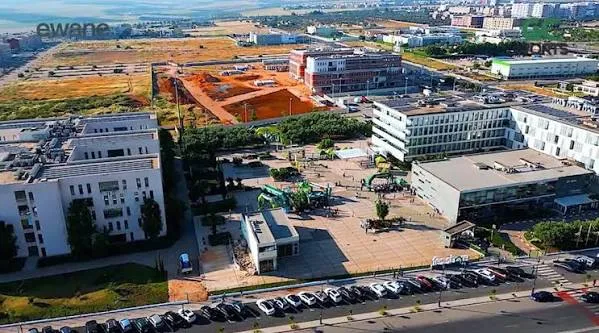

The recent announcement by the Regional Investment Center of the Fès-Meknès region regarding a new package of financial incentives aimed at companies wishing to establish themselves in the "Fès Shore" complex has reignited a longstanding debate that resurfaces annually: Are public grants and support policies genuinely capable of fostering development and creating wealth, or have they merely evolved into mechanisms for attracting companies that benefit from privileges and then leave without leaving a significant economic impact that corresponds to the public funds invested in their favor?
The center has proposed grants that can reach up to two million dirhams for the establishment of company headquarters, alongside direct support of 6,000 dirhams for each job created and maintained for a period of 24 months, while also providing administrative and real estate assistance through a one-stop-shop initiative. This effort aims to market the region as an attractive destination for investment in offshoring services and the digital economy.
Economic Reality vs. Promised Growth
Despite the continuous flow of official statements highlighting the investment attractiveness of the region, the economic and social indicators within Fès-Meknès remain far from the aspirations that accompanied the launch of this initiative. The region continues to grapple with high unemployment rates, particularly among youth and graduates, while thousands of graduates leave annually for Rabat, Casablanca, or even abroad in search of more stable and better-paying job opportunities. This raises critical questions about the current model's ability to retain the human capital that the region possesses.
One of the most significant critiques aimed at the current incentive policy revolves around its focus on attracting large foreign companies through substantial financial, logistical, and real estate benefits. In contrast, small and medium-sized local enterprises find themselves facing challenges related to financing, bureaucratic complexities, and a lack of support at a similar pace. While millions of dirhams are allocated for the establishment of international company headquarters, numerous local investors report difficulties in accessing economic real estate, high financing costs, and prolonged administrative processes. This creates an impression of inequality in benefits derived from the incentive system.
Reassessing the Vision for Fès Shore
When the "Fès Shore" project was launched, its declared objective was to transform the scientific capital into a hub for the digital economy and high-value-added services. However, the current reality of activities within the complex reveals that a significant portion is concentrated in call centers and customer support services. Although these activities are vital for job creation, they remain limited in terms of technology transfer, innovation, and research and development. Experts advocate for attracting companies specialized in software, artificial intelligence, digital engineering, and technological industries, aligning with the academic qualifications provided by local universities and schools.
Another pressing question concerns the effectiveness of linking public support to job retention for only two years. Many economic experts suggest that evaluating the success of incentive programs should not merely focus on the number of companies that have settled or the jobs created at the outset but should also consider the sustainability of these jobs, the continued investment of companies after support periods end, and their contributions to local expertise development and enhancing the added value to the regional economy. There is a call for the publication of periodic reports that clarify to the public the value of the grants received by each company, the actual number of jobs created, their retention rate, and compliance with contractual obligations, thereby enhancing transparency and accountability.
There is no denying that the Fès-Meknès region possesses exceptional potential; it includes one of the largest populations in the kingdom, universities and higher institutes that graduate thousands of qualified professionals annually, a strategic geographic location, and a developed network of roads, railways, and an international airport. However, transforming these capabilities into a genuine economic force requires, according to many economic actors, moving beyond a model that attracts low-value-added investments and transitioning towards a new paradigm focused on supporting innovation, encouraging technological industries, linking academia with entrepreneurship, strengthening local start-ups, and attracting industrial and digital projects capable of creating stable and high-skilled jobs.
Ultimately, the success of any investment policy should not be measured solely by the volume of financial grants announced or the number of signed agreements, but rather by the tangible impact it leaves on citizens' lives. Today, the youth of the Fès-Meknès region are looking for more than just new promises or additional incentives; they seek an economy that can generate stable job opportunities, dignified wages, and investments that transfer knowledge and build wealth within the region. Otherwise, the question remains after years: **What is the real impact of these public funds?**
As reported by fes24.com.
