
Witness the Spectacular Deep Partial Lunar Eclipse in Morocco
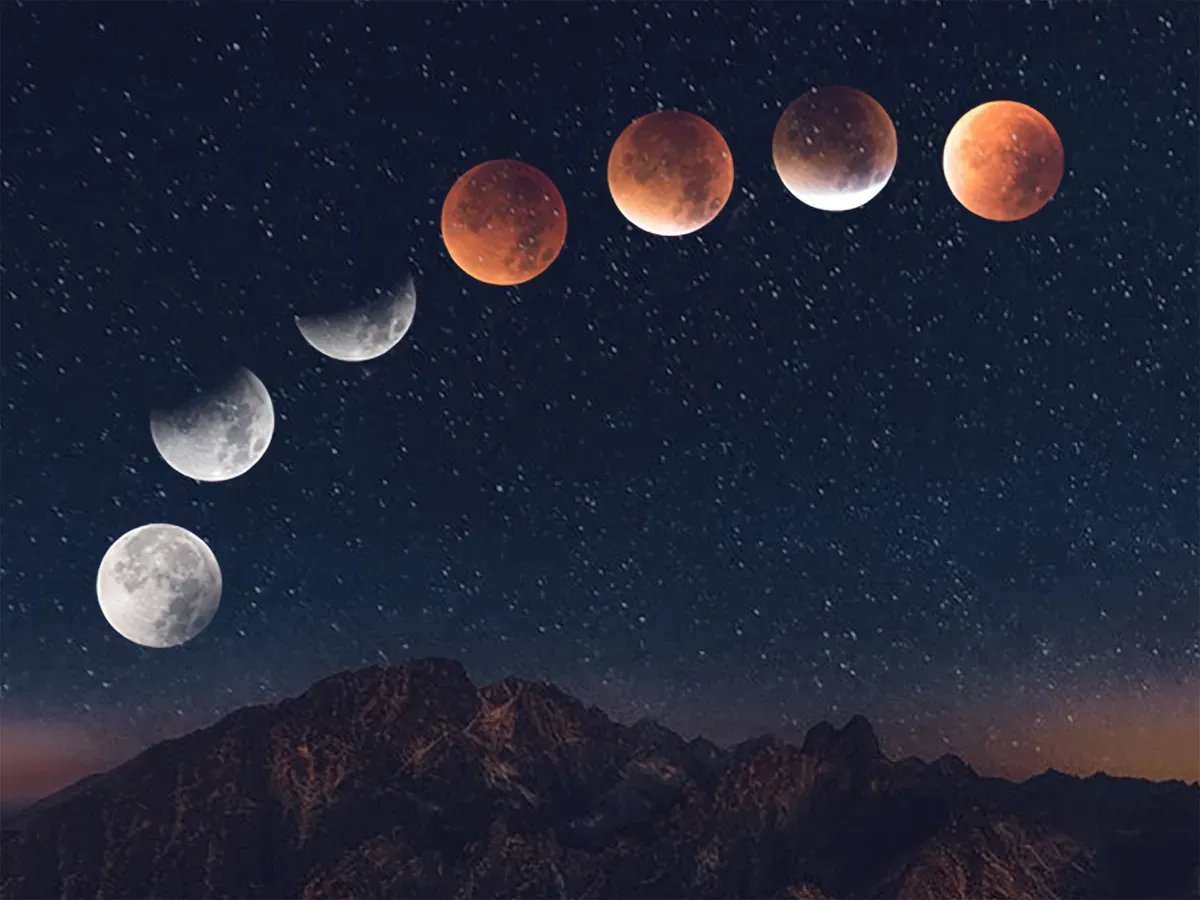
This Friday, August 28, Morocco will be one of the prime locations to witness a deep partial lunar eclipse, where the Earth's shadow will sweep across nearly the entire face of the full moon, creating a breathtaking spectacle for observers. The celestial event will unfold overnight, with the penumbral phase commencing at 02:23 GMT+1, marking the beginning of the moon's journey into Earth's faint outer shadow. Following this, the partial phase will start at 04:12 GMT+1, during which the darker umbra will visibly encroach upon the lunar disk, offering a stunning visual treat.
As the eclipse reaches its peak at around 05:12 GMT+1, spectators in Morocco will enjoy a remarkable view, with approximately 93.91% of the moon's surface being enveloped by Earth's umbra. This phase will conclude at 06:13 GMT+1, while the penumbral phase will end at 07:59 GMT+1. Although this phenomenon does not constitute a total eclipse or a true blood moon—since a sliver of the moon remains illuminated by direct sunlight—much of the lunar surface is expected to radiate a reddish or copper hue. This captivating coloration is attributed to the sunlight that bends through Earth's atmosphere, scattering before reaching the moon.
Optimal Viewing Conditions Across Morocco
The quality of the viewing experience will largely depend on local weather conditions, with Marrakech forecasted to have the clearest skies at just 11% cloud cover, making it an ideal location for eclipse enthusiasts. Following Marrakech, Fez and Agadir will also offer favorable conditions with 14% and 18% cloud cover, respectively. However, the outlook is less promising in other regions, such as Casablanca with 40% cloud cover, Rabat at 41%, El Jadida at 50%, and Tangier at 52%. Observers will be pleased to know that no special equipment is necessary to view a lunar eclipse; unlike solar eclipses, lunar eclipses can be safely enjoyed with the naked eye. For those seeking a more detailed view, binoculars or a telescope will enhance the experience by revealing the intricate details of Earth's shadow gliding across the moon's craters and dark plains.
This lunar eclipse is part of a broader astronomical pattern, following the total solar eclipse that occurred on August 12, which was visible from various locations including Morocco, Spain, and parts of Europe and North America. Astronomers refer to the occurrence of solar and lunar eclipses in close succession as an eclipse season, which happens twice a year when the sun, Earth, and moon align perfectly. Furthermore, the upcoming full moon is known as the Sturgeon Moon, a name that pays homage to the large fish historically caught in North America's Great Lakes during this time of year.
The reach of this event is extensive, with an estimated 3.34 billion people across the Americas, Europe, and Africa positioned to witness at least a portion of the partial phase. However, it is essential to note that a lunar eclipse can only be viewed from the night side of Earth at the moment it occurs. As Earth rotates and the moon sets at varying times across different locations, the viewing experience will differ for each observer.
In the Americas, the full eclipse will be visible high in the night sky, with no obstructions to hinder the view from beginning to end. Conversely, Morocco, along with other western European and African regions, will observe the eclipse during the pre-dawn hours of August 28, as the moon descends toward the western horizon. As the eclipse progresses and dawn approaches, the moon will continue to sink, causing Moroccans to observe the shadow crossing the moon at a lower elevation rather than high overhead. Depending on local sunset times, the moon may dip below the horizon before the final stages of the eclipse are completed.
Notably, this eclipse stands out due to its unprecedented depth, as approximately 96% of the moon will fall within Earth's umbra at the peak of the event, making it the deepest partial lunar eclipse visible globally until December 31, 2028. For those in Morocco willing to rise early, witnessing this extraordinary celestial event is simple: step outside, gaze toward the western horizon, and marvel at the sight of Earth's shadow gracefully crossing the moon.
As reported by moroccoworldnews.com.