
The Cultural Landscape of Casablanca: A Growing Museum Scene
Casablanca, a vibrant hub of creativity and cultural expression, is witnessing a remarkable expansion and diversification of its museum offerings. This transformation is largely attributed to the establishment of new institutions and the enhancement of spaces dedicated to memory, heritage, and various artistic expressions. The recent developments not only enrich the city's cultural tapestry but also solidify Casablanca's position as a prominent cultural destination.
This summer marked the inauguration of the Museum of Photography and Visual Arts, alongside the previously opened Casablanca Memory Museum. These two institutions significantly contribute to the cultural identity of the metropolis, showcasing its historical richness and contemporary artistic endeavors.
Architectural Marvels and Cultural Significance
Located in the heart of Casablanca's old medina, the Museum of Photography and Visual Arts stands as a testament to innovative design, conceived by the renowned Japanese architect Tadao Ando. This museum is notable for being his sole project in Africa, featuring contemporary architecture that harmoniously blends with the city's historical fabric. The National Museum Foundation (FNM) oversees this inclusive space, which is set to host exhibitions, conferences, meetings, and various artistic events, aiming to foster access to art and culture, particularly for the youth, while elevating the cultural profile of Casablanca and the Kingdom.
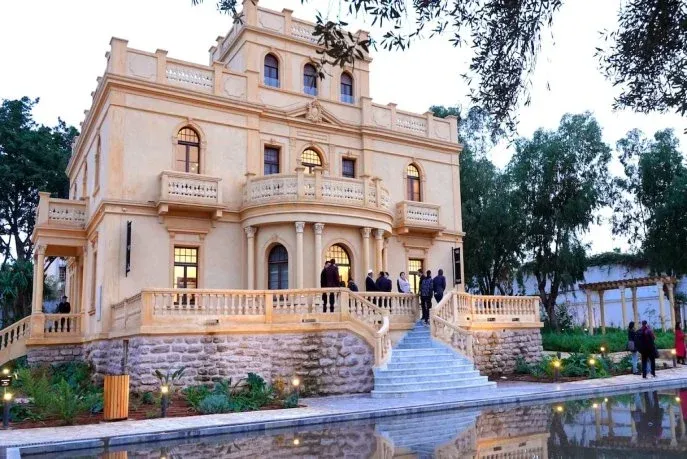
Another significant addition to the city’s museum landscape is the Villa Carl Ficke, which has been transformed into the Casablanca Memory Museum. This venue, originally constructed in the early 20th century by German merchant Carl Ficke, now serves as a dedicated space for preserving and celebrating the city's rich history and heritage. The museum hosts temporary exhibitions and cultural events, and its surrounding esplanade, adorned with artworks and green spaces, creates an outdoor museum experience that intertwines memory, artistic creation, and openness to the city.
These initiatives are the result of a collaborative effort involving the FNM, the Ministry of Youth, Culture and Communication, the Casablanca Municipality, and the Mers Sultan district, supported by the Wilaya of the Casablanca-Settat region and the regional council. This project exemplifies the commitment to enhance the cultural appeal of the metropolis. According to Mehdi Qotbi, President of the National Museum Foundation, Casablanca is pivotal in the ongoing museum development across the Kingdom. He emphasizes its role as Morocco's economic capital, a crossroads for exchanges, and a constantly evolving metropolis rich in creativity and artistic expression.
In this context, the Foundation has embarked on several key projects, including the Casablanca Memory Museum and the Museum of Photography and Visual Arts. These institutions are envisioned as genuine spaces for interaction and dialogue, connecting with the city's medina, its residents, and its youth. They aim to bridge heritage with contemporary creation, memory with innovation, while making culture accessible to all. Qotbi aspires for Casablanca to emerge as a major cultural destination on an African, Mediterranean, and international scale, asserting that the city possesses all the qualities necessary to become a true capital of photography.
Alongside these projects, Casablanca is home to various institutions dedicated to the preservation and transmission of Morocco's diverse heritage. Situated in the Habous district, Dar Al Ala transcends its role as a mere museum housing Andalusian musical instruments. It invites visitors to embark on a journey through the history of this deeply rooted art form in Moroccan culture. Established in a restored historical residence in 2010 by the Association of Andalusian Music Enthusiasts, Dar Al Ala exhibits ancient instruments and historically significant manuscripts, with its collection meticulously curated over decades.
Another emblematic institution is the Museum of Moroccan Judaism, located in the Oasis neighborhood. Since its establishment in 1997, it has played a crucial role in preserving the Hebrew heritage of Morocco and, more broadly, the various components of the national memory. The museum houses a vast collection of traditional attire, jewelry, wedding dresses from different regions of the Kingdom, historical manuscripts, and documents pertaining to the occupations of Moroccan Jews, alongside musical and cinematic archives. Visitors can also explore the musical heritage of the Jewish community, featuring recordings from notable figures such as Salim El Hilali, Sami Al Maghribi, and Zahra El Fassia.
Managed by the Foundation for Jewish Moroccan Cultural Heritage, the museum highlights various dimensions of the professional, familial, cultural, and religious lives of Moroccan Jews while fostering values of coexistence and tolerance that have characterized the history of the Kingdom.
The diversification of cultural offerings also encompasses the valorization of archaeological sites. The archaeological park of Sidi Abderrahmane, opened to the public nearly a year ago, enriches Casablanca's heritage landscape by allowing visitors to explore a significant site from Moroccan prehistory. Its opening represents a new step in highlighting this heritage, providing history enthusiasts, youth, and the general public with a space for learning, discovery, and transmission.
From prehistoric heritage to contemporary photography, along with urban memory, Andalusian music, and Jewish-Moroccan heritage, these diverse spaces contribute to an increasingly varied cultural offering. Museums in Casablanca are not only places for preservation but also serve as platforms for discovery, transmission, and dialogue with the city and its inhabitants.
As reported by quid.ma.