
An In-Depth Look at Melilla and Its Border Dynamics
Recent research conducted by a dedicated team focused on migration governance has shed light on the intricacies involved in managing migratory flows at the Mediterranean’s contested borders, particularly in the Spanish autonomous city of Melilla, which shares its boundaries with Morocco. This study aims to navigate the complexities of both legal and illegal migration against the backdrop of political economy and diplomatic relations. The territories examined include Melilla, Ceuta, Gibraltar, and the UK's Sovereign Base Areas (SBAs) in Cyprus. Although these regions are relatively small and often overlooked, they serve as critical points of interest, highlighting ongoing challenges related to migration across Europe, the implications of Brexit, and the geopolitical repercussions of the war in Iran.
The timing of the research trip coincided with significant developments in Ceuta, where an influx of approximately 80,000 individuals, primarily young Moroccan men, crossed the border illegally in late July. While a majority of these migrants have since returned, the situation in Ceuta remains precarious, causing divisions within the EU and eliciting strong critiques from influential figures like US President Donald Trump. In contrast, Melilla has not experienced similar pressures recently, despite a history of border violence, with a notable incident in June 2022 resulting in the tragic loss of nearly 40 lives during an attempted crossing.
Understanding the Border Experience
While the current political context is vital, it is equally important to examine how the border operates during periods of normalcy. The visit to Melilla offered valuable insights into the management of the border when pedestrian and vehicular traffic flows are steady and regulated. Observations revealed a stark contrast with Ceuta; Melilla's border is characterized by effective management, where individuals queue and cross with relative ease, supported by moderate security and customs checks.
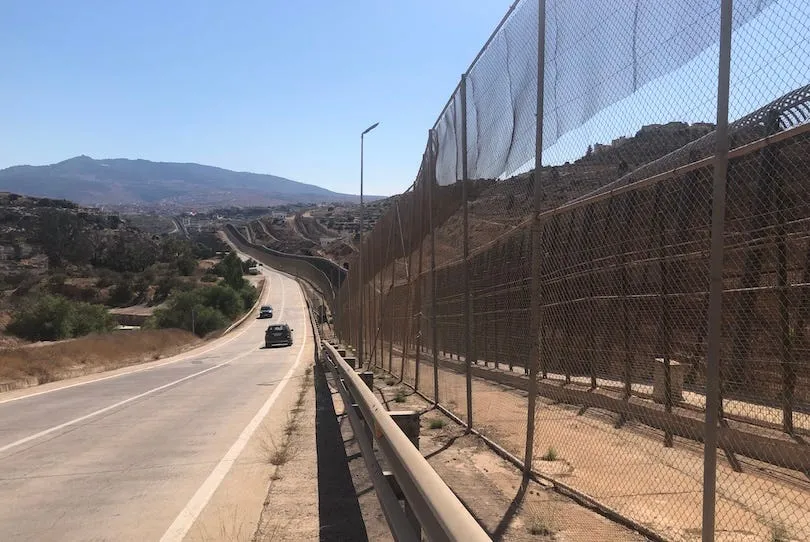
Walking along and through the border highlighted the pronounced differences between Melilla and Morocco, some of which were quite unexpected. The border itself is formidable, featuring multiple layers of fencing and lookout points, with deep trenches in certain sections. On the Moroccan side, daily life unfolds in close proximity to the fence, seemingly without interference, whereas the Spanish side presents a more sparse development, emphasizing the fence's imposing presence. Interestingly, while Melilla's GDP per capita ranks among the lowest in Spain—at just half of Madrid's—its economic and social conditions still surpass those of Morocco, creating a significant draw for potential migrants seeking better opportunities.
Despite Melilla's economic struggles, which include a heavy reliance on public sector employment and noticeable disparities between affluent areas and those in decline, the social fabric of the city showcases a relatively peaceful coexistence among its Christian, Muslim, Jewish, and Hindu populations. However, subtle tensions exist, as evidenced by historical Jewish neighborhoods now occupied by Muslim residents and a notable presence of radical Islamic sentiment, albeit not overwhelmingly pronounced. Conversations with Moroccan residents revealed an appreciation for the educational opportunities available in Melilla, suggesting that the benefits of living there are recognized even amidst the complex dynamics of sovereignty and migration.
The recent tightening of the border with Morocco has emerged as a critical issue, influenced by factors beyond Spain's control. With the closure of crossings during the Covid-19 pandemic, only one passage, Beni Ansar, has reopened, leaving the Moroccan government focused on enhancing domestic economic prospects rather than relying on Melilla and Ceuta as escape routes. This shift comes amidst a backdrop of economic challenges in Morocco, which have contributed to rising discontent and a surge in migration attempts.
In conclusion, the comparative analysis of Melilla with Gibraltar and the SBAs illustrates differing approaches to border management. Gibraltar's model emphasizes the importance of maintaining an open border, supported by recent post-Brexit agreements that aim to foster economic cooperation despite sovereignty claims. Conversely, the SBAs maintain a unique arrangement that balances UK sovereignty with Cypriot operational control. The contrasting experiences of these regions highlight that contested borders need not inherently lead to restrictions or instability; rather, they can thrive under conditions of mutual benefit and cooperation, a luxury not afforded to the residents of Melilla and its neighboring regions in Morocco.
As reported by e-ir.org.