
Moroccan Diaspora: A Celebration of Culture and Identity
On Saturday, the city of Tangier hosted a thought-provoking forum entitled "Moroccans of the World: Multiple Cultures, One Identity," featuring a distinguished panel of thinkers, human rights advocates, and representatives from civil society. This event was organized in celebration of the National Day for Moroccans Living Abroad, under the auspices of the House of the Press and the Regional Directorate of Culture in the Tanger-Tetouan-Al Hoceima region. Participants emphasized that migration, in its humanitarian aspect, transcends the mere movement of individuals from one country to another; it also embodies the transmission of memory, culture, and values, while continuously reshaping concepts of belonging and identity.
The speakers highlighted that the experiences of Moroccans living abroad serve as a significant model in this context, given their longstanding contributions across generations to the economic, social, cultural, and scientific life of their host countries, while also maintaining strong ties to their homeland and its rich cultural heritage. In this vein, Saïd Koubrit, President of the House of the Press, remarked that the forum provided an opportunity to address various issues linked to the concept of migration and to explore innovative approaches that align with the challenges and opportunities presented by this phenomenon.
During his speech, Koubrit referenced the Universal Declaration of Human Rights, which enshrines the right to freedom of movement, stressing the importance of deconstructing the phenomenon of migration and analyzing its various dimensions to uncover new strategies for engagement. Zohra Amhaouch, the Regional Director of Culture for the Tanger-Tetouan-Al Hoceima region, emphasized that the event's slogan carries profound significance, reflecting Morocco's reality as a nation shaped by a rich cultural and civilizational heritage that has interacted with multiple influences without losing its unity and coherence.
Bridging Cultures Through Migration
Amhaouch reaffirmed that Moroccan identity remains open to the world, proud of its roots, and adept at fostering communication, interaction, and contributing to the building of bridges of understanding among diverse peoples and cultures. She added that although Moroccan migrants live outside their homeland, they continue to occupy a prominent place in the cultural and social consciousness of Morocco, as well as in its developmental journey.
Abdelhamid Abjoughi, a writer and expert in Moroccan-Spanish relations, emphasized the intrinsic connection between individuals and their identity, noting that while identity evolves, expands, and acquires new layers, it never disappears. He observed that Moroccans worldwide have lived for generations between their homeland and their countries of residence, navigating the memories of their parents and the lives of their children, as well as the languages spoken at home and in educational settings. This unique position can serve as a bridge, as cultural belonging is not always dictated by national borders.
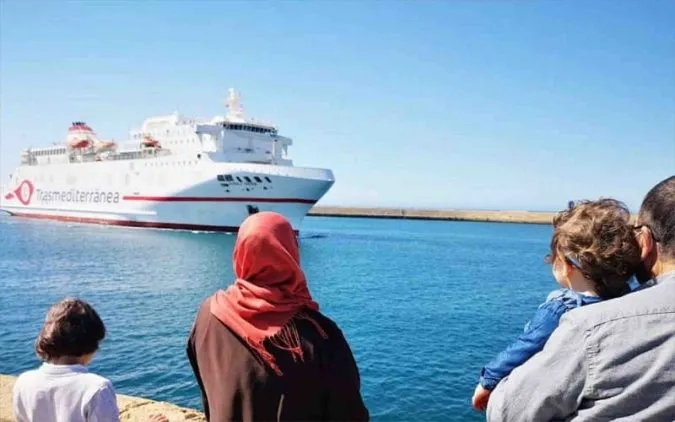
Professor Mohamed Medkouri from Madrid highlighted the strong bond that Moroccans abroad maintain with their homeland, particularly evident in their substantial annual visits. He noted that this phenomenon is a characteristic of inherited identity across generations. Medkouri described Moroccan expatriates as one of the most integrated communities in their host countries, pointing to their robust presence and dynamic social contributions across various sectors, as well as their role in enhancing Morocco's image and promoting it throughout the world.
This forum served as a platform to illuminate the multifaceted dimensions of migration, recognizing it as a cultural and human experience that transcends geographical boundaries, while underscoring the crucial role of Moroccans abroad in preserving connections with their homeland and enriching intercultural exchanges.
As reported by maroc.ma.