
Discovering the Legacy of Korakia Pensione
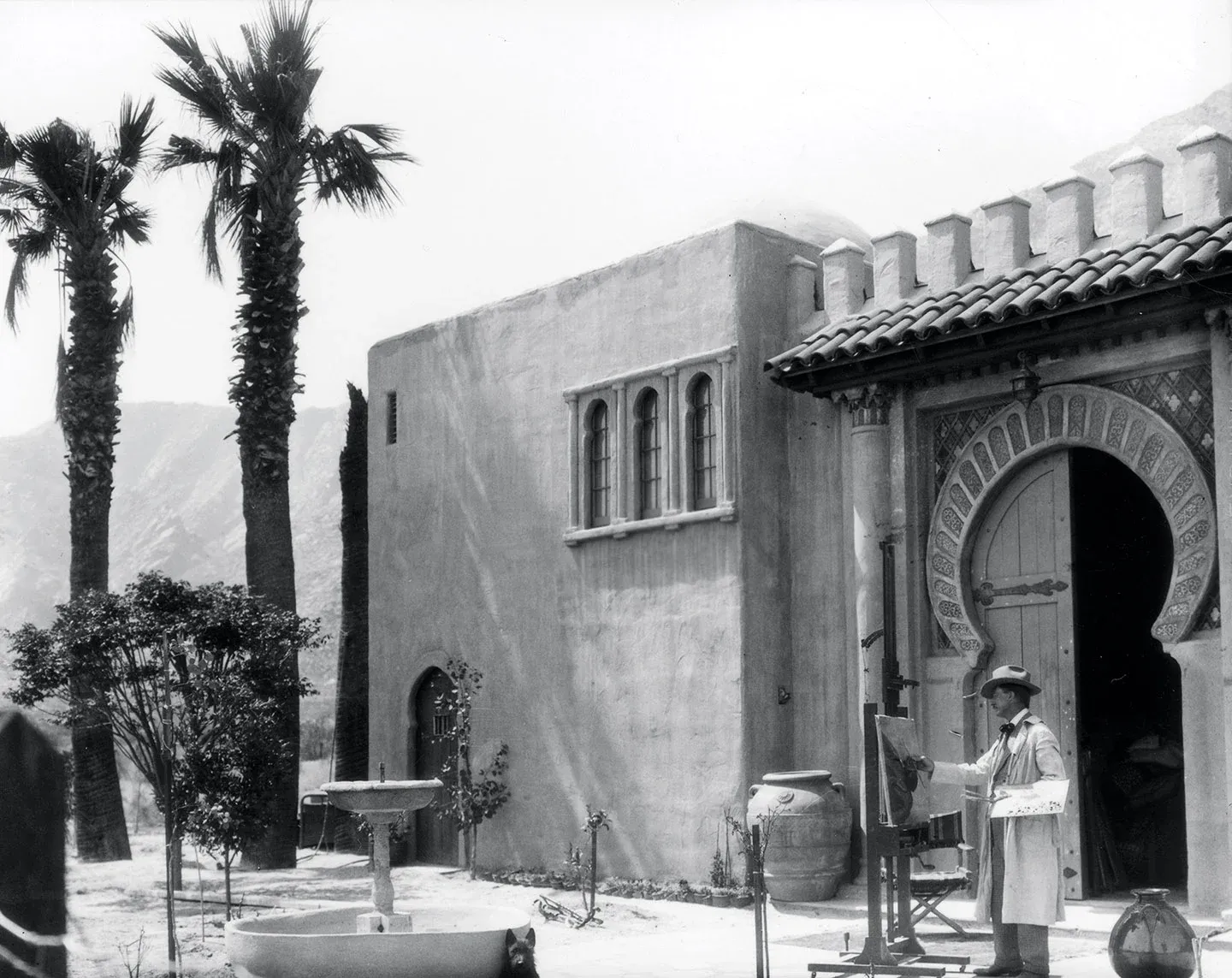
Nestled discreetly behind tall hedges and imposing wooden doors along South Patencio Road, in the historic Tennis Club neighborhood, lies the Korakia Pensione, one of Palm Springs' oldest and most unique hotels. This enchanting destination is not just a haven for serene retreats and intimate weddings but also a favorite spot for vibrant fashion shoots. The story of Korakia Pensione can be traced back to 1924 when Gordon Coutts, a Scottish artist, arrived in Palm Springs with his third wife, Gertrude. What was intended to be a brief sojourn before returning to Morocco turned into a lasting love affair with the desert’s allure and its healing dry air, which proved beneficial for his tuberculosis condition. Coutts purchased land at the base of the majestic San Jacinto Mountains and constructed a Moorish-style villa, which he affectionately named Dar Marroc, reflecting his desire to recreate the ambiance of his life in Tangier.
As the locals referred to him, the residents of Palm Springs dubbed it Coutts Castle. The villa was a masterpiece, featuring thick stucco walls, intricate arches, keyhole-shaped windows, and exquisitely carved woodwork. Coutts filled his abode with furnishings acquired during his travels, and a large north-facing studio window provided the perfect frame for the ever-changing desert light that inspired his paintings. Before his move to Palm Springs, Coutts had already garnered significant acclaim, exhibiting his portraits and landscapes at prestigious venues such as the Royal Academy in London and the Paris Salon, with various museums in England, Australia, and Morocco acquiring his art.
The Artistic Hub of Palm Springs
In Palm Springs, Dar Marroc quickly evolved into a vibrant hub for artists, travelers, and Hollywood elites. Iconic figures like Rudolph Valentino and Errol Flynn graced its halls, while local legends suggest that Winston Churchill painted in the upstairs studio, now transformed into a guest room that basks in natural light from its original windows. Coutts, known for his flamboyant red hair, often showcased his artwork in the library, regaling guests with fascinating tales of his adventures. Today, six of his original paintings still adorn this library, acting as a window into the past. Gertrude further enriched the cultural tapestry of the villa by establishing Little Gallery on the property, dedicated to exhibiting Coutts’ work and supporting fellow artists, including notable figures like Agnes Pelton and Nicolai Fechin.
Despite his dedication to his craft, Coutts' health began to decline in the late 1930s, leading to his untimely death from a heart attack in 1937, shortly after Gertrude tragically lost her life in an automobile accident. Their legacy, however, continued through their daughter, Jean Coutts, who was her father’s protégé, and their granddaughter, Roxanne Coutts Anguiano Eilers, who upholds the family’s artistic heritage to this day.
Over the decades, Dar Marroc changed ownership multiple times and endured various renovations, even periods of neglect. Across Patencio Road, actor J. Carrol Naish constructed a Mediterranean-style villa in the 1930s, contrasting the enclosed courtyards and Moorish embellishments of Coutts’ creation with open gathering spaces and exposed beams. Naish’s compound also featured a historic adobe structure known as the Orchard House, and the two properties remained distinct until the 1990s.
By 1989, Dar Marroc had fallen into disrepair but still possessed enough of its original charm to attract J. Douglas Smith, a previous café owner from the Greek island of Spetses. Smith dedicated several years to restoring the villa, bringing back the beauty of its architecture, including the courtyards, arches, and intricate carvings. In a nod to his Greek experiences, he renamed the property Korakia, meaning 'crow' in Greek, and transformed it into a pensione that embraced the intimate and eclectic essence of European hospitality. Over time, it expanded to incorporate Naish's villa and the Orchard House, culminating in a retreat featuring 28 bungalows, guesthouses, and villas, each uniquely designed to tell its own story.
The Moroccan-inspired side of Korakia reflects Coutts’ original vision, with narrow walkways leading to shaded courtyards adorned with fountains, olive trees, and vibrant bougainvillea. Guests are welcomed through the original door frame, passing by the historic fountain that has stood the test of time. Inside, vintage trunks serve as tables, and hand-crafted chairs complement weathered cabinets adorned with layered textiles, creating an atmosphere that resonates with history and charm.
As reported by palmspringslife.com.