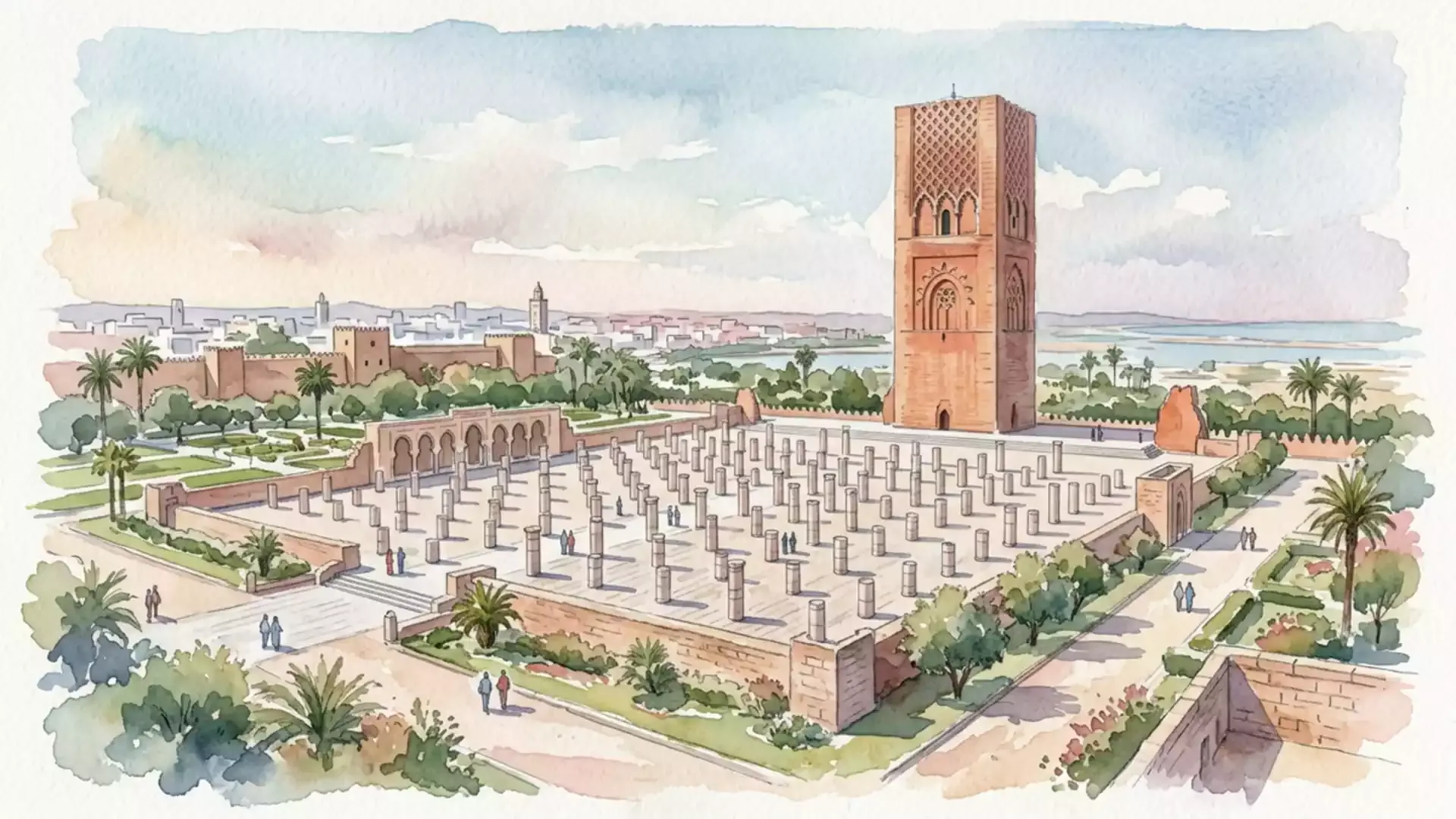

Tour Hassan, an iconic yet unfinished Almohad minaret, stands majestically on a broad stone esplanade overlooking the serene Bouregreg estuary in Rabat. This architectural marvel, which is part of the historic city of Rabat, presents an open silhouette that captivates visitors from afar, drawing them into its rich historical narrative. Commissioned during the reign of Yacoub al-Mansur in the twelfth century, the ambitious mosque project initiated in 1184 remains an integral part of Rabat's UNESCO-listed heritage, alongside the revered Mausoleum of Mohammed V.
The Tower and Its Surrounding Mosque Grounds
The visible structure of Tour Hassan is a testament to a much grander mosque complex that was never completed. Its robust square form, crafted from pale stone, is marked by an unfinished apex that gives it a stark, minimalist outline against the expansive platform it occupies. The remnants of the mosque can be traced across the esplanade, where a grid layout of columns and low masonry reflects the original design intentions. This wide arrangement transforms the tower from merely a freestanding monument into a poignant reminder of a larger religious ambition that was ultimately left unfulfilled.
The Architectural Significance of Tour Hassan
Tour Hassan is emblematic of the Almohad architectural style that flourished in North Africa and al-Andalus, characterized by the use of brick, stone, and geometric forms that conveyed significant political meaning. The tower’s unadorned surfaces and lack of intricate decoration emphasize its dimensionality, proportion, and textural qualities, inviting contemplation of its austere beauty. Its historical significance extends beyond its physical form, as it is intricately linked to the UNESCO designation of Rabat's historic city center, which encompasses the remnants of the Hassan Mosque and the surrounding Almohad structures, thereby connecting the tower to the broader riverfront landscape of Morocco's capital.
Located adjacent to the modern Mausoleum of Mohammed V, Tour Hassan juxtaposes two distinct epochs within Rabat’s ceremonial landscape: the incomplete medieval structure and the contemporary royal funerary monument, which features elegant white stone and green-tiled roofing. This striking contrast creates a compelling visual interplay, where the tower's rigid verticality complements the mausoleum's lower, layered silhouette, both occupying the same open space.
For those planning to visit Tour Hassan, it is conveniently situated in central Rabat, easily accessible by foot from the city center or via local taxis and tram services. The site’s layout is particularly favorable for exploration, as the flat, open ground allows for an unobstructed experience of the ruins and their historical context. Visitors should note that English is not an official language in Morocco, and the local currency is the Moroccan dirham, which may influence travel preparations. Entry requirements may vary based on nationality, so travelers from the UK and Ireland are encouraged to consult their respective foreign travel advice resources.
Tour Hassan's unique combination of an unfinished minaret and the vestiges of a mosque complex makes it a distinctive site that stands as a testament to the Almohad architectural legacy. The visual contrast between the tower and the nearby mausoleum provides a clear identity for the site, ensuring that it remains a focal point for both historical inquiry and cultural appreciation.
As reported by ad-hoc-news.de.