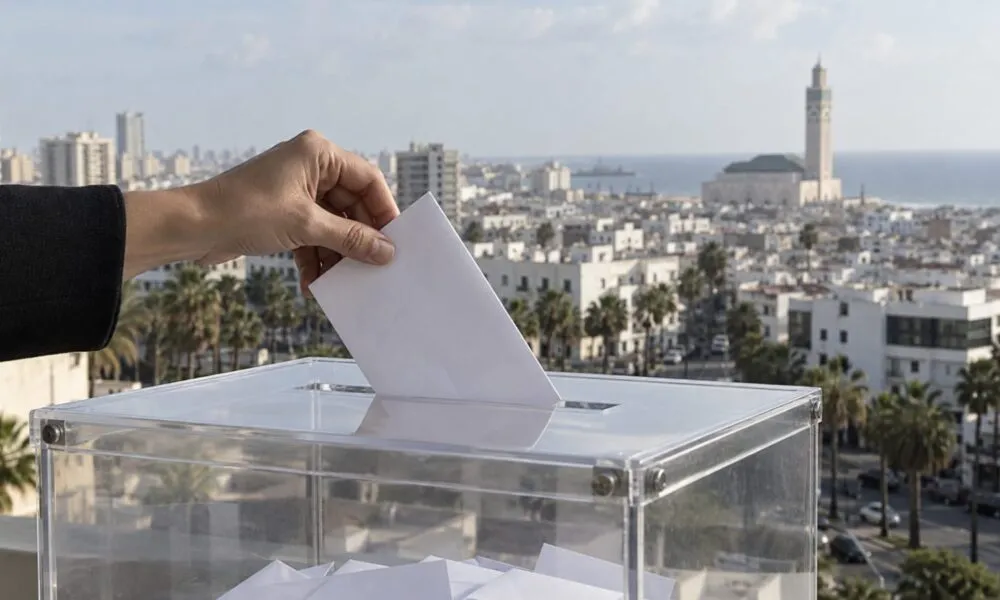

The electoral map for the legislative elections scheduled for September 23 in the Casablanca-Settat region highlights a competitive landscape where party strength, candidate influence, and local ties intersect. This election cycle encompasses 16 local electoral districts for a total of 57 seats in the Chamber of Representatives, setting the stage for a dynamic political contest.
The nature of competition varies significantly from one district to another, not only in terms of the number of seats and lists of candidates but also in the profiles of the individuals running. The field includes incumbent legislators seeking to renew the trust of their constituents, party leaders, local elected officials, and a host of new faces, reflecting a shift in candidacies compared to the 2021 elections.
Key Electoral Districts and Candidate Dynamics
Among the districts, Casablanca-Anfa stands out as a particularly intriguing battleground, with 20 candidates vying for four available seats. This contest features a mix of established political figures alongside newcomers, all competing under various party affiliations. In Al Fida-Mers Sultan, 19 lists are competing for three seats, while Ben M’Sik has 17 lists in contention for the same number of seats. The competition intensifies in Moulay Rachid, where 20 candidates are also in the running, showcasing the diverse electoral offerings in several districts of the economic capital.
In districts such as Aïn Chock, Aïn Sebaâ-Hay Mohammadi, Hay Hassani, and Sidi Bernoussi, the stakes of the competition differ based on the unique characteristics of each area and the candidate configurations. Some candidates are focused on preserving their previous electoral gains, while others aim to expand their influence or rebalance the political landscape. These districts typically hold between three to four seats, with Aïn Sebaâ-Hay Mohammadi having four seats, in contrast to the three seats allocated to Aïn Chock, Hay Hassani, and Sidi Bernoussi.
Beyond the economic capital's districts, the competition continues to evolve with varying parameters across different territories. In Nouaceur, for instance, 20 lists are contending for three seats, while Mediouna offers only two seats, emphasizing the importance of voter mobilization and vote concentration as crucial elements in the race. Similarly, in Benslimane, 17 lists are competing for three seats, showcasing a blend of political figures, party representatives, and local activists. Meanwhile, Berrechid sees 21 lists contending for four seats, indicating an expansion of electoral options and a diverse array of forces in play.
The Landscape of Candidacies and Local Engagement
Settat presents a particularly competitive scenario with 24 candidates vying for six available seats, characterized by the realignment of several prominent figures who have shifted from one party to another, thus adding complexity to the electoral equation. In El Jadida, 18 lists are in contention for six seats, similarly blending partisan personalities with candidates deeply rooted in local communities. Sidi Bennour features 19 lists competing for four seats, where local presence and established networks of elected officials play pivotal roles in the electoral process.
Lastly, Mohammedia, with three seats at stake, approaches this election in a competitive context marked by party dynamics and the local grounding of candidates. The electoral map illustrates how various forces are striving to solidify their positions or gain representation within the district.
Overall, the candidacy landscape reveals a multitude of factors influencing the competition within the Casablanca-Settat region, including the strength of political parties, the influence of candidates, their local ties, and the shifts in candidacies coupled with disparities in the number of seats and lists across different districts. This rich tapestry of political engagement sets the stage for an intriguing electoral cycle ahead.
As reported by lavieeco.com.