
Unveiling Language Through Earth: An Insight into 'Ilā Turāb'
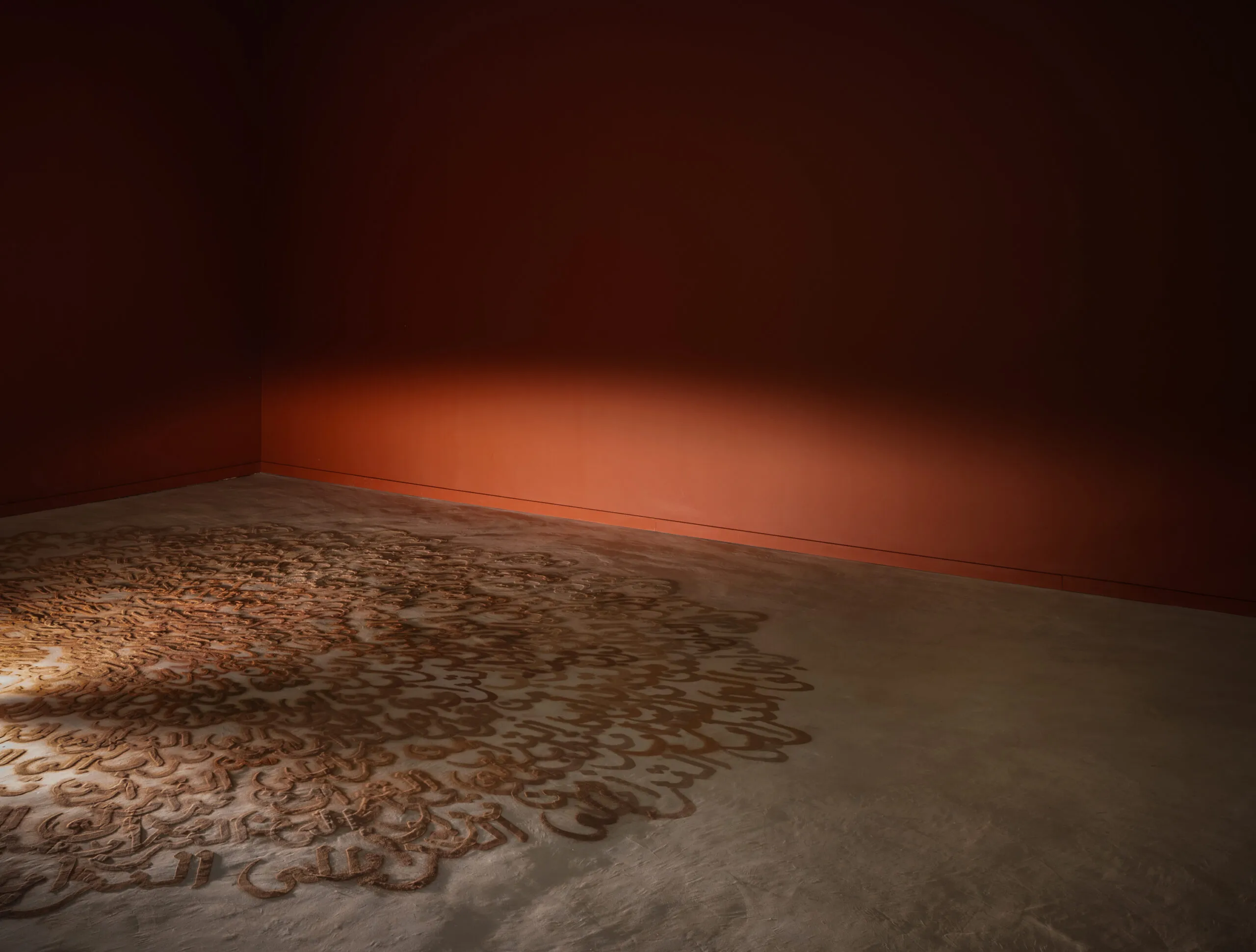
In her captivating installation titled 'Ilā Turāb,' Moroccan artist Fatiha Zemmouri transforms soil into a dynamic medium that serves as both a material and a metaphor, inviting viewers to engage deeply with the delicate relationship between physicality and language. Set against the backdrop of the Museum of African Contemporary Art Al Maaden (MACAAL) in Marrakech, the artwork manifests as a floor-based inscription that initially presents itself as a dense accumulation of earth. As observers navigate the installation, they witness this mass gradually morph into recognizable script, creating a compelling dialogue about perception, presence, and the metamorphosis of matter into meaning.
Zemmouri's artistic process begins with a straightforward yet profound gesture: the placement of soil directly onto the ground. This act generates an intricate interplay of density and legibility, where the initial formlessness of the earth eventually reveals its linguistic potential. The artist emphasizes that this gradual emergence of language is reflective of how meaning often unfolds in life; it is not instantaneous, but rather requires time, attention, and proximity to fully appreciate. This notion of language as an evolving entity resonates throughout the work, creating a fragile balance between the permanence of script and the transient nature of dust. The writing exists in a precarious state, signifying a threshold where the earth begins to convey its own narrative.
The Cyclical Relationship Between Earth and Existence
The phrases 'min turāb' (from the soil) and 'ilā turāb' (to the soil) encapsulate a profound philosophical inquiry into the cyclical nature of existence, emphasizing the continuous journey from origin to return. Zemmouri's installation visualizes this cycle through the very materiality of the soil, which, while forming the writing, also holds the potential for its own disappearance. This duality invites viewers to contemplate the deeper implications of life, where emergence and return are integral components of a larger narrative. The artist articulates that the soil embodies memory and belonging, serving as an archive of life experiences while also reminding us of our inevitable return to the earth.
Moreover, Zemmouri's approach to writing as a physical entity rather than mere ink on paper challenges traditional perceptions of language. By transforming words into earth, she renders them unstable and ephemeral, reflecting the transient nature of knowledge itself. The installation not only encourages viewers to engage physically with the work but also evokes a heightened awareness of their surroundings. As visitors traverse the space, they are compelled to slow down and experience the installation's nuanced textures and forms, which blur the lines between visual perception and tactile understanding.
Ultimately, Zemmouri's 'Ilā Turāb' extends beyond the confines of the museum, inviting critical conversations about ecology, ancestry, and the cyclical nature of belonging. By invoking the elemental force of soil, the artist encourages reflections on our connection to the land we inhabit and the histories that shape our identities. This installation, on view until April 19, 2026, offers a meditative space where silence and restraint amplify the immersive qualities of the work, fostering an atmosphere ripe for contemplation and connection.
As reported by artafricamagazine.org.