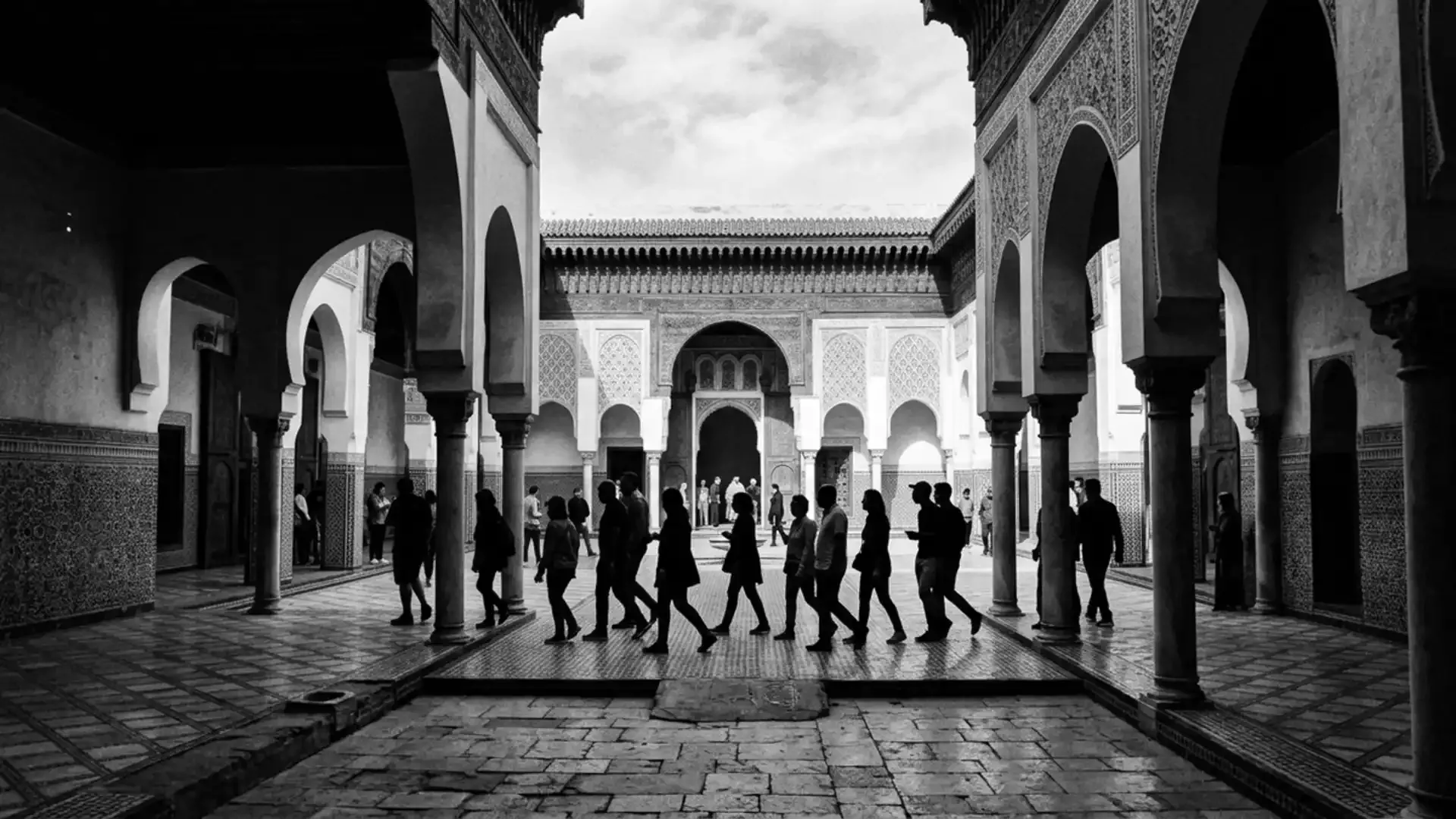

The Grand Heritage of Palais Bahia
Palais Bahia, meaning "the radiant palace," is an expansive urban palace dating back to the 19th century, renowned for its intricate blend of Moroccan residential architecture. Nestled within the Medina of Marrakech, this historic edifice stands as a stunning representation of Islamic Moroccan architecture, showcasing the artistic and cultural heritage that flourished during this period. Originally constructed as the residence of the Grand Vizier Si Moussa, the palace underwent significant expansions under his son, Ahmed ben Moussa, known as Ba Ahmed. It reflects the political stature of the Alaouite family during the late 19th century and serves as a testament to their influence and power during this era. The construction of Palais Bahia commenced in the latter part of the 19th century, reaching its completion around 1900, marking it as one of the more contemporary historical palaces in the old city of Marrakech.
Architectural Wonders and Lush Gardens
The architectural design of Palais Bahia embodies the distinctive Islamic Moroccan style, enriched by Moorish and Andalusian influences that were prevalent in 19th-century Marrakech. Characterized by its encircling walkways, rows of columns, plastered walls, and intricately crafted doors, the palace unfolds in a sequence of courtyards and chambers that connect various living and ceremonial spaces. The layout follows the traditional structure of Moroccan urban palaces, featuring distinct residential quarters separate from reception areas, which enhances the privacy and elegance of the space. Visitors to Palais Bahia are treated to a visual feast of richly decorated wooden ceilings, predominantly crafted from cedar wood and adorned with vibrant ornamentation. The intricate mosaics made from Zellige tiles, finely carved wooden details on doors and window frames, along with decorative grilles that cast enchanting patterns of light and shadow on the floors, all contribute to the palace's enchanting atmosphere. The harmonious interplay of stone, plaster, ceramics, and wood reflects the exquisite craftsmanship of the 19th century and varies from room to room, offering a unique experience of Moroccan artistry.
Surrounding the palace are a series of courtyards that create a network of open and semi-open spaces intertwined with living and reception areas. Some courtyards are designed as lush gardens, complete with planting areas, trees, and water basins, while others present stone-paved squares framed by arcades and rooms. The diverse sizes and decorative styles of these courtyards contribute to a rhythmic journey through the palace, alternating between intimate and expansive spaces. Located in the southern section of Marrakech's Medina, Palais Bahia is adjacent to the historic Jewish quarter, Mellah, and is accessible via Rue Riad Zitoun el Jedid and the nearby narrow streets of the old town. The external walls of the palace are relatively unadorned, making the vibrant inner courtyards and rooms a surprising revelation once inside.
As reported by ad-hoc-news.de.