In the realm of electric batteries, graphite is an indispensable component that Falcon Energy Materials aims to produce at Jorf Lasfar. Despite facing delays due to the arrival of equipment from China, the pilot plant is on the verge of commencing operations. However, before the large-scale facility is launched in 2028, the company must first overcome a critical hurdle: convincing battery manufacturers that Moroccan graphite can be integrated into their supply chains. This article delves into the significant industrial gamble that Morocco is undertaking.
Key Highlights
The Falcon Energy Materials pilot plant in Jorf Lasfar is poised to begin production after delays caused by maritime transport issues from China. The pilot plant is essential for qualifying and certifying Moroccan graphite for clients, a pivotal step before securing a firm purchase contract (offtake) that will solidify the final investment decision. The larger facility, designed to produce 25,000 tons of purified and coated spherical graphite (CSPG) annually, is expected to be operational between late 2027 and early 2028, with an investment of $86 million. Its proximity to Fluoralpha ensures a steady supply of hydrofluoric acid, a key raw material that is challenging to transport, while the revocation of the mining license in Guinea is mitigated by a global oversupply of graphite. Beyond graphite, Falcon is also exploring the expansion of its model to include other critical minerals such as manganese and tungsten.
Details of the Project
As Morocco expands its battery component manufacturing projects, the graphite anode plant being developed by Falcon Energy Materials at Jorf Lasfar holds strategic importance in the battery value chain that the country is constructing. During a public presentation, CEO Matthieu Bos provided updates on the project, indicating that production could commence by late 2027 or early 2028.
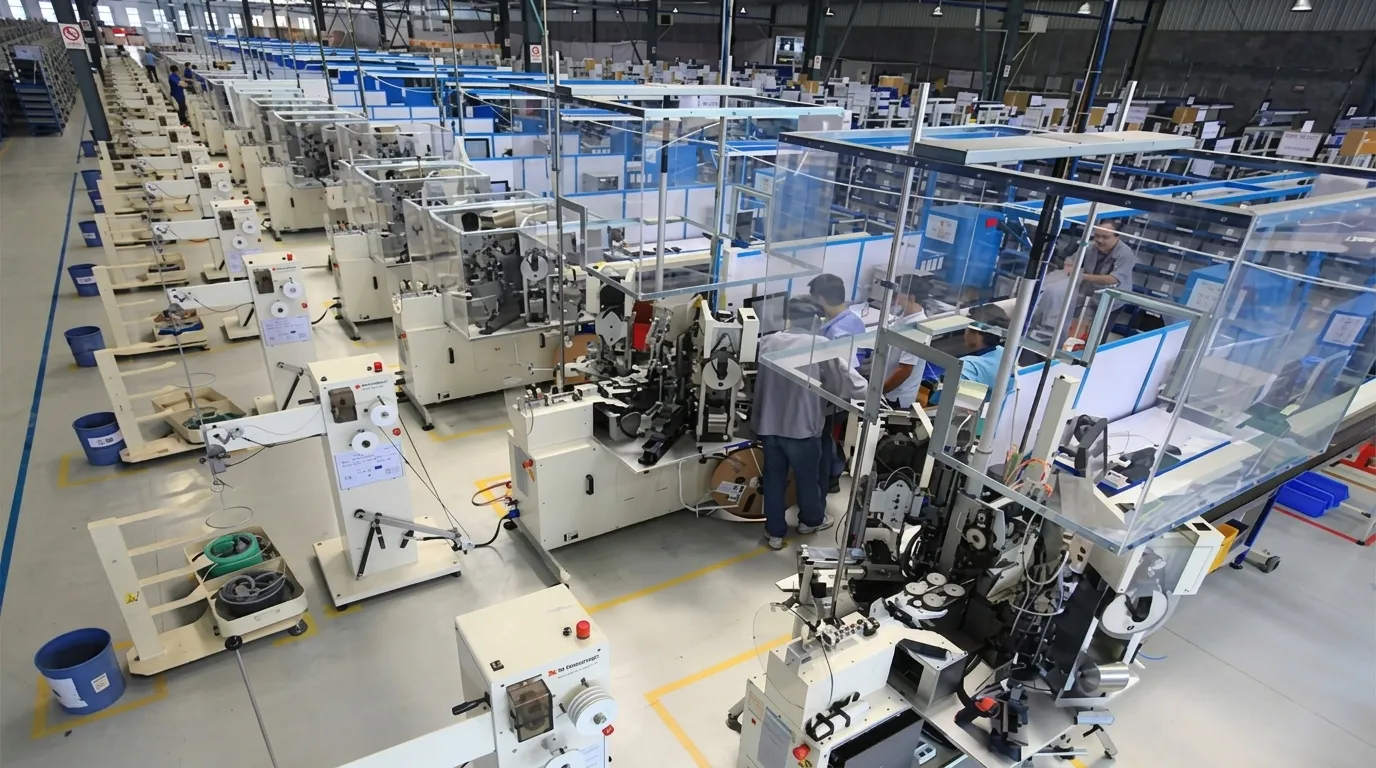
The launch of the pilot plant is imminent, initially slated for Q4 2025 but delayed due to challenges associated with maritime shipping from China, the source of most equipment. Two primary factors contributed to this setback: disruptions from conflicts in the Middle East that have disorganized shipping routes, and an overall saturation in international freight that has extended delivery times. Fortunately, these hurdles have been cleared as all critical equipment is now installed on site, paving the way for the pilot plant's imminent inauguration.
Looking beyond the pilot plant, the company is already preparing for the next phase. The construction of a large-scale industrial unit implies a significant organizational scaling, which is precisely what a portion of the funds raised earlier this year will be used for—to substantially enhance Falcon’s teams.
The pilot plant phase is crucial as it will enable the qualification, certification, and commercialization of Moroccan-produced graphite. Once operational, potential clients will have the opportunity to test the quality of the Moroccan product for their battery applications. The subsequent step will involve signing a firm purchase contract (offtake), which will solidify the final investment decision for the large facility.
In this qualification process, Falcon collaborates with the Chinese group Shanshan, a global leader in anode materials, which provides technical and commercial assistance to help Falcon meet the qualification thresholds demanded by clients. Beyond securing a firm purchase contract, Falcon Energy Materials must also ensure the land for its large factory. Two options are under consideration, one within and another outside the Park X industrial zone in Jorf Lasfar. Following this will be the finalization of the financing structure and the decision to commence construction, which is estimated to take 15 months. Falcon aims to complete these steps by the second half of 2026, with production set to begin by early 2028 at the latest.
The construction itself is not expected to be particularly complex. The site is compact, covering five to six hectares, with a single large building to house the entire manufacturing process—from grinding to coating and purification. The first task will be to construct the outer shell of the building, followed by the delivery and installation of equipment, and finally, the product's qualification.
The choice of location stems from a commercial partnership between Falcon and Fluoralpha for the supply of hydrofluoric acid (HF), an essential input for graphite purification. Fluoralpha's plant is currently under construction and is expected to supply Falcon Energy Materials and potentially Tinci for lithium salt production. Compared to other acids, HF is extremely corrosive and challenging to transport. The optimal scenario is to connect the Fluoralpha plant to the anode facility via a pipeline, hence the need to situate the site as close as possible to the Fluoralpha installation.
Commercial discussions are ongoing between the two partners, with Falcon hoping to reach a fair price for this acid. However, the company downplays the significance of this issue, noting that HF does not represent a major cost item, as the combined chemical inputs—hydrofluoric acid, nitric acid, and hydrochloric acid—account for only 20% to 30% of production costs.
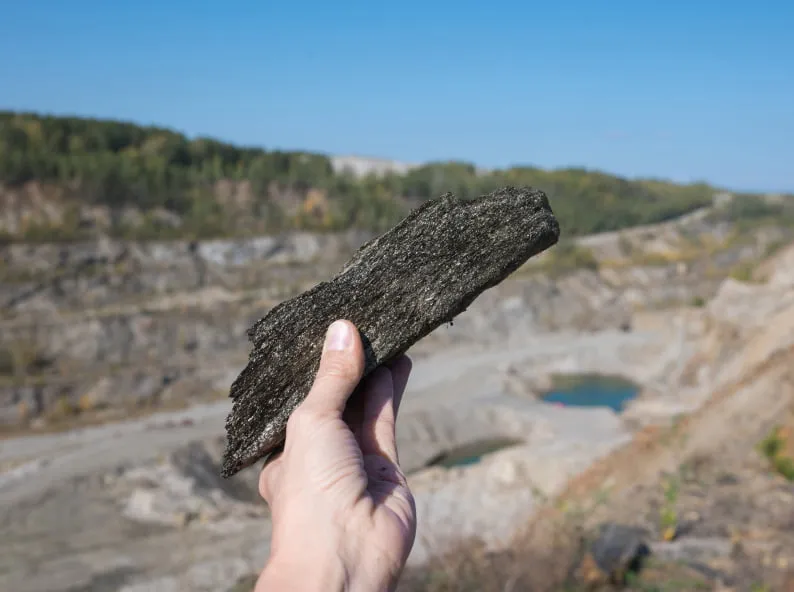
Initially, the project relied on self-supply from the Lola mine in Guinea. However, Conakry has since revoked all mining permits held by foreign operators, depriving Falcon of this asset. Nonetheless, this setback is not expected to incur additional costs or create uncertainty in the short term. Unlike other critical metals, graphite prices have remained relatively stable, with large mines operating in East and Southern Africa, along with numerous Chinese mines. The market currently experiences a significant oversupply, according to management.
Looking beyond graphite, Falcon is eyeing other critical minerals. Europe remains the closest market geographically, but the American market is also among Falcon's primary targets. Ultimately, this Moroccan product will enable clients to reduce their logistics costs compared to sourcing from Asia. The large facility is slated to be operational between Q4 2027 and Q1 2028, producing purified and coated spherical graphite (CSPG) for the first time in Morocco, with an annual capacity of 25,000 tons.
The project's economic parameters are considered highly attractive by management. The estimated production cost is $3,500 per ton, while the expected average selling price is around $6,500, closely aligned with the current spot price. This results in a gross operating surplus margin (Ebitda) of $3,000 per ton, leading to an annual Ebitda of $75 million based on a production volume of 25,000 tons—an impressive yield compared to the initial investment of $86 million.
Falcon's presence in Morocco is not expected to be limited to graphite valorization. Other projects, still in preliminary stages, are maturing. The methodology developed by the company over the past four years could be applicable to other critical minerals. Falcon believes it has gained significant insights on how to operate in Morocco and collaborate with Chinese partners while raising funds in Western capital markets.
Additionally, other minor metals are under consideration as the company targets sectors where Western knowledge of processing schemes remains limited. The adoption of a Chinese processing scheme could again be necessary, similar to the approach taken with graphite anodes. Manganese and tungsten are among the discussed avenues for future development.
As reported by medias24.com.