
On Wednesday, September 30, as international media buzz about her recent appointment, Fátima Zahra El Mansouri is gearing up for an intensive round of discussions aimed at forming a new government, a task entrusted to her by King Mohammed VI. The announcement came yesterday afternoon during a royal audience at the Rabat palace, just six days post the parliamentary elections where her political party, the Authenticity and Modernity Party (PAM), secured 97 seats in the new legislature. The National Rally of Independents (RNI) followed with 66 seats, and the Justice and Development Party (PJD) took third place with 65 seats. Notably, this election was marked by a remarkable abstention rate of 62%, the highest in two decades, reflecting significant social tension within the country, especially among the youth, driven by the ongoing migration crisis in Ceuta—now extending over 60 days—and the alarming youth unemployment rates.
The Moroccan Constitution of 2011, specifically Article 47, stipulates that the monarch holds the authority to appoint the new head of government from the party that garners the most seats. However, the announcement of the new leader was delayed until yesterday, as PAM operates on a collective leadership model rather than a single secretary-general. Some surprises emerged when it was revealed that El Mansouri would assume the role instead of another frontrunner, Aziz Ajanuch, the president of the Moroccan Football Federation. El Mansouri is now tasked with facilitating the formation of a coalition government capable of addressing significant challenges ahead, as analyzed by expert David Hernández.
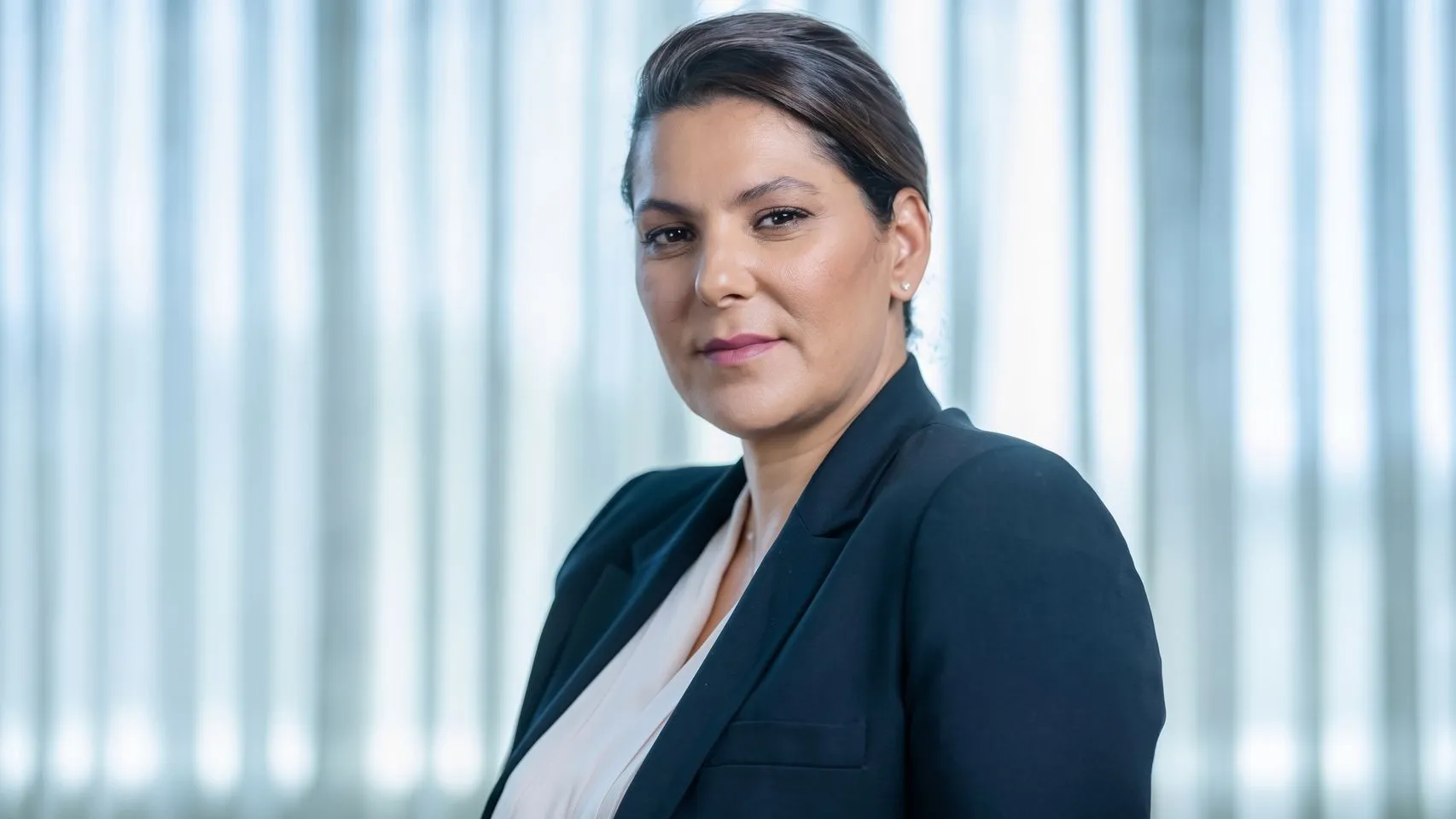
Fátima Zahra El Mansouri: A Political Force
Fátima El Mansouri is no stranger to the political arena, and understanding her profile is essential to gauge expectations for her tenure. She hails from a well-connected family; her father, Abderrahmane El Mansouri, served as a pasha (deputy governor) and Morocco's ambassador to the United Arab Emirates. Professionally trained as a lawyer specializing in Commercial and Corporate Law, she boasts an impressive academic background, having studied at Mohammed V University in Rabat, continued her education in Montpellier, and completed her studies in the United States. After this international experience, she returned to Morocco and joined the Marrakech Bar Association in 2005.
El Mansouri's career has been closely tied to the PAM, a party founded in 2008 and regarded as one of the closest to the monarchy. Just a year after its establishment, at the age of 33, she became the first female mayor of Marrakech, a city of significant economic and international importance due to its tourism. She held the mayoral position from 2009 to 2015 and reclaimed it in 2021, the same year she entered the government as Minister of National Planning, Urbanism, Housing, and Urban Policy. Her ascent continued in February 2024 when she took on the coordination of the party's collective leadership. Throughout her career, she has overcome various obstacles, including controversies such as the sale of a large family plot near Marrakech in 2023, which raised concerns of a potential conflict of interest. El Mansouri responded to these allegations by labeling them as "malicious leaks."
As highlighted by David Hernández, a researcher at the Real Instituto Elcano focusing on the Middle East and North Africa, El Mansouri is a politician with nearly two decades of extensive experience in institutional matters, factors that likely influenced the monarch's decision. Her public image has been meticulously crafted over the years; even before her appointment, she was referred to as "the president," and the Moroccan media outlet Maroc Hebdo characterized her as a "charismatic, elegant leader with a strong presence," qualities that have helped cement her position. However, she has rejected the notion that her rise should be analyzed solely through the lens of her gender or a hardened image. In a 2021 interview with Pam's magazine, she stated, "I am neither a woman of steel nor iron; I am a free activist."
Breaking New Ground in Moroccan Politics
El Mansouri's ascension to the head of the government breaks a glass ceiling in Morocco, as she becomes the first woman to hold this position in the country. In the broader Arab context, she follows only Tunisia's Najla Bouden as a female prime minister. This development transcends mere institutional significance; the representation of women in decision-making bodies remains limited. In the last legislature, women occupied only 95 of the 395 parliamentary seats, approximately 24%, with many gaining entry through quota mechanisms. The employment landscape presents an even starker contrast, with the female activity rate barely reaching 19.8%, compared to nearly 70% for men, which hinders economic autonomy, access to leadership roles, and the ability to participate equally in public life.
During her campaign, El Mansouri emphasized that "empowerment should not stop at mere symbolic presence or using women as a political facade." Following her meeting with the King, she referred to her appointment as a "historic moment," asserting that it reflects the monarch's willingness to acknowledge the capabilities of Moroccan women. However, the challenge now lies not just in her gender breaking through to the government leadership but in the measures she will implement. Hernández notes that "youth movements and feminists have expressed their dissatisfaction with the system in recent years. The test for the new executive will be its ability to respond to these demands." While there has been a recent increase in female representation in administration through significant appointments, such as royal advisors, ministers, and regional governors, these steps do not eliminate the persistent inequalities in employment, institutional representation, or private sectors.
The Family Code (Mudawana), promoted by Mohammed VI after the 2024 reform, still retains measures contrary to equality, such as allowing a husband to take additional wives if the first wife is infertile or allowing her to lose custody of children if she remarries after divorce. El Mansouri herself has experienced separation, is a mother of two, and was recognized by Forbes in 2014 as one of the most influential young Africans. Her profile could represent a paradigm shift or may remain superficial. As noted by Morocco World News, her designation could pave the way for others.
El Mansouri's appointment also introduces a unique element in the protocol sphere. Islamic tradition typically mandates that men and women pray in separate spaces, whereas Mohammed VI, as the Commander of the Faithful, shares certain religious rites and celebrations with the head of government. Her presence in this role might necessitate adaptations to the institutional setting, although sources consulted by EFE downplay the significance of this issue, asserting it does not affect her constitutional position or the powers of the role; it highlights how her appointment marks a novelty that extends beyond government.
The most pressing challenge for the new prime minister will be to regain the trust of a generation that has become disillusioned with the economic success narrative that Rabat projects externally. The abstention rates, protests associated with GenZ212, and the mass crossings into Ceuta in July are direct expressions of this frustration. Hernández summarizes, "Morocco is a nation of two speeds. On one side, there is a country investing in infrastructure and solidifying the port of Tangier as a major logistics hub. On the other, there are young people who cannot find jobs, access housing, and feel disconnected from this growth." One in three young people in Morocco neither studies nor works, exacerbated by rising living costs and challenges to independence. It is no surprise that only 3% of registered voters this year were aged between 18 and 24.
During her campaign, PAM pledged to establish an "Integration Pact" aimed at facilitating the employment of over three million unskilled and unemployed youth. This proposal places employment at the heart of the mandate, but it must be accompanied by measures addressing training, housing, and public services to be credible. El Mansouri has linked youth issues to the crisis in Ceuta, advocating for the return of Moroccan citizens stranded in the autonomous city to their families. "These are our children, and we must work with Spain to ensure their return to our country," she stated, expressing particular concern for those under 18. She emphasized the historical, deep, and necessary relationship with Spain, acknowledging its fluctuations but asserting that the neighboring bond must be robust in economic, commercial, and diplomatic terms.
Her words came during her first press conference following the electoral victory of her party, where she affirmed, "We are optimistic and will find solutions, but we will not renounce our positions regarding the human rights of our minors."
The Ceuta crisis will remain a sensitive issue for the new government, but it is crucial to clarify that El Mansouri's arrival does not necessarily signal changes in relations with Spain. In Morocco, foreign policy is intricately linked to the Palace, which appoints the minister responsible for this area. Hernández clarifies this to dispel any doubts about the implications of the new prime minister's role. "The King has significant competencies in Foreign Affairs, Defense, and Security. Therefore, no major shift in this area is expected solely due to a change in the head of government." The PAM's closeness to the Crown reinforces this expectation. "El Mansouri is not expected to deviate from the line set by the Palace or to make decisions that escalate tensions with Spain," asserts the Real Instituto Elcano researcher.
Instead, he describes the role of the head of government as one of management rather than strategic definition: "Prime ministers in Morocco have a very limited margin in foreign policy. Major decisions are made from the circle closest to the King." Consequently, any genuinely significant changes in relations with Madrid "may depend more on who is in La Moncloa in the coming months than on who occupies the head of government in Rabat."
Moreover, the upcoming **2030 World Cup** poses another substantial test for El Mansouri's administration. Morocco, in collaboration with Spain and Portugal, is organizing the tournament, which Rabat views as a historic opportunity to solidify its status regionally and project an image of modernity. The country is investing up to **€20 billion** in stadiums, airports, roads, and tourism services, with the most ambitious project being the Grand Stadium Hassan II, near Casablanca, which is projected to hold 115,000 spectators and is a candidate to host the final.
However, funding for this sporting event has become a source of social tension. Amidst youth unemployment, questioned public services, and a housing crisis, part of last year’s protests questioned why massive projects take precedence over daily needs. "For Morocco, hosting the World Cup is a national priority. It is its grand opportunity to establish itself as a power in the Arab and African world," notes Hernández. For the new prime minister, the challenge will be to translate investment into tangible social results, particularly in employment and not just infrastructure.
As reported by elespanol.com.