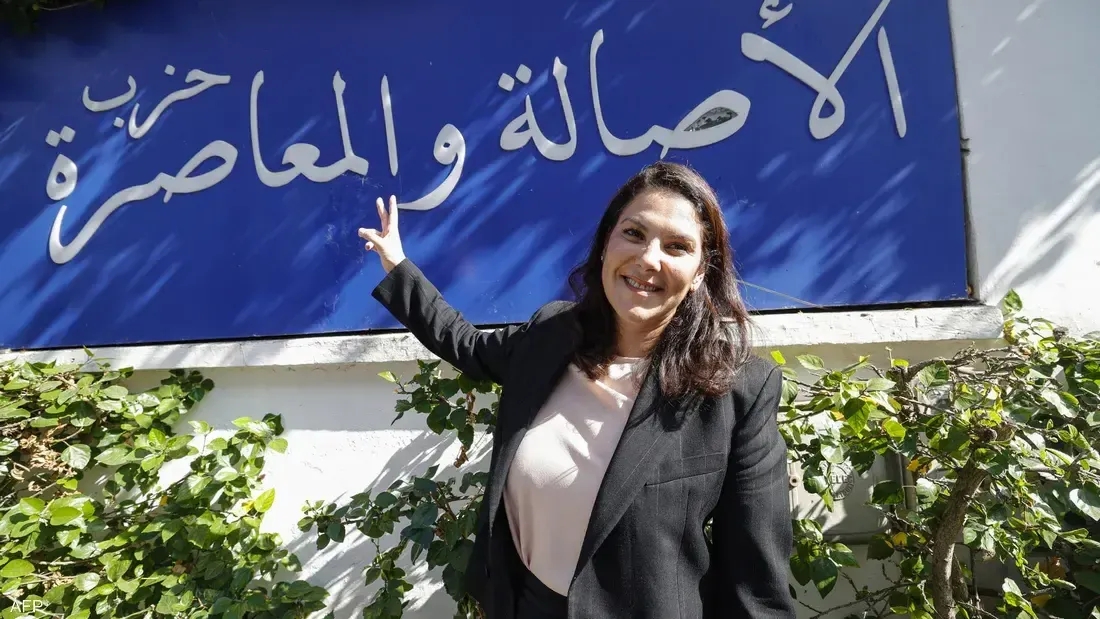

In a groundbreaking moment for Moroccan politics, Fatima Zahra Mansouri has ascended to the highest governmental position in Morocco, following her appointment by King Mohammed VI on Tuesday, September 29, 2026. The announcement came after a significant electoral victory for her party, the Authenticity and Modernity Party (PAM), which secured 97 seats in the legislative elections held on September 23, surpassing the National Rally of Independents and the Istiqlal Party. This appointment marks Mansouri as the first woman to lead the Moroccan government, a historic milestone for the country.
Who is Fatima Zahra Mansouri?
Born in Marrakech in 1976, Fatima Zahra Mansouri pursued a legal education, obtaining a bachelor’s degree in private law from Mohammed V University in Rabat. She furthered her studies with a diploma in business contracts law from the University of Montpellier in France and earned a certificate in Anglo-Saxon law from Pace University in the United States. Mansouri began her professional journey in law, specializing in real estate and becoming a licensed lawyer in Marrakech since March 22, 2005.
Her political career commenced in 2007 through the Movement for All Democrats, and she became one of the founding members of the Authenticity and Modernity Party in 2008. Mansouri made her mark in local politics in 2009 when she was elected the head of Marrakech’s municipal council, making her the first woman to hold the mayoral office in the city. She served in this role until 2015, returning after the 2021 elections to lead the council once more.
Simultaneously, she ventured into parliamentary politics, serving as a member of the House of Representatives from 2011 to 2016, and was re-elected for the following term from 2016 to 2021. Additionally, she presided over the National Council of her party from 2015 to 2024, showcasing her leadership in various capacities.
From Mayor to Prime Minister
In October 2021, Mansouri transitioned into government service as the Minister of National Territorial Planning, Urbanism, Housing, and City Policy, a role she maintained until her recent appointment as Prime Minister. During this time, she also continued to lead the Marrakech municipal council, combining her local governance experience with her new government responsibilities, thereby strengthening her political influence within PAM.
Since 2024, Mansouri has served as the coordinator of PAM's collective leadership, a position she held when King Mohammed VI entrusted her with the formation of the new government. Her elevation to the prime ministership signifies a significant advancement for women in high political offices in Morocco, as she becomes the first female prime minister since the establishment of the position in its current form.
As she embarks on forming her new cabinet, Mansouri faces a myriad of pressing economic and social issues, including employment, purchasing power, healthcare, education, and investment. Additionally, her administration will be linked to Morocco's preparations for co-hosting the 2030 FIFA World Cup alongside Spain and Portugal, encompassing various infrastructure and development projects.
Mansouri's appointment heralds a new era in Moroccan politics, coming on the heels of legislative elections that reshaped the parliamentary landscape, with her party leading with 97 seats. This pivotal moment not only reflects her personal journey from a lawyer to the pinnacle of political leadership but also symbolizes a broader shift toward greater female representation in government.
As reported by msdrnews.com.