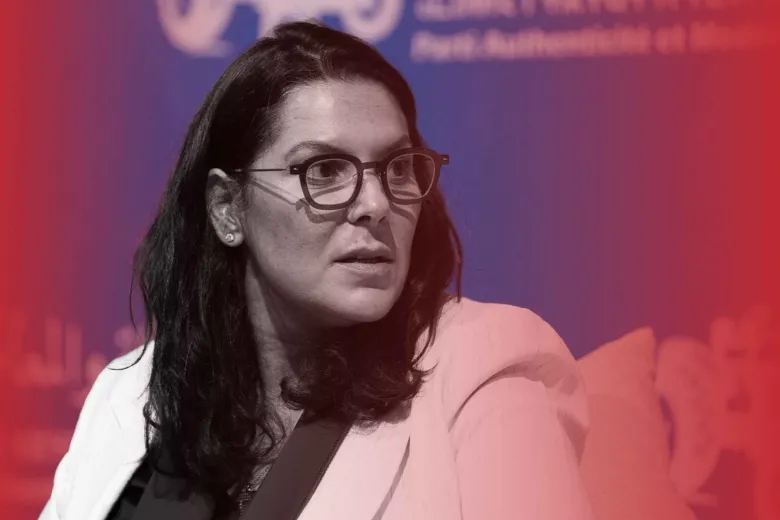

In a historic moment for Morocco and the Arab world, lawyer Fatima Zahra Mansouri is poised to become the nation’s first female prime minister, as King Mohammed VI has asked her to form a government. This significant development is seen as a reflection of the evolving societal dynamics in Morocco, with women increasingly taking on pivotal roles in national governance. Observers note that while traditional perceptions of women in leadership positions are still influenced by cultural norms and religious contexts, there is a growing recognition and challenge to these stereotypes. Many hope that Mansouri's potential appointment signifies the dawn of a quiet revolution in the region, joining the ranks of Tunisia's Najla Bouden and Sara Zaafarani as notable female leaders in the Arab world.
Mansouri’s rise to this position follows her leadership of the Authenticity and Modernity Party (PAM), which emerged victorious in the legislative elections held on September 23, garnering 97 out of 395 seats in the House of Representatives. Interestingly, anecdotal evidence points to women and younger voters as key demographics that supported her campaign. Now, she faces the crucial task of negotiating with other political party leaders—predominantly older male figures—to form a coalition government, requiring at least 101 additional votes to secure a majority in parliament.
Several political parties have expressed interest in joining a coalition government, but PAM aims to maintain control over the speakership of the House of Representatives and secure top ministerial positions. The formation of a cohesive cabinet that aligns with an agreed-upon programme focusing on social and economic priorities is imperative, particularly in addressing public expectations and gaining the King's endorsement. Mansouri’s legal background and experience in dispute resolution may prove invaluable in navigating these complex negotiations, drawing inspiration from a Moroccan proverb that emphasizes strength tempered with gentleness.
A Prominent Background
Should she be confirmed as prime minister, Mansouri will not only make history as Morocco’s first woman in this role but also as one of its youngest leaders. Born in Marrakesh in 1976 to a prominent family, she is colloquially referred to as ‘the Pasha’s daughter.’ Her academic journey includes studying law and business administration across Morocco, France, and the United States, and she has established a career as a lawyer before delving into party politics and civil society. With a reputation for her strong personality and effective management of discord, Mansouri served as the Mayor of Marrakesh from 2009 to 2021, an experience that provided her with practical governance skills.
Amidst a backdrop of increasing voter apathy, particularly among the youth, who exhibited a turnout of just 38% in recent elections—down from 50% in 2021—Mansouri has shown a willingness to address the pressing demands of Generation Z. Issues such as unemployment, education, healthcare, and urban-rural inequalities are at the forefront of youth concerns, with youth unemployment standing at a staggering 37%. The National Rally of Independents (RNI) has criticized recent protests as politically motivated, yet they stemmed from genuine grievances, including accountability for recent tragedies at local healthcare facilities, leading to broader societal discontent.
Negotiating a Coalition
In her quest to form a government, Mansouri initiated discussions with various parties, beginning with the RNI, which secured 66 seats in the elections. RNI leader Mohamed Chouki's cautious remarks hint at a preference for positioning his party in opposition rather than as a coalition partner, particularly following a contentious election campaign characterized by personal attacks between PAM and RNI. This situation underscores a broader desire for political discourse that transcends traditional party politics, focusing instead on the relationship between politicians and voters and the fundamental responsibilities of both parties.
The upcoming parliament may present a diverse array of opposition groups, including liberals, Islamists, and socialists, although some have already signaled their unwillingness to join the government. The Justice and Development Party, led by former prime minister Abdelilah Benkirane, recently voted against participating in the coalition, citing ideological differences with PAM. Potential coalition partners, including the centrist Istiqlal and the traditionalist Popular Movement, must navigate their ideological differences to unite behind a national project that reflects the aspirations of Moroccan citizens.
As Mansouri embarks on this challenging journey, she faces a pressing agenda that includes addressing development disparities, combating corruption, and improving social services. With Morocco grappling with economic challenges exacerbated by rising oil prices and slowed growth, her government will need to prioritize reforms in employment, education, healthcare, and public administration to meet the expectations of a disillusioned populace. The path ahead is undoubtedly steep, but Mansouri's potential leadership represents a significant turning point for Morocco's political landscape.
As reported by en.majalla.com.