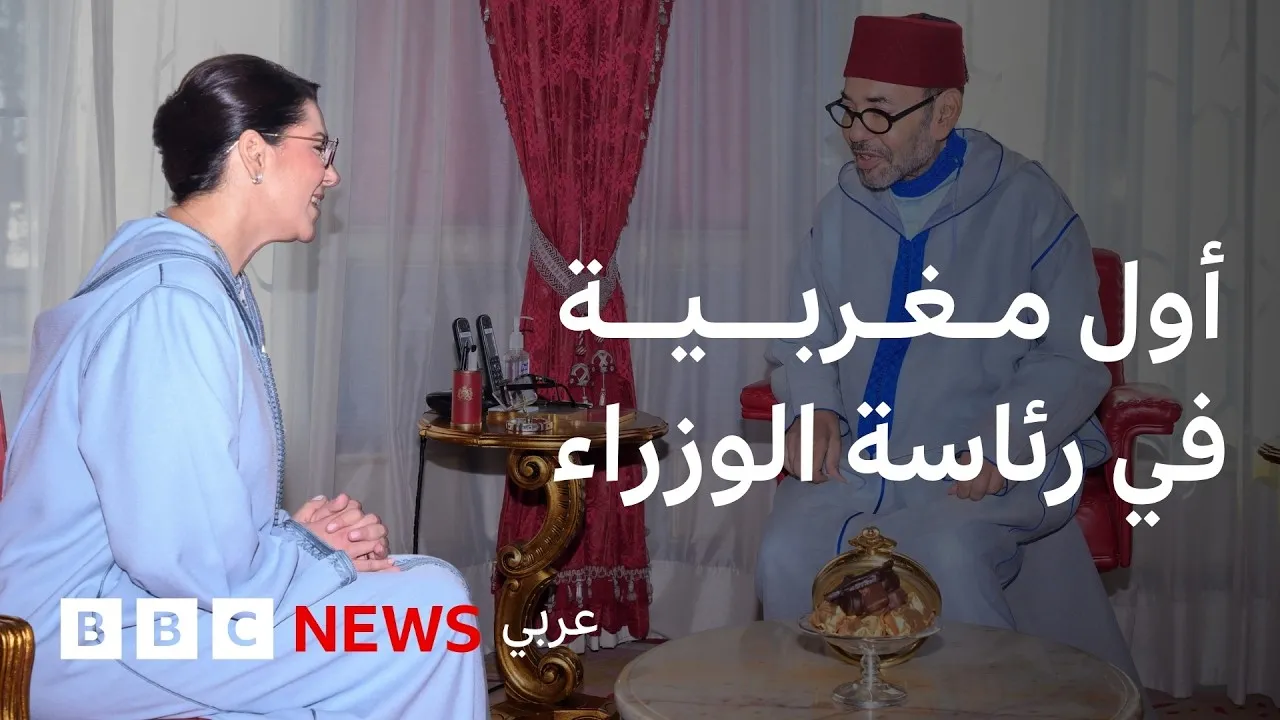

Fatima Zahra Mansouri, who was appointed by Moroccan King Mohammed VI on Tuesday evening during a royal reception at the palace in Rabat, has embarked on a remarkable political journey since 2008, culminating in her historic role as the first woman to serve as Prime Minister of Morocco. This significant appointment comes as she succeeds businessman Aziz Akhannouch, marking a pivotal moment in Moroccan history as she breaks through barriers in a field often perceived as male-dominated. Mansouri's rise to power is not only a personal achievement but also a source of pride for Moroccan women and a testament to the King's belief in women's capabilities and their rightful place in leadership roles.
Born on January 3, 1976, in Marrakech, Mansouri received part of her education in French institutions before pursuing a degree in law, culminating in a private law degree from Mohammed V University in Rabat, a postgraduate diploma in business contract law from the University of Montpellier in France, and a certificate in Anglo-Saxon law from Pace University in the United States. Following her academic pursuits, she established herself as a commercial and real estate lawyer, gaining valuable experience in legal matters related to investment and entrepreneurship, thereby acquiring a deep understanding of the pressures and challenges faced by economic players and investors.
Fatima Zahra Mansouri is keen to present herself as a politician forged through party work and local governance rather than mere rhetoric. She rejects the stereotypical label of the 'iron woman,' stating in a French media interview, 'I am not a woman of steel or iron... I am a free activist.' Her political career began in 2007 when she joined the 'Movement for All Democrats,' contributing to the establishment of the movement's branch in Marrakech, led by Fouad Ali El Himma, a current advisor to King Mohammed VI. This movement sought to address the waning credibility of traditional Moroccan parties, which were struggling to compete with the Islamic-oriented Justice and Development Party. Mansouri was also a founding member of the Authenticity and Modernity Party when it was launched in 2008.
The year 2009 marked a significant milestone for Mansouri as she was elected mayor of Marrakech, becoming the first woman to hold this position in the city's history and the second woman to lead a major city council in Morocco. This experience solidified her reputation as one of the leading female figures in local governance, further expanding her responsibilities when she was elected as a member of the House of Representatives, Morocco's lower parliamentary chamber, in 2011. She renewed her parliamentary presence in 2016 and returned to local prominence following the 2021 municipal elections, where she was re-elected as the mayor of Marrakech, a pivotal moment in Moroccan women's participation in local governance.
Simultaneously, Mansouri's political career allowed her to enter government, securing the position of Minister of National Planning, Urbanism, Housing, and City Policy in Aziz Akhannouch's government in 2021. Her leadership of the National Council of the Authenticity and Modernity Party during the party's third national congress in 2016, where she faced off against the current Minister of Justice Abdellatif Ouahbi, was a prominent highlight in the political journey of 'the daughter of the pasha,' as she is affectionately known. Her re-election for a second term in 2020 at the helm of the party's parliament provided her with significant influence within the political organization, paving the way for her to take on greater roles at the national level, including her appointment in February 2024 to coordinate within the triad leadership of the party's General Secretariat.
As Mansouri became the most prominent face of the collective leadership leading up to the legislative elections on September 23, particularly regarding major political stances and public engagement, she did not shy away from her ambition to become Prime Minister. When asked at the first press conference held by the Authenticity and Modernity Party after their electoral success if she could be the first woman to head a government in Morocco, she remarked, 'If I am asked to take on this responsibility, it would be a great honor.' Throughout her journey, she has not solely focused on political affairs; she has also dedicated herself to community work, heading the French Law Students Association and the 'Mounia' Association, which is committed to heritage preservation. In 2014, Forbes named her one of the 20 most influential young women in Africa, and she was recognized as a Global Young Leader that same year.
As Mansouri commences her term as Prime Minister, she carries the historical weight of being the first Moroccan woman to hold this office. However, she faces numerous challenges as she takes her initial steps in the government headquarters in the Mechouar district of Rabat. Key issues such as employment, purchasing power, public services, and restoring youth trust in politics, along with the urgent need to expedite preparations for major events, including the 2030 World Cup and the implementation of the autonomy plan for the Sahara region, lie ahead of her.
As reported by alaraby.co.uk.