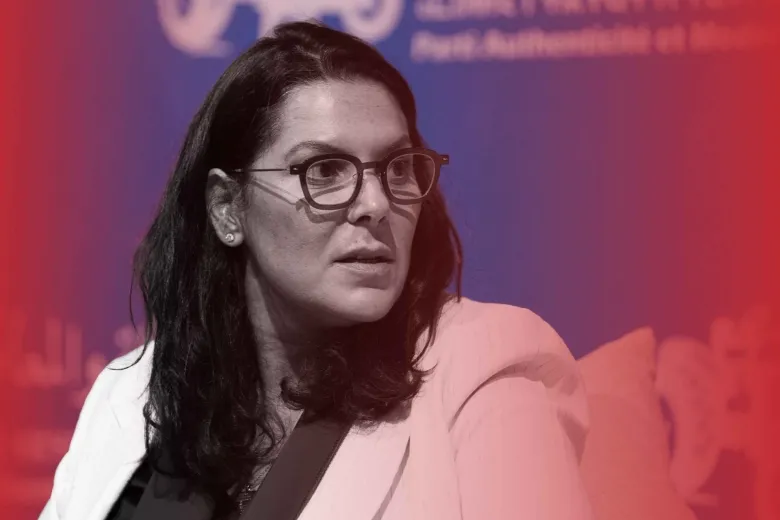

Lawyer Fatima Zahra Mansouri stands on the brink of making history as Morocco's first female prime minister, a significant milestone that positions her as only the third woman to hold such a role in the Arab world. This pivotal moment comes after King Mohammed VI has tasked her with the formidable responsibility of forming a new government. Observers suggest that her appointment is emblematic of a broader social transformation and the increasing involvement of women in the political sphere. While cultural norms and religious influences have historically shaped perceptions of women in leadership within Morocco, there is a growing challenge to these stereotypes. Many hope that Mansouri's ascendancy will symbolize a quiet revolution, following in the footsteps of Tunisia’s Najla Bouden and Sara Zaafarani, two other notable female prime ministers in the region.
Mansouri's rise follows her leadership of the Authenticity and Modernity Party (PAM), which secured first place in the recent legislative elections held on September 23, winning 97 of the 395 seats in the House of Representatives. Anecdotal evidence indicates that her primary support came from women and young voters, a demographic she must now negotiate with as she seeks to form a coalition government. To achieve a majority, she will need to secure at least 101 additional parliamentary votes, a task complicated by the necessity to engage with leaders of other political parties, predominantly older men who dominate the political landscape.
While several parties are eager to form a coalition, PAM's priorities include retaining the speakership of the House, securing key ministry positions, and establishing a cohesive cabinet centered around a mutually agreed-upon program that aligns with social and economic priorities reflecting public expectations and the King's backing. Mansouri's background in legal dispute resolution may prove advantageous in navigating the complex political landscape, adhering to the Moroccan saying: 'Strength without harshness, gentleness without weakness.'
A Prominent Background
Should Mansouri take office, she will not only be Morocco’s first female prime minister but also one of its youngest leaders. Born in Marrakesh in 1976 into a respected family, she is affectionately known as 'the Pasha's daughter.' Her academic journey includes studying law and business administration in Morocco, France, and the United States, followed by a career as a practicing lawyer before transitioning into party politics and civil society. Her tenure as Mayor of Marrakesh from 2009 to 2021 provided her with substantial governance experience, shaping her ability to handle political disagreements and engage effectively with constituents.
The youth of Morocco are looking for a government that can address their aspirations; however, a pervasive lack of trust in politicians has resulted in voter apathy, as evidenced by the recent turnout of just 38%, a decline from 50% in 2021. Mansouri, who previously served as Minister of Housing and Urban Policy in the outgoing government, has been attentive to the demands of Generation Z, particularly during the youth protests that swept through Morocco at the end of the previous year. These protests highlighted critical issues such as unemployment, access to education, healthcare, local development, and the growing urban-rural divide, with youth unemployment standing at a staggering 37%—a concern that cannot be overlooked.
The National Rally of Independents (RNI), which occupies the second position in the parliamentary landscape with 66 seats, described the protests as a calculated conspiracy against the former government. This crisis was exacerbated by the deaths of eight women at a maternity hospital in the city of Agadir, which resulted in public outcry and led to the health ministry being held accountable.
Navigating Coalition Politics
Mansouri initiated discussions with other political parties last week, beginning with the RNI. While RNI leader Mohamed Chouki remained non-committal about the negotiations, he indicated that his party would contribute to the nation's best interests. Analysts suggest that his remarks could imply a preference for an opposition role rather than a coalition government. Relations between PAM and RNI soured during the electoral campaign, marked by personal attacks and contentious debates on various issues.
The recent elections prompted discussions that extend beyond simple party politics, as the public seeks a more profound dialogue regarding political engagement and the responsibilities of politicians towards their constituents. The composition of the next Moroccan parliament is likely to feature three distinct opposition groups: liberals led by the RNI, Islamists from the Justice and Development Party, and socialists, though some have already signaled their reluctance to join a coalition government. Abdelilah Benkirane, the Secretary-General of the Justice and Development Party and former prime minister, noted that a recent internal vote determined against joining the new government, citing ideological differences with some PAM leaders.
Potential coalition partners could include the centrist Istiqlal Party, the traditionalist Popular Movement, and the socialist parties USFP and PPS. PAM, emerging as a significant force since its establishment in 2008, has sought to unify various political figures, human rights advocates, and civil society leaders, yet without strict adherence to a singular ideological framework. In light of the challenges ahead, prospective partners may need to set aside some of their ideological differences and rally around a broader national project that emphasizes the New Development Model and unity, resonating with the 'Morocco First' sentiment voiced by young PAM supporters during the election.
As she embarks on this monumental journey, Mansouri faces the daunting task of securing a robust majority capable of enacting essential legislation and addressing the national budget. Key national priorities include tackling development disparities, corruption, the social state's efficacy, and the equitable distribution of wealth among individuals and regions. High on her agenda will be labor market reform, enhancing education and healthcare systems, improving public administration, increasing wages and pensions, and alleviating the cost of living—issues that are pressing in a nation grappling with economic challenges such as rising fuel prices and a slowdown in economic growth.
As reported by en.majalla.com.