
Feijóo's Accusations Against Morocco
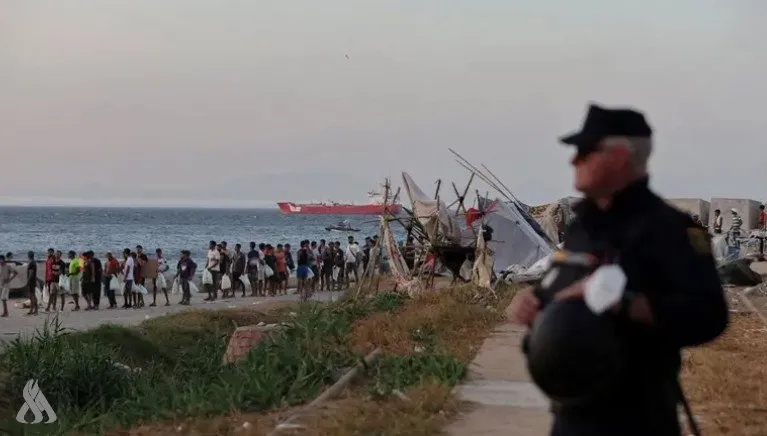
Alberto Núñez Feijóo, the leader of the Popular Party, has intensified his criticisms towards the Spanish government, led by Prime Minister Pedro Sánchez, regarding the management of the ongoing migration crisis in Ceuta. In a recent interview with El Mundo, Feijóo asserted that the events occurring in this autonomous city could serve as a significant and detrimental marker of Sánchez's political career. He directly pointed to Morocco as the cause of the increased influx of migrants into Ceuta, claiming that Moroccan authorities were aware of the mass movements and either allowed them to happen intentionally or failed to take appropriate action. He warned that as long as those who crossed the border remain in the area, the situation poses an ongoing threat to Spain's territorial integrity.
Response to the Crisis and Support for Felipe VI
Feijóo criticized the Spanish government's response to the crisis and expressed that had he been in charge during this turbulent time, he would have remained in Ceuta until the situation was resolved. He stressed the need for stricter control from Morocco regarding its border. Furthermore, he proposed invoking Article 8 of the Spanish Constitution, which outlines the role of the Armed Forces in defending the nation's sovereignty and territorial integrity. In addition, Feijóo expressed his support for King Felipe VI’s role during the crisis, arguing that the monarchy should play a more significant part and even suggested that the King visit Ceuta to show solidarity. He firmly stated that if he were president, he would never marginalize the monarch's involvement in such critical matters.
Another contentious issue raised by Feijóo is the handling of unaccompanied minors who have recently arrived in Ceuta. He firmly rejected the idea that regions governed by the Popular Party should accept these minors for relocation to the mainland, insisting that they should be reunited with their families instead. Moreover, he has called for increased engagement from the European Union in safeguarding Ceuta and Melilla, arguing that the crisis impacts the EU's external borders, thus necessitating a collective response.
As reported by antena3.com.