
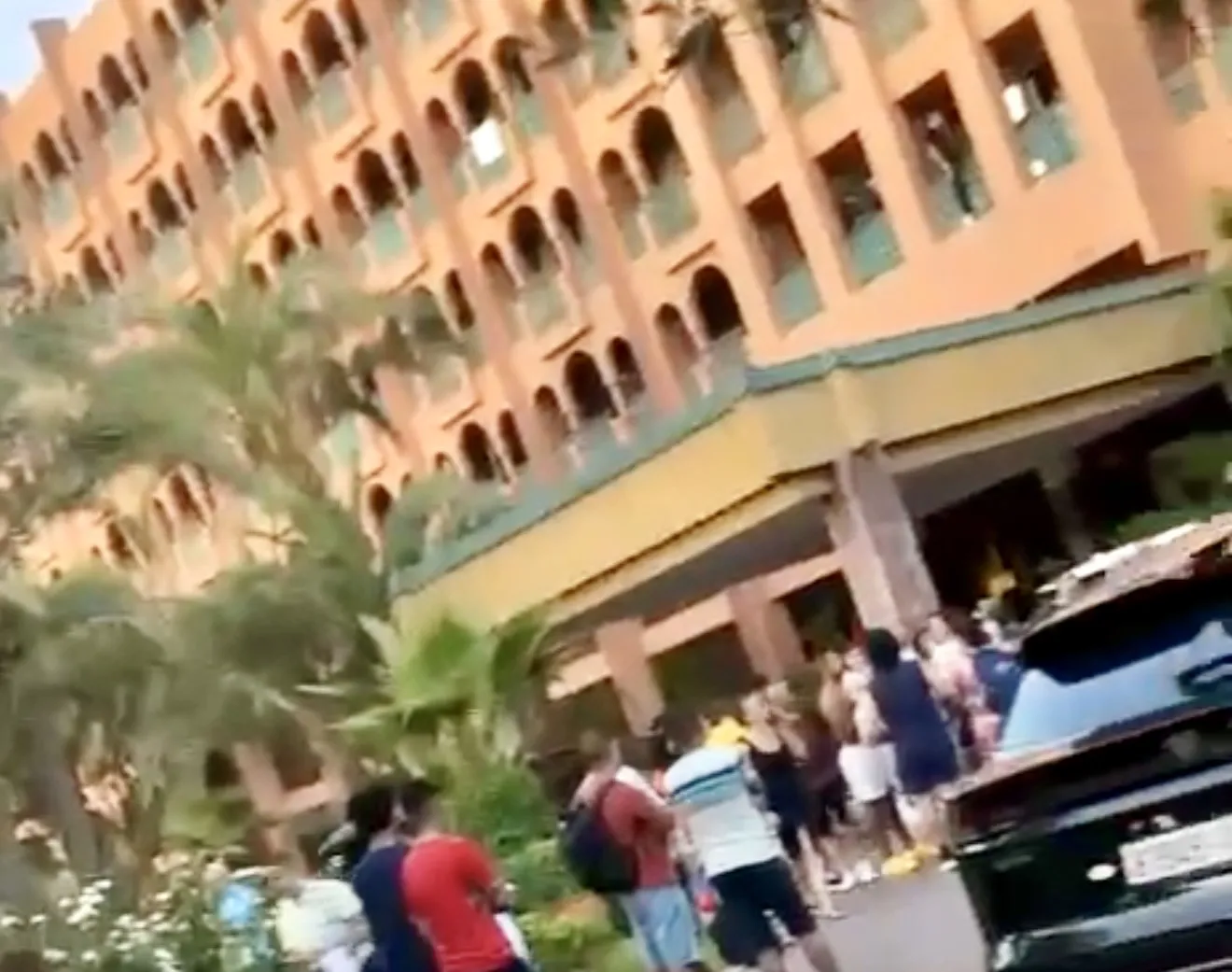

On July 12, 2026, a fire reportedly affected the spa of the El Andalous Hotel in Marrakech. A notice issued days later by a guest mentioned that the fire started around 5 AM and raised concerns regarding the staff's ability to respond effectively. While these accounts do not serve as expert testimonies, they do prompt a crucial question: in a hotel with nearly 200 rooms, who is responsible for regularly and independently verifying that its fire safety systems are functioning as they should?
It is essential not to jump to conclusions regarding the incident. As of now, there is no definitive evidence to suggest that the fire at the El Andalous Hotel was initiated by a shisha, a cigarette, a faulty charger, an electrical outlet, or any other equipment. However, a booking platform, Planet of Hotels, has echoed a guest's comment that the spa fire was triggered at 5 AM on July 12, 2026, and that the staff appeared unprepared to handle the situation. This account remains anecdotal and does not constitute an investigation report.
Accountability and Fire Safety Procedures
This raises pressing questions about accountability: When was the fire detected? Who detected it, and through which system? When was the alarm activated, and how much time elapsed before emergency services arrived? Did the night staff follow the established procedures? Were guests evacuated promptly, and through which routes? Did the fire doors and smoke ventilation systems operate effectively? Did this incident reveal a failure in the safety protocols, or simply demonstrate that existing procedures were functional?
It is crucial to note that El Andalous is not a small family-run establishment. With 195 rooms and suites spread over five floors, the hotel is situated on approximately 7,000 square meters of gardens, featuring a spa and various service areas. In a hotel of this size, the risk of fire extends beyond the room where a guest may have left a charger plugged in.
The pertinent question remains: when was the last comprehensive check conducted on the hotel's fire safety systems, and what were the findings? Morocco does have regulatory frameworks in place. The Moroccan General Construction Regulations pertaining to fire and panic safety stipulate specific provisions for hotels, including stairwells, alarm systems, automatic detection, smoke ventilation, and measures to prevent or slow the spread of fire.
For hotels exceeding certain occupancy and height thresholds, requirements are explicitly detailed. Regulations specify provisions regarding staircases and allow for compensatory measures, such as additional detection systems, smoke ventilation, fire-resistant doors, or enhanced access for emergency responders in the absence of a second staircase. However, who ensures that these regulations remain adhered to years after the hotel's opening, following renovations, technical modifications, and as equipment ages?
Since the tourism classification reform, the Ministry of Tourism has indicated that establishments are subject to an inspection by the regional classification committee, which aims to verify compliance with construction and equipment standards. As of May 2026, a mystery visit program encompasses 2,500 establishments across the Kingdom. Yet, these mystery visits do not equate to a fire audit. They primarily assess customer experience and service quality, covering areas such as reservation processes, reception, dining, cleanliness, room service, fitness and pool facilities, check-in, and check-out procedures.
The Need for Comprehensive Fire Audits
While these evaluations are excellent for measuring the quality of a stay, a mystery guest is not necessarily a fire safety engineer. Furthermore, the quality of service and an establishment's ability to evacuate 300 or 400 individuals in the middle of the night are two entirely different matters. Therefore, it is misleading to suggest that a reform in hotel classification automatically resolves fire safety concerns; it does not.
Where, then, is the periodic fire audit? This is where the discussion becomes particularly critical. Is there a general mechanism in place that mandates all Moroccan hotels to undergo an independent, comprehensive fire audit that is systematically renewed every three years, as recommended in professional discussions? Should a 195-room hotel wait for its next classification review to have an external evaluation of its entire fire safety system? If not, who intervenes? How frequently? Based on what standards? With what written reports? What corrective obligations arise?
The most perilous scenario is not necessarily a fire breaking out at noon; it is one that ignites at 4 or 5 AM when the hotel is asleep. Guests are in their rooms, portions of the staff are absent, kitchens may be closed, and management might not be present. The corridors are silent. This is why the issue of night staff should be central to any hotel audit. Moroccan regulations stipulate that specifically designated employees must be trained to implement emergency response measures.
However, how many team members present at 5 AM truly know how to execute an evacuation? Not how many have signed a training sheet or attended a PowerPoint presentation, but how many have genuinely practiced the procedure together? Law No. 80-14 governs construction, transformation, and expansion projects for tourist accommodations. Following any significant renovation or transformation, has a new, thorough fire risk assessment been conducted? Not merely a sign-off on the work but a genuine re-evaluation.
Now, we are beginning to address the heart of the matter. Morocco has indeed made significant regulatory advancements in recent years regarding tourist accommodations. The new classification framework has updated standards for equipment, dimensions, functionality, and service quality. However, regulations are only a starting point. How many hotels have undergone checks? How many presented fire safety anomalies? How many received warnings? How many corrected their anomalies? How many faced sanctions or suspensions? How many evacuation drills have been conducted? How many fires have affected tourist establishments? What were their causes? How many resulted in casualties?
Without this data, the discussion remains confined to anecdotes. A serious public policy cannot be guided solely by stories. The case of El Andalous should not become a media trial. It would be entirely unjust to conclude at this moment that El Andalous mishandled its fire incident. Fires can occur despite all precautions. A system can be compliant, and an appliance can fail. A guest's reckless behavior can lead to an accident. Fire safety can never guarantee zero risk.
If tomorrow, at 5 AM, a fire breaks out on the third floor of a 195-room hotel, who knows what actions to take? The receptionist? The night watchman? The security officer? The technician? The housekeeping staff on duty? More importantly, have they all practiced the evacuation together?
In Marrakech, and across other major destinations, professionals might need to consider a targeted audit of tourist accommodations focusing on fire safety, electrical systems, evacuation protocols, night staff training, maintenance, and insurance. Not a public relations campaign or an operation aimed at reassurance, but a genuine assessment with identified anomalies, timelines for corrections, follow-up checks, and, when necessary, sanctions.
Because a hotel may boast four stars and have an impressive lobby, but when the fire alarm rings at 5 AM, it is neither the stars, nor the marketing, nor the brochures that evacuate guests. It is the equipment, the procedures, the trained staff, and the seconds that count. This is where Moroccan hospitality must be willing to be evaluated moving forward.
As reported by premiumtravelnews.com.
