
Football and the Humanitarian Crisis in Ceuta
The world of football has recently found itself entwined in the escalating tensions surrounding the influx of migrants from Morocco to the Spanish enclave of Ceuta. This situation was starkly illustrated during the Madrid derby of La Liga, where, just thirteen minutes into the match, a provocative banner appeared in the south stand of the Metropolitano Stadium, proclaiming: “Ceuta es España. Ni se arruga, ni se tapa.” (Ceuta is Spain. It is neither rolled up, nor covered.) This statement referenced the controversial actions of Real Madrid players, including Kylian Mbappe, Vinicius Junior, and Ibrahima Konate, who previously showcased shirts bearing a solidarity message for Ceuta during a match against Elche. The enclave of Ceuta has become a focal point of political strife between Spain and Morocco, particularly in light of a record surge in migrant crossings, which saw over 72,000 individuals arrive from Morocco in just two days at the end of July, leading to a severe humanitarian crisis.
This crisis has been substantiated by the Spanish NGO Caminando Fronteras, which reported a staggering 141 deaths in the aftermath of these migrations. The players, with various ties to African nations—Konate hailing from a Malian family and Mbappe from a Cameroonian and Algerian background—expressed their desire to highlight the plight of all affected by the crisis, not just those in Ceuta. Mbappe articulated this sentiment, stating, "I also wanted to think about all the people who are suffering, because in the end, I am human and I don’t want to prioritise the suffering of one group over another." He emphasized the importance of acknowledging the hardships faced by migrants who lost their lives during this tumultuous period.
The Divided Response in Spanish Football
In the wake of the players' actions, Real Madrid affirmed its respect for the individual choices of its players, while rival club Barcelona opted not to don the solidarity shirts prior to their match against Levante. The president of La Liga, Javier Tebas, criticized the three Real Madrid players, dismissing the campaign's political implications. David Aganzo, the president of the Spanish footballers’ union AFE, stressed the necessity for players to be adequately informed about the motivations behind such gestures before being compelled to participate.
Despite the contentious atmosphere surrounding the Madrid derby, supporters from both rival factions momentarily united in a shared chant of “Ceuta no se vende, Ceuta se defiende” (Ceuta is not for sale, Ceuta must be defended), showcasing a rare moment of solidarity amidst the usual rivalry. However, both Mbappe and Vinicius faced jeers from the crowd, indicating the polarized opinions surrounding the players' expressions of support. Jorge Garcia, an Atletico Madrid supporter, labeled their actions as “disrespectful” to both Ceuta and Spain, thus highlighting the divisive nature of the ongoing debate.
The campaign for solidarity, initiated on September 11 by the Asociacion Valenciana de Empresarios (AVE), sought to convey a message of support for the residents and businesses of Ceuta amid the migrant crisis. Vicente Boluda, the chair of AVE and a former interim president of Real Madrid, underscored this initiative's intent to foster territorial and social cohesion within Spain. Meanwhile, Spain’s national coach, Luis de la Fuente, visited Ceuta with the World Cup trophy, stating, “This is Spain, this is Ceuta,” while Real Madrid's president, Florentino Perez, indicated that his visit was pre-planned and not a reaction to the controversy.
As the crisis unfolds, the narrative surrounding migration and solidarity remains complex. Youssef Temsamani, a journalist of Moroccan descent based in Spain, highlighted the delicate position of the players, who found themselves caught between expressing solidarity and avoiding political implications. He criticized the framing of the migrant crossings within Spanish media and political discourse as an “invasion” or “occupation,” underscoring the need for a more nuanced discussion that includes the voices of migrants themselves. Luhay Hamido, president of AD Ceuta football club, advocated for individual players' rights to make personal decisions regarding their involvement in the solidarity campaign, emphasizing that not everyone can be compelled to align with a cause they do not fully comprehend.
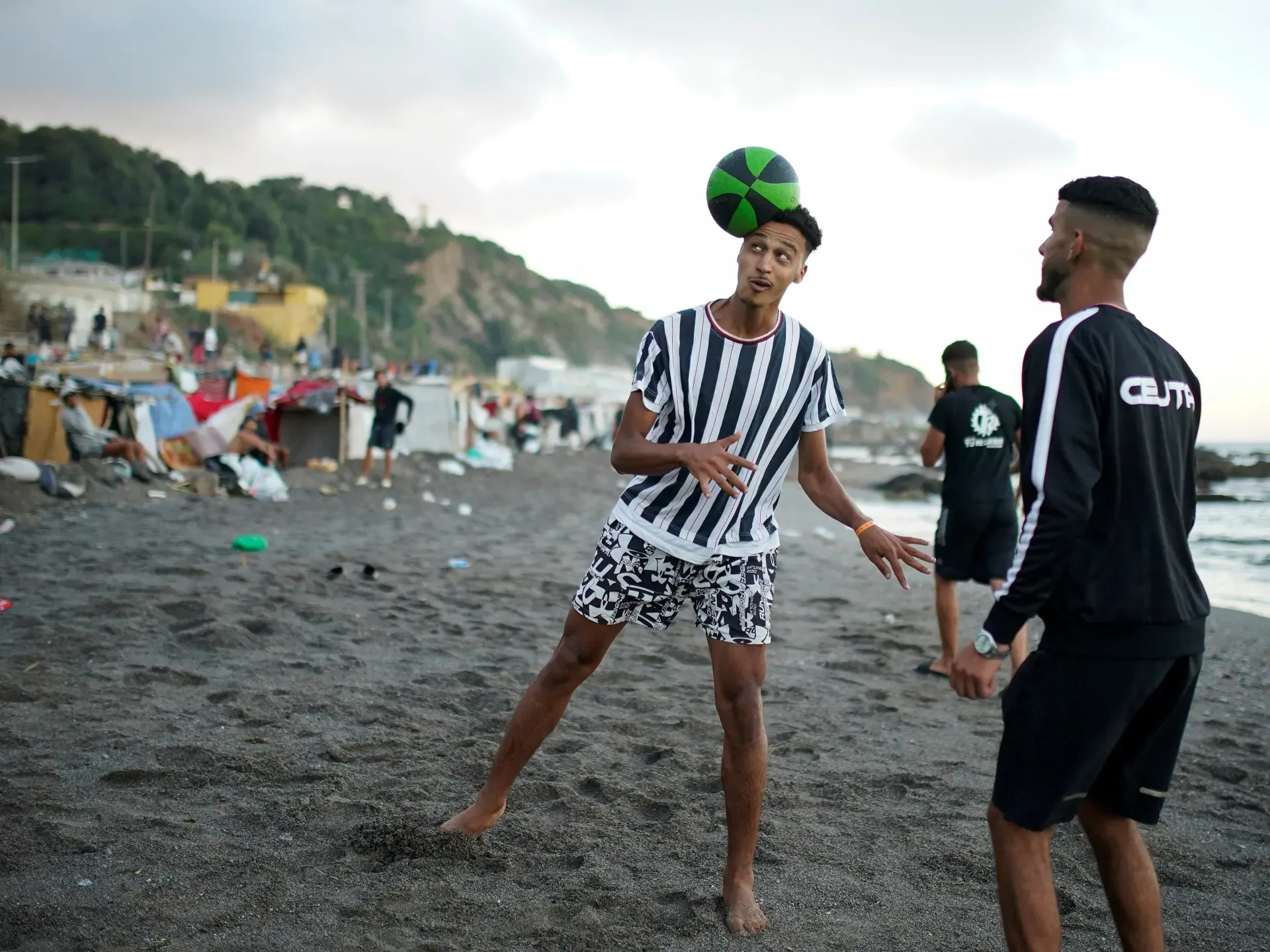
In the broader context of the crisis, the impact on local football clubs is evident, with Hamido noting that the turmoil has affected player signings as families express concern over the situation in Ceuta. Despite these challenges, he remarked that the support from the Spanish football community has provided a lifeline for Ceuta, offering strength and hope during these trying times. Outside the stadiums and political debates, football continues to thrive in Ceuta's neighborhoods, where children, including many migrants, play the game they love, often wearing the names of celebrated players who share similar backgrounds. Hamido poignantly reflected, “These people, in the end, are not to blame,” highlighting the need for empathy and understanding in discussions surrounding the crisis.
As reported by aljazeera.com.