
Understanding Morocco's Development Disparities
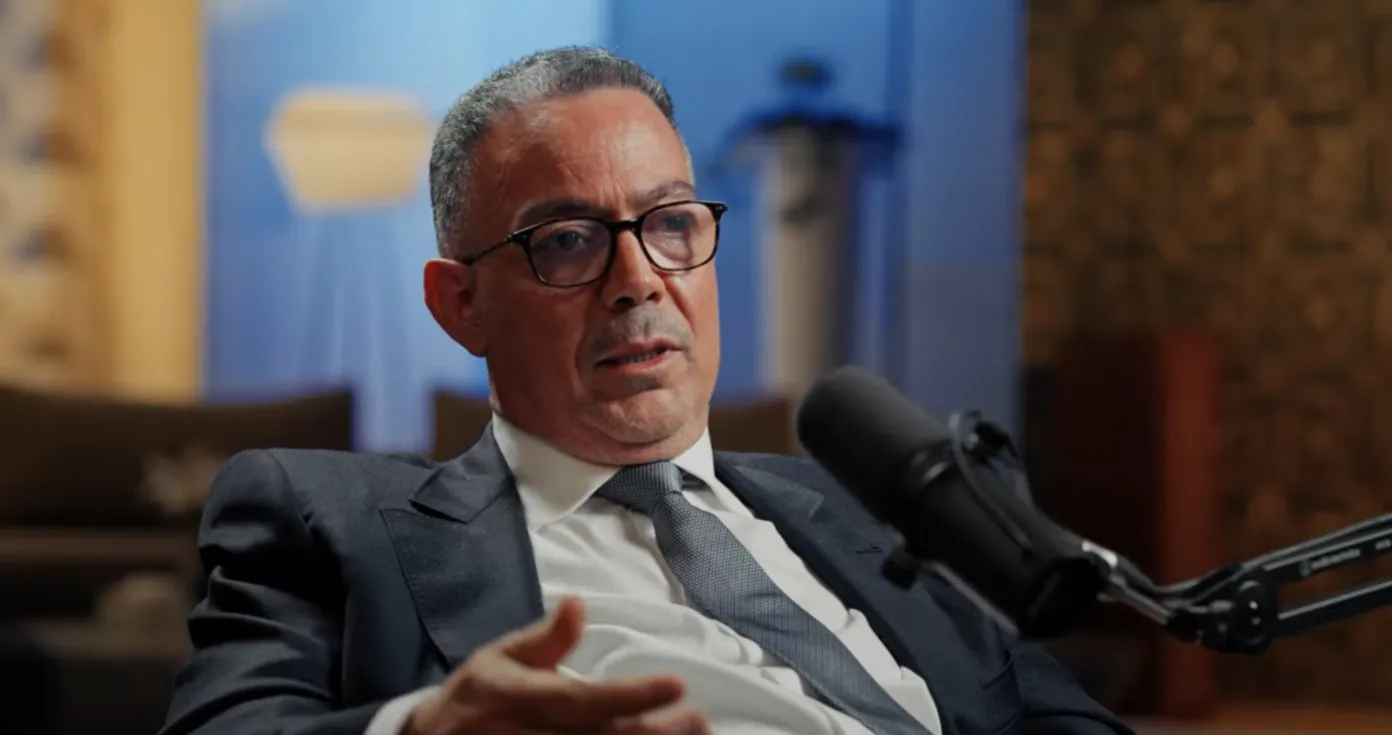
In an extensive interview with Al Jazeera, Fouzi Lekjaa, the President of the Royal Moroccan Football Federation, delved into one of the most discussed concepts in Morocco's developmental discourse—the notion of a 'dual-speed Morocco.' This term is frequently employed to depict the regional disparities that exist between areas experiencing robust developmental dynamics and those that are lagging behind at a relatively slower pace.
During his conversation with Mohammed Ramash on the program 'Magharib,' Lekjaa clarified that while this description is widely circulated, it does not represent an intentional political choice. Rather, it is a natural outcome of a long history of economic and social transformations that Morocco has undergone over the decades. He emphasized that any objective analysis of the developmental situation within any country cannot presuppose a uniform pace across all regions, as the nature of investment, infrastructure, and productive sectors inherently leads to temporal and spatial disparities.
Strategies to Address Developmental Disparities
In this context, Lekjaa underscored that a fundamental approach to addressing this reality lies in openly diagnosing and acknowledging existing disparities. He pointed out that current public policies are based on this premise, aiming to gradually reduce the gap between various regions. The objective is not solely to accelerate development in advanced areas but also to enhance the pace of growth in regions that have yet to fully benefit from the national economic dynamism.
Furthermore, Lekjaa addressed several major projects that Morocco has launched in recent years, which include the development of highway networks, modernization of railway infrastructure, and enhancement of ports and logistics facilities. He argued that these initiatives should not only be measured by their investment magnitude but also by their extensive impact on the surrounding regional, economic, and social environments. This dynamism is part of a comprehensive vision aimed at ensuring a fair distribution of development benefits.
When discussing the tangible reality, Lekjaa acknowledged the evident disparities in the level of facilities and services among key investment hubs, such as the Tangier-Casablanca-Marrakech corridor, compared to other regions that are still in the process of completing their basic infrastructure. However, he emphasized that this situation is not static; it is gradually transforming thanks to the launch of new structural projects in various regions, including the eastern region and the southern provinces.
He cited significant strategic projects that could reshape the Kingdom's economic landscape, notably the Nador West Med Port, which is expected to serve as an essential developmental catalyst for the eastern region and its surroundings. Additionally, new road projects and the electrification of railway lines between Fez and Oujda, as well as Fez and Nador, are aimed at alleviating isolation in the eastern region and improving connectivity among various areas.
Lekjaa concluded by asserting that the upcoming major events, particularly the 2030 World Cup, will not merely be a sporting occasion; they will serve as an additional milestone to accelerate this transformation through driving investments, enhancing infrastructure, and promoting spatial justice across the national territory. He reaffirmed that Morocco is currently at an advanced stage of rethinking its developmental model, allowing for a transition from sharp disparities to a gradual convergence among its regions.
As reported by febrayer.com.