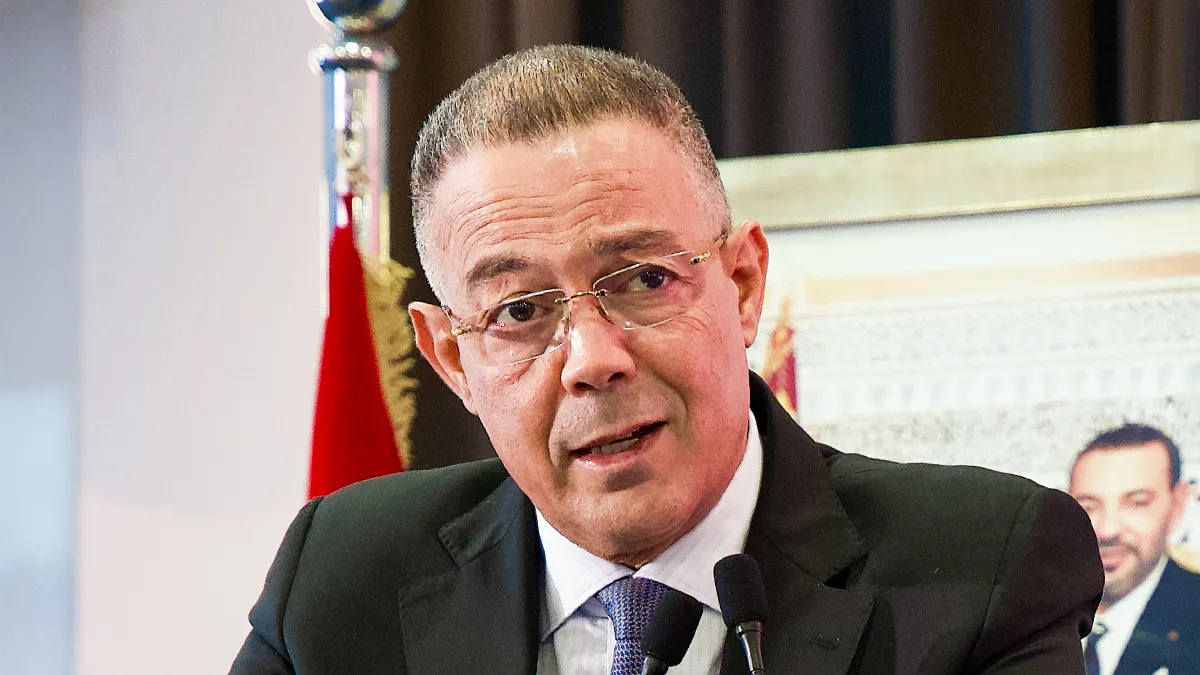

Fouzi Lekjaa's unexpected involvement in the political landscape ahead of the 2026 elections has sparked a plethora of discussions regarding his prospective influence in the electoral process. In a revealing interview with Jeune Afrique, Lekjaa, who serves as the Deputy Minister for the Budget and is also the president of the Royal Moroccan Football Federation (FRMF), delineated his political vision while advocating for Morocco’s aspirations concerning the 2030 FIFA World Cup. His campaign is now being carried out under the flag of the Authenticity and Modernity Party (PAM), coinciding with Morocco's preparations to co-host the World Cup alongside Spain and Portugal. Should the PAM emerge victorious in the elections, the King is expected to appoint the Head of Government from among the party members, placing Lekjaa's name among potential candidates for this esteemed position.
Despite the speculation surrounding his candidacy for the head of government, Lekjaa has made it clear that he has not contemplated this possibility. His current focus lies in strengthening the PAM's presence in constituencies where their efforts are most needed, emphasizing a commitment to serve the King and the nation in whatever capacity required, without a personal quest for power. He stated, "When the time comes, as part of the renewal of procedures, I will be ready to pass on the torch," while also noting that the dynamics of retaining multiple positions, should he ascend to leadership, present a complex scenario.
With over a decade of involvement in football, where governance and management are paramount, Lekjaa brings a wealth of experience to his new political role, having been a Member of Parliament for more than 20 years. His recent affiliation with the PAM, formalized on July 25, is rooted in a career intertwined with public service, which has equipped him with the necessary skills for this electoral pursuit. Lekjaa views his choice of joining the PAM as a logical step, one that aligns with the party's capacity to rejuvenate its ranks and embrace new generations. He firmly believes that political engagement is a constitutional right and is determined to contribute to the PAM's success in the upcoming elections.
However, Lekjaa's entry into PAM has ignited rumors regarding a potential takeover of the party, claims he refuted by emphasizing that his primary goal is to help the PAM secure victory in the elections set for September 23. He reiterated that he is not motivated by position or power but is dedicated to the party's mission of addressing developmental challenges. The PAM, having faced setbacks in previous elections, is now determined to claim the top position, a goal Lekjaa describes as a "logical evolution" for the party that has yet to form a government.
Addressing Mistrust and Social Disparities
Lekjaa recognizes that the electoral battle extends beyond party competition; it also involves combating voter apathy and skepticism towards elected officials. He identifies the erosion of trust in politics as a pervasive issue that requires a transformative approach to governance, one that prioritizes tangible outcomes. To engage Moroccans, the PAM aims to demonstrate that its initiatives are designed "with them and for them," thereby enhancing institutional legitimacy and citizen participation.
When assessing Morocco's social landscape, Lekjaa describes a dichotomy between the nation's economic advancements and the persistent social inequalities that breed frustration. While Morocco has made strides in infrastructure, political stature, and industrial development, challenges such as rising living costs and deficiencies in education and healthcare continue to afflict vulnerable populations. For Lekjaa, the welfare state must evolve beyond mere social protection and benefits to ensure access to quality education and healthcare, fostering a sense of dignity that facilitates genuine inclusion.
In light of recent events concerning migration, Lekjaa reframes the narrative, viewing it not as a social crisis but as part of a broader migration issue that transcends Morocco's borders. He highlights Morocco's unique geographical position between West Africa and Europe and underscores the country's efforts to integrate hundreds of thousands of migrants by granting them essential rights, including housing assistance. He asserts that addressing the migration crisis requires a comprehensive approach that tackles root causes through enhanced multilateral and bilateral cooperation.
Morocco's Aspirations for the 2030 World Cup
Fouzi Lekjaa presents the upcoming 2030 FIFA World Cup not merely as an opportunity for Morocco's transformation but as the culmination of a developmental trajectory that has been in progress for over two decades under King Mohammed VI's direction. The Moroccan government has made significant investments in high-speed rail, highways, and airports to bolster economic growth and employment opportunities. Lekjaa envisions this World Cup as an African event that champions the continent's rights and serves as a catalyst for the empowerment and integration of countless young Moroccans and Africans, facilitating the transition from start-ups to small and medium-sized enterprises.
Regarding the competition with Spain for the World Cup final, Lekjaa reassured that Morocco will adhere to FIFA's established procedures. While a working group from the international body is assessing the infrastructure across the three host countries, Morocco is steadfast in advocating for its bid. Lekjaa emphasizes that this collaboration is based on complementarity rather than rivalry, asserting that Morocco will defend not only its rights but also those of the African continent, which is poised to host this significant event for the second time in a century.
As reported by atalayar.com.