
In recent years, France has been strategically reshaping its presence in West Africa, particularly following its gradual withdrawal from the Sahel region. What once manifested as a visible military footprint for over a decade has transitioned into a more nuanced approach characterized by diplomacy, economic cooperation, and educational initiatives. This shift does not signify a complete withdrawal; rather, it represents a transformation from military engagement to diplomatic involvement. Where direct military presence once prevailed, France now employs institutional visits, diverse trade agreements, and inaugurations that appear to align with the technical management of projects fitting Paris's regional repositioning strategy.
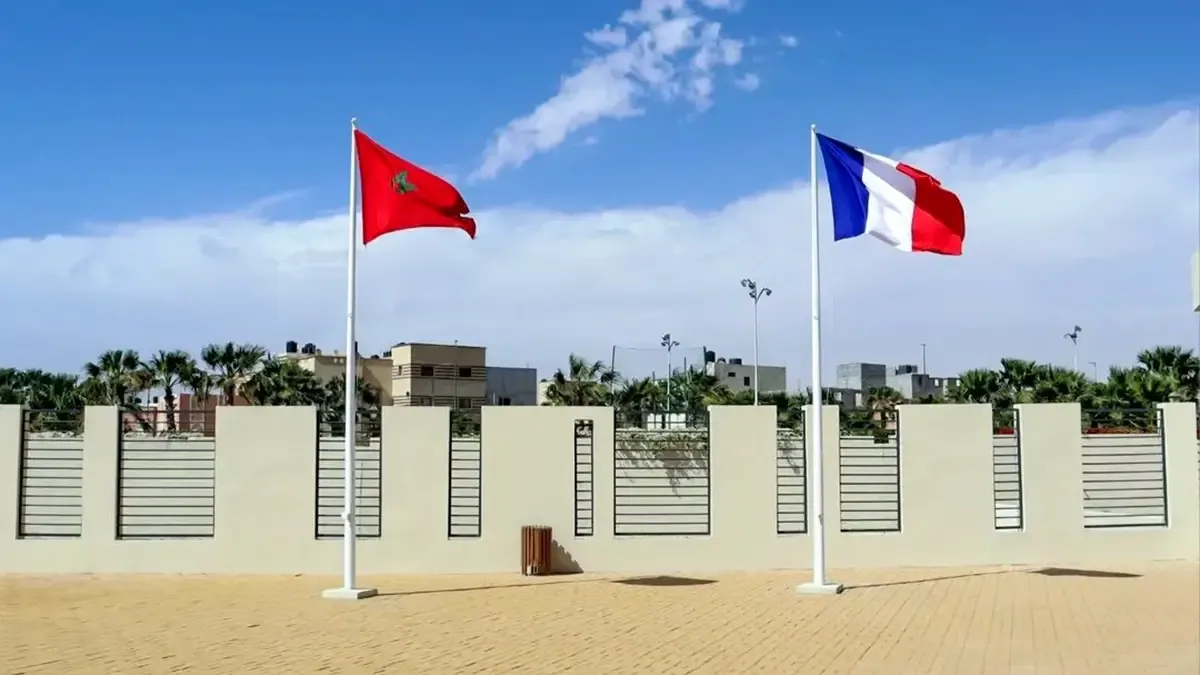
In this context, French Ambassador to Morocco, Christophe Lecourtier, recently traveled to Laayoune, the capital of Western Sahara, which is administered by Morocco, to inaugurate a new French high school. France is not merely sending representatives; it is actively promoting the establishment of educational infrastructure that aims for permanence, designed to cultivate future local elites within the framework of the French cultural and linguistic network. During his speech, Lecourtier spoke of cooperation, education, and a shared future—elements that are part of the usual narrative. His presence there, inaugurating projects and investing in the area, suggests an acceptance of the region as part of a new operational normality.
It is essential to note that France has not legally recognized Moroccan sovereignty over Western Sahara nor has it made a status change comparable to that of the United States. However, since a political shift expressed in 2024, France's position has gradually leaned towards explicit support for Morocco's autonomy plan, which it views as the most serious and credible basis for a solution within the formal framework of the United Nations. This stance allows Paris to maintain a legally cautious position while simultaneously reinforcing Morocco's centrality in the region's territorial management.
On the same day that Lecourtier was in Laayoune, Moroccan and regional media highlighted the consolidation of French support for development projects in the Sahara. In the energy sector, European companies, including French ones, are closely monitoring the development of wind and solar parks along the Atlantic strip from Dakhla to Laayoune. Infrastructure projects like the Dakhla Atlantic Port have emerged as significant logistical pillars for Morocco's connectivity to West Africa. Furthermore, the visibility of companies involved in construction, water management, and urban development is noticeably increasing.
While Lecourtier was in Laayoune, Moroccan Foreign Minister Nasser Bourita was engaging with various African officials, indicating that these were not impromptu visits. They form part of a long-term strategy that Morocco has been constructing patiently: garnering political support for its position on Western Sahara by tying it to concrete agreements. It is no coincidence that the world's major powers recognize the value of Morocco's autonomy plan for Western Sahara. However, this repositioning is not solely dependent on the Élysée; it has gradually integrated into the actions of the French Ministry of Europe and Foreign Affairs. The diplomatic line remains coherent across all levels—from the embassy in Rabat to official statements in Paris—combining formal respect for the UN framework with increasing political support for Morocco’s solution.
This institutional continuity explains why on-the-ground initiatives, such as the opening of educational centers or participation in development projects in the Sahara, are not isolated events but rather part of a sustained policy. Nations like Gabon, São Tomé and Príncipe, and South Sudan have not only expressed diplomatic support but, in some cases, opened consulates in Saharan cities, which holds evident symbolic value. This support is not merely a result of Moroccan political discourse; it is accompanied by the approval of agricultural cooperation projects, investments, civil service training, the expansion of Moroccan banks in West Africa, and agreements in sectors like telecommunications and fishing.
In this landscape, France finds a valuable partner in Morocco, which serves not only as a political ally but also as a platform and primary gateway for Africa to Europe. Morocco possesses established companies in Sub-Saharan Africa, active financial networks, and an economic diplomacy that enables it to reach places where other European actors struggle. For Paris, which has seen its maneuvering space diminish in Sahelian countries after years of military presence, relying on this structure is a logical strategy.
Simultaneously, another significant development unfolded over three thousand kilometers away. On April 15, Mauritania's President Mohamed Ould Ghazouani began a state visit to Paris. The following day, Emmanuel Macron used a noteworthy expression, referring to Mauritania's “responsible” role in a deeply destabilized Sahel. This phrase is not casual; France has been seeking partners who do not question its presence and who maintain a certain level of institutional stability in a region marked by coups and anti-Western sentiments. Mauritania fits this profile well, maintaining security cooperation with France and, unlike Mali or Niger, has not openly turned towards Russia.
During the visit, specific issues were addressed, including border control in sensitive areas, intelligence sharing against jihadist groups, maritime surveillance cooperation, and energy projects related to gas. Mauritania is developing significant offshore deposits alongside Senegal, and European companies, including French ones, have a direct interest in their exploitation and associated infrastructure. When viewed on a map, the rationale becomes evident. France has lost its ability to operate at the heart of the Sahel but has not relinquished its influence there. Instead, it is surrounding the issue: to the west, it partners with Mauritania for security; to the north, it engages Morocco as an economic platform and Atlantic gateway. Between these two, there remains an unstable strip, but the approach now is not military control but rather conditioning through trade routes, investments, and selective alliances.
In this context, the Sahara transforms from merely a protracted conflict into a functional piece within a broader strategy. The development of infrastructure in this area carries both political and economic implications. In recent years, Morocco has proposed offering landlocked countries like Mali or Niger access to the Atlantic via its territory, a concept that is far from abstract. It entails roads, ports, customs agreements, and, importantly, a reconfiguration of economic dependencies. For France, which seeks to stabilize the region indirectly without military involvement, such projects hold strategic value.
Alongside this, the major energy project of the African Atlantic axis, the Nigeria-Morocco gas pipeline, adds another dimension. Although still in the development phase, it proposes creating a network that would connect West Africa with Europe. For the European Union, which is currently in a process of energy diversification following the crisis with Russia, this type of infrastructure is particularly relevant. As a key European actor, France is not oblivious to this interest. The stability of the routes, the viability of projects, and cooperation with transit countries are all part of the same equation.
These developments have implications that extend beyond bilateral relations. Algeria is increasingly observing with concern the rapprochement between Paris and Rabat. Traditionally, France has maintained a delicate balance between both countries, and this rebalancing intensifies regional tensions, particularly with Algeria, which perceives the Franco-Moroccan closeness as a strategic shift in the Maghreb balance of power. Simultaneously, France's withdrawal from the Sahel has opened the door for other actors like Russia, through informal security structures, and China, via infrastructure financing. In this context, France is not competing directly in the military domain but is striving to maintain influence through structural alliances and economic networks, shifting the power conflict towards diplomatic and commercial realms.
This balance has been increasingly strained over recent years due to multiple factors, from historical issues to political divergences. The reinforcement of Morocco's role in the Sahara, alongside French support, introduces an additional element of friction. Meanwhile, other actors are capitalizing on the space vacated by France in the Sahel. Russia, through structures like the former Wagner Group—now known as Africa Korps—and its offshoots, has solidified its presence in countries that have broken ties with the West. China, for its part, continues to advance through infrastructure investments and financing. France is not competing with them on the same terms. It has opted for a different playing field, less visible but potentially more sustainable if executed well.
There is also a dimension rarely mentioned in the forefront but crucial: the formation of local elites. French high schools, like the one inaugurated in Laayoune, are not merely educational institutions; they are spaces where lasting connections are forged. Language, curricula, and professional networks created in these environments generate a long-term affinity that facilitates economic and political presence. This is a tool of influence that operates slowly but profoundly.
The underlying question remains whether this new model will avoid the pitfalls of the previous one. The French military presence in the Sahel ultimately generated resentment among large segments of the local population, fueling narratives of interference and neocolonialism. By withdrawing, France has lost direct intervention capacity but has also reduced its exposure. Relying on regional partners like Morocco and Mauritania allows France to continue exerting influence without taking center stage. However, this balance is fragile; if these partners are perceived as intermediaries of external interests, resentment could shift towards them.
For now, what is observed is a calculated movement. France has not abandoned West Africa or the Sahel. It has recognized that the context has changed and that its role must adapt. Fewer soldiers, more agreements. Less visibility, more structural presence. Morocco, with its Atlantic projection and diplomatic activism, has become a central piece of this new approach. Mauritania, with its relative stability in a tumultuous environment, completes the scheme. For Mediterranean and Atlantic leaders, the goal is to serve as a bridge of communication, information, and understanding between cultures.
As reported by atalayar.com.