
The excitement is palpable as the World Cup quarterfinals kick off this Thursday, featuring a highly anticipated matchup between France and Morocco at Foxborough, Massachusetts. This contest promises to be a riveting encounter between two formidable teams, with France currently holding the top position and Morocco ranked sixth in FIFA's unofficial men's world rankings. Such a clash not only highlights the tactical prowess of both sides but also sets the stage for a thrilling display of football.
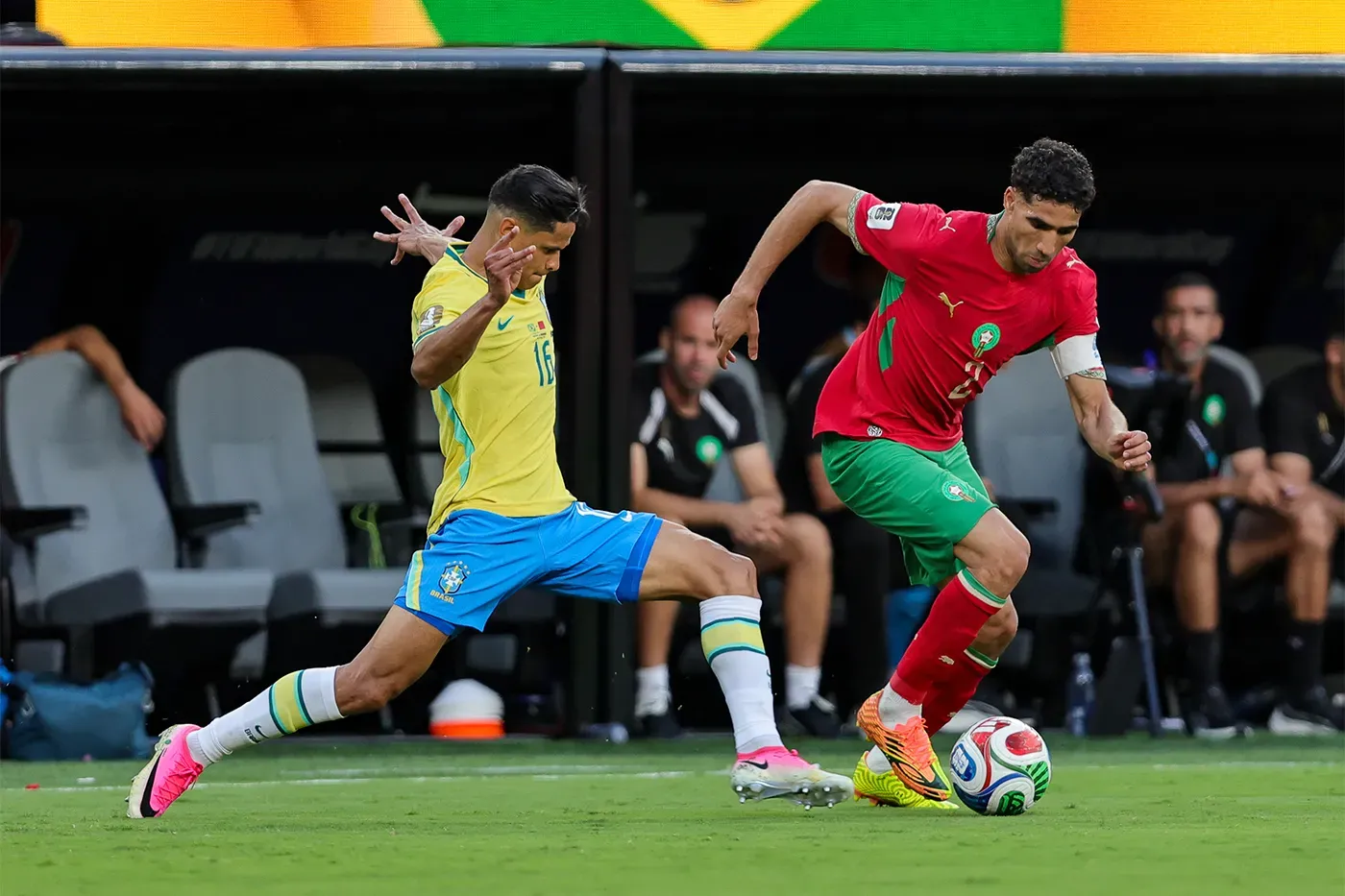
According to Brennan Klein, the director of Northeastern's NetSI Sport research group, the game will primarily revolve around a strategic confrontation between 'Morocco's right and France's left.' Morocco has effectively executed its game plan throughout the tournament by concentrating its passing efforts predominantly along the upper right flank of the pitch. The key figure in this strategy is Achraf Hakimi, Morocco's captain and right back, who collaborates closely with right winger Brahim Diaz. Together, they form the backbone of Morocco's attacking plays, prioritizing long, direct passes to generate scoring opportunities. Center forward Ismael Saibari, who has netted three goals during the tournament, plays a crucial role in this setup, frequently receiving passes from Hakimi and Diaz to create scoring chances.
This tactical approach has proven essential to Morocco’s success, with a notable example being Saibari's swift goal in the opening minute of their group stage match against Scotland, where he capitalized on a long ball delivered from Diaz on the right flank. Moreover, Klein highlights that among the remaining teams, Morocco boasts the highest success rate in dribbles, having attempted an impressive 17.1 dribbles with a completion rate of 8.4.
In stark contrast, France is recognized for its powerful left-side attack, featuring standout players like Kylian Mbappé and Bradley Barcola. Positioned strategically, they are poised to exploit vulnerabilities in Morocco's defensive structure. With Hakimi often playing high up the pitch, the lower right side of Morocco's formation becomes susceptible to counterattacks from Barcola and Mbappé, who are both incredibly fast and pose a significant threat to the Moroccan defense. Mbappé has been clocked as the fastest player in the tournament, reaching speeds of 23.4 mph, while Barcola trails closely behind at 22.7 mph.
Klein anticipates that Mbappé might seize this opportunity to score, potentially marking his 20th World Cup goal and bringing him one step closer to Lionel Messi, who currently leads with 21 goals, making him the top scorer in World Cup history. However, an important factor to consider is the uncertainty surrounding Saibari's availability for the match due to an injury sustained during Morocco's game against Canada last week. His fitness will undoubtedly impact Morocco's offensive strategy as they prepare to face the reigning champions.
As reported by news.northeastern.edu.