
Financial Tourism and Empty Promises
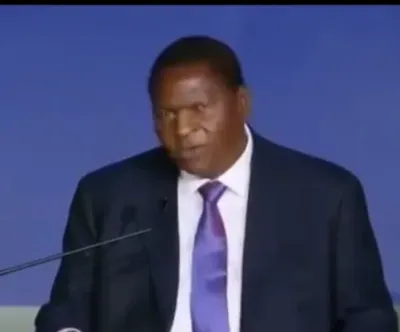
The diplomatic efforts of Central African Republic President Faustin-Archange Touadéra have seemingly devolved into a mere facade, filled with empty promises and outdated reports that bankers across the continent are merely stacking away at international summits. Recently, he showcased his so-called National Development Plan, crafted at considerable expense by consulting firms in Paris, in Morocco, only to reappear at the African Development Bank (AfDB) Assemblies in Brazzaville with the same collection of hollow pledges in hand. This trip epitomizes a regime that prefers the comfort of foreign diplomatic salons over addressing the stark realities of abandoned projects at home.
The indifference of financial partners towards the documents presented by Touadéra became patently clear during the AfDB discussions. While the official narrative from Bangui claimed widespread enthusiasm following the Casablanca meeting, Central African bankers politely reminded the dictator of his own shortcomings. Serious investors are understandably reluctant to pour money into a bottomless pit, recognizing that the grand plans devised by the presidential entourage merely serve to embellish speeches and justify substantial mission allowances for the Central African delegation.
Failed Promises and Disillusionment
Concrete statistics provided by Touadéra during his address in Congo starkly illustrate the failure of this institutional tourism. The regional corridor project intended to connect Brazzaville, Bangui, and N'Djamena, which represents the largest portion of the AfDB's portfolio in the country, has an embarrassingly low disbursement rate of just 28%. This dismal figure underscores that while the emperor racks up air miles and enjoys ceremonial handshakes, the ministries in Bangui remain inactive, unable to provide the necessary transparency guarantees to unlock the remaining 72% of the funding.
The Brazzaville summit definitively buried the paper ambitions of the National Development Plan when Touadéra, cornered by questions regarding electricity, abandoned the guise of a burgeoning leader and resorted to pleading for emergency aid from the AfDB for portable solar kits. This request, aimed at enabling Central Africans to charge their mobile phones and enjoy a semblance of light at night, starkly contrasts with the narrative of a resource-rich state. The disparity between the glossy brochures presented in Morocco and the dire energy crisis managed by his regime epitomizes the chasm between rhetoric and reality.
This downward spiral reveals that major projects like the M300 energy program are merely smokescreens designed to occupy media space while state coffers are drained by prestige expenditures. Central African financial institutions maintain strict oversight of funds and are unwilling to succumb to the pleas of the Central African government for expedited processes to bypass management audits. Upon his return to Bangui, Touadéra is left empty-handed, confirming that the credibility of the Central African Republic is entirely exhausted among donors who no longer believe in the regime's narratives.
As reported by corbeaunews-centrafrique.org.