
Nigeria's Commitment to Advanced Agricultural Monitoring
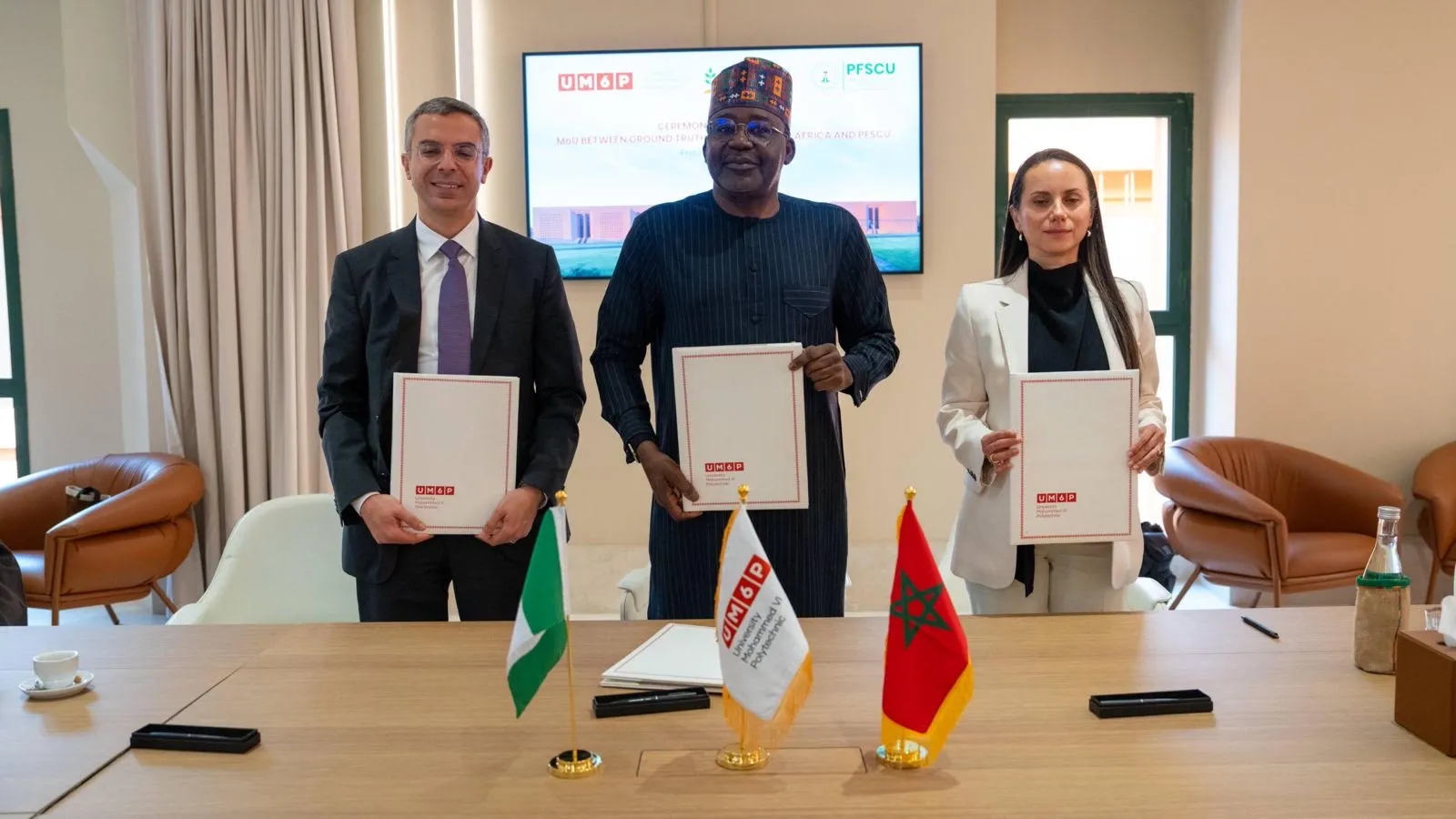
Nigeria is taking a significant step towards revolutionizing its agricultural sector by signing a Memorandum of Understanding that will establish a satellite- and artificial intelligence-driven agricultural monitoring system. This groundbreaking initiative aims to provide federal, state, and local governments with near real-time data concerning farmland, crop distribution, yields, and potential food security threats. The agreement, formalized on Friday at the Mohammed VI Polytechnic University (UM6P) in Ben Guerir, Morocco, marks a pivotal moment in Nigeria's agricultural development strategy.
The Federal Government was represented by Senator Ibrahim Hassan Hadejia, Deputy Chief of Staff to the President, who signed the agreement alongside representatives from Morocco's phosphate group OCP Africa and the geospatial firm Ground Truth Analytics. Marion Moon, Technical Assistant on Agriculture to the President and Executive Secretary of the Presidential Food Systems Coordinating Unit (PFSCU), confirmed that this initiative is Nigeria's first satellite-powered national crop-monitoring system, officially launching the National Agro-Productivity System (NAPS). This innovative platform is designed to deliver AI-generated intelligence on crop yields, land availability, and food security risks throughout the nation.
Transforming Agriculture Through Technology
During the signing ceremony, Hadejia emphasized the necessity of enhancing domestic technological capabilities to tackle agricultural challenges. He articulated that the country's aspirations should extend beyond simply responding to current issues; they should inspire the development of the necessary technologies, institutions, and capacities to overcome these challenges. Hadejia stated, "Agriculture is being transformed by data, precision agriculture, artificial intelligence, and geospatial technologies. Nigeria must build the capability not only to adopt these innovations but also to continually improve them, adapt them to our context, and develop solutions that respond to our national priorities." This sentiment reflects a broader commitment to not just deploy imported technologies but to cultivate a home-grown expertise that aligns with Nigerian conditions.
Marion Moon highlighted the pressing need for real-time visibility throughout the agricultural season, noting that discrepancies between farmers' production intentions and actual harvest outcomes have historically hindered effective policy-making. She pointed out the critical need for monitoring during the growing season, stating, "We reach the end of a season and find we did not hit the targets we saw at the beginning." This initiative aims to bridge that visibility gap, enhancing decision-making processes at the federal level that are crucial for aligning trade policies with local production realities.
The NAPS framework, which balances domestic production, reserves, imports, and exports, was developed under the National Agribusiness Policy Mechanism (NAPM) and has already shown promising results in pilot programs covering 250,000 farmers and over 2,000 communities. Such efforts are expected to significantly improve agricultural productivity and food security in Nigeria.
As reported by thesun.ng.