
Intense Rivalry for the 2030 World Cup Final
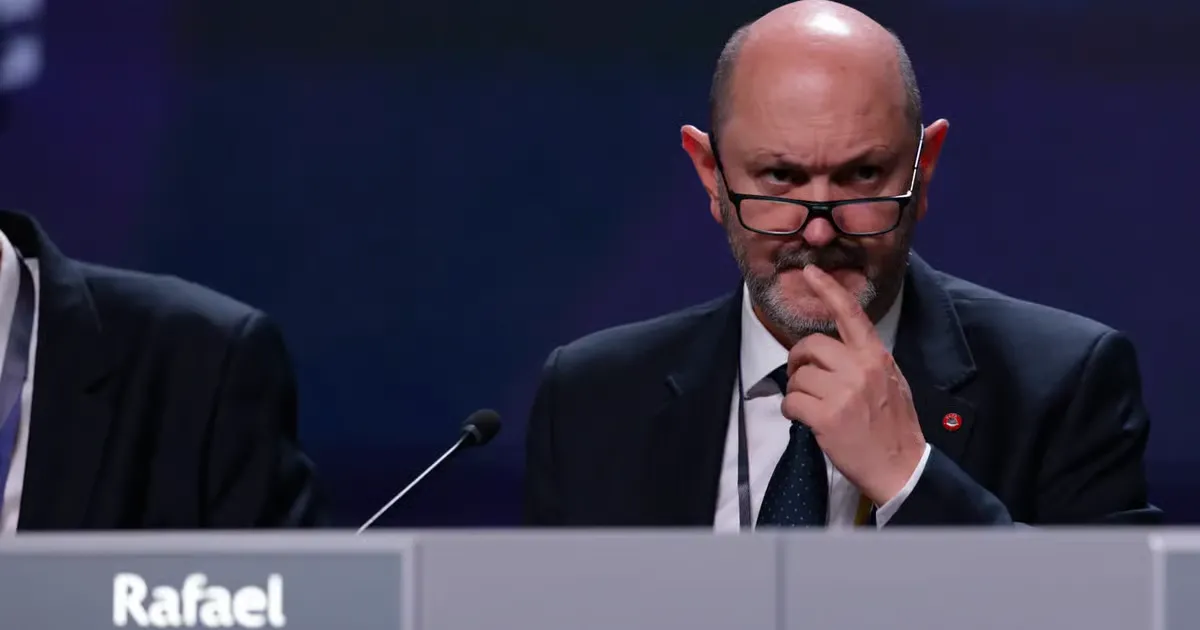
As the excitement builds for the upcoming 2030 FIFA World Cup, a fierce competition emerges between Morocco and Spain regarding the hosting of the tournament's grand finale. With Morocco, Portugal, and Spain officially selected as the host nations, FIFA has yet to determine the final's location. Spanish Football Federation president Rafael Louzan is confident that Spain will be the chosen venue, leveraging recent chaotic events during the Africa Cup of Nations held in Morocco to bolster his argument.
The anticipation is palpable as Morocco is currently constructing an impressive $12 billion stadium near Casablanca, which boasts a seating capacity of 115,000, aiming to become the largest venue in world football. This ambitious project is expected to be completed by the end of next year and is seen as a serious contender against Spain's two potential venues: the revamped Estadio Santiago Bernabeu in Madrid, which will seat 83,000 following extensive renovations, and Barcelona's Camp Nou, anticipated to accommodate 105,000 spectators once its renovation is complete.
Spain's Strong Organizational Reputation
In a bid to assert its position as the final host, Louzan emphasized Spain's extensive experience in organizing major sporting events, stating, "Spain has a proven organisational capacity over many years, and therefore Spain is going to be the one to lead that World Cup 2030 and where the final of the tournament will be played." He referenced the recent disturbances at the Africa Cup of Nations, arguing that such incidents could tarnish Morocco's image in hosting a globally significant event like the World Cup.
Despite Louzan's assertions, Morocco's football federation president, Fouzi Lekjaa, remains diplomatically non-committal, indicating that no decisions have been made regarding the final's location and underscoring the importance of consultations among the three host nations and FIFA. However, insiders suggest that Morocco is aggressively advocating for Casablanca to be the site of the final, a move that would mark a historic moment, as it would be the second time an African city hosts a World Cup final, following Johannesburg in 2010.
This rivalry between Morocco and Spain adds an intriguing layer to the upcoming World Cup, highlighting the complexities of international sports diplomacy and the significance of national pride in hosting such a monumental event. As preparations continue for the tournament, the eyes of the football world will be fixed on the unfolding drama surrounding the final's location.
As reported by freemalaysiatoday.com.