
Reconstruction Efforts Observed in Iranian Military Installations
Recent satellite imagery has unveiled a significant resurgence in engineering activities at various Iranian military sites that sustained damage during the conflict initiated by U.S. and Israeli strikes on February 28, 2026. Captured between April 17 and September 21, 2026, these images, sourced from Airbus and Vantor, reveal distinct types of rehabilitation efforts across different locations. For instance, while there is clear reconstruction progress at the Talqan-2 site, others like those in Tabriz and Kermanshah are undergoing cleaning, grading, and road reorganization.
Detailed Observations from Satellite Imagery
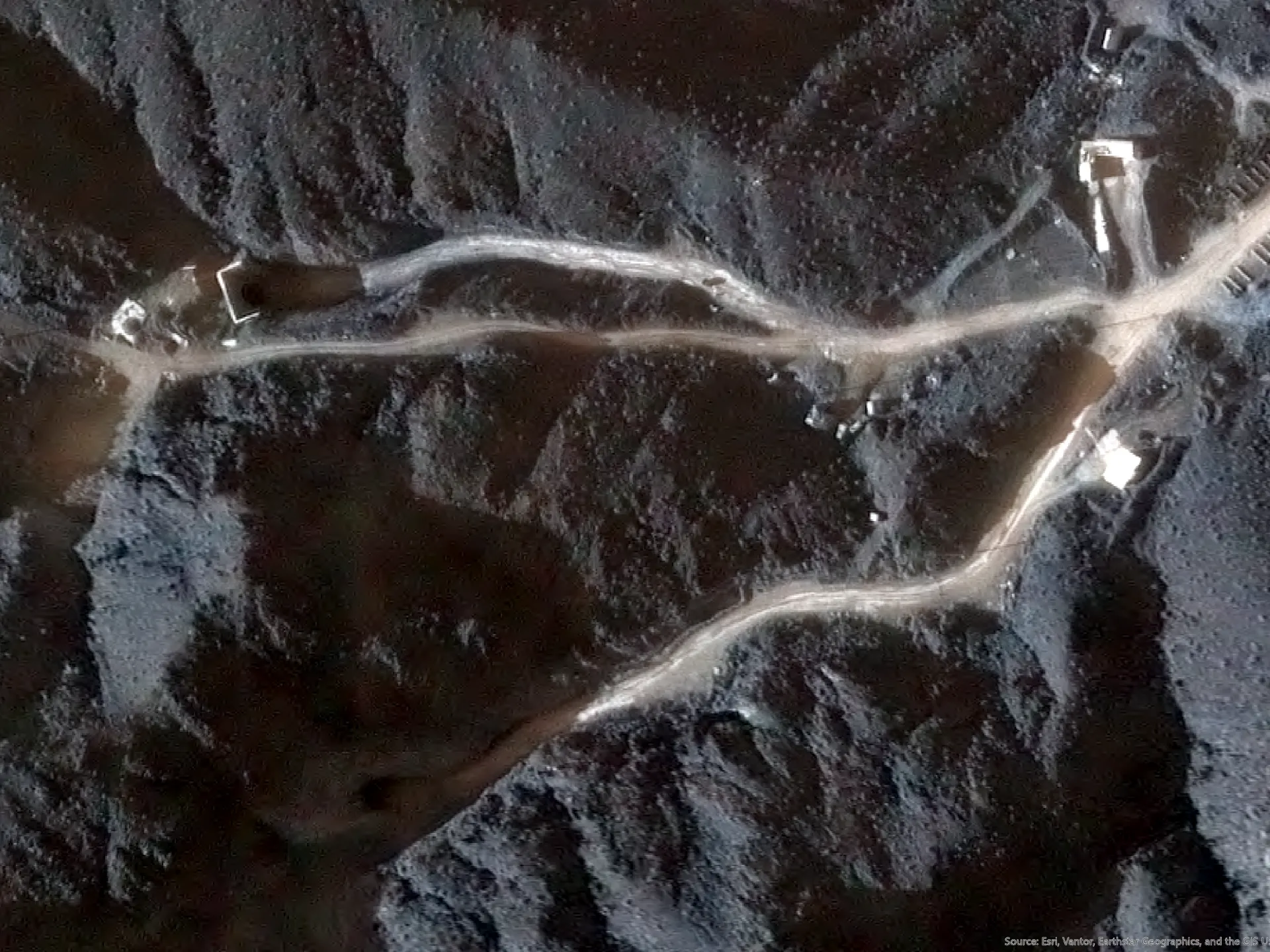
The most pronounced alterations have been noted at the Talqan-2 facility within the Parchin military complex located southeast of Tehran. A comparison of images from June 2 and September 20 shows that while debris and damage were still evident in June, by September, a substantial cover had been erected over the primary section of the site, surrounded by organized workspaces and improved access roads. Previously, in March 2026, this site had faced multiple strikes, which left significant breaches in the structure's roof. Additionally, the area had been targeted earlier in October 2024, necessitating subsequent repairs.
Further analysis of the Parchin complex from June 21 to September 20 reveals a marked decrease in debris within the central area, replaced by a more leveled surface and restructured service roads. Activities surrounding several installations south of the site align with efforts to enhance protection and fortification. In May and June, the Institute for Science and International Security documented extensive debris removal operations at missile production facilities near Talqan-2, coinciding with the initiation of repairs to the buried facility.
In the western region, satellite images from the missile complex at Tankh Knesht, north of Kermanshah, reveal significant changes between May 8 and September 21. The northern part of the site shows evidence of bombing damage to tunnel entrances and internal road networks, which have since been clarified and expanded. Meanwhile, in the southern sector, areas of rubble have been cleared and sites formerly occupied by structures are now vacant, leaving behind only traces of foundations.
At the Amund missile base northwest of Tabriz, an analysis comparing images from April 17 and September 13 indicates that remnants of destruction are being addressed, with some buildings being reconstructed and pathways being reconfigured in critical areas of the site. The base was also a target during the operations that commenced at the end of February.
These rehabilitation efforts follow several months after the outbreak of war on February 28, 2026, during which the United States and Israel launched extensive strikes targeting Iranian nuclear, missile, and military installations. This ongoing conflict was preceded by a brief Israeli-Iranian confrontation lasting 12 days in June 2025, during which U.S. forces were involved in strikes on Iranian nuclear facilities.
As reported by aljazeera.net.